04 / HIDDEN LEAKS
How to find drafts in your house
Five tests, no equipment, an hour. Done in this order they find the big leaks before the small ones, which is not the order most people search in.

Depressurize the house by closing the windows and running a bathroom or kitchen extractor fan, then work around the building with a lit incense stick. Where the smoke bends, air is coming in. Check doors, windows, the attic hatch, outlets on exterior walls, and where pipes and cables pass through walls.
You do not need a thermal camera. Every test below uses something already in the house, and together they find the leaks that matter on almost any home. What they will not do is find leaks inside the wall structure — for that you need a blower door and someone who does this for a living.
First, tilt the odds: depressurize the house
- 1Close every exterior window and door.
- 2Close the fireplace damper if you have one.
- 3Turn off the furnace or any combustion appliance, so you are not fighting its air supply.
- 4Turn on the bathroom extractor fans and the kitchen range hood.
- 5Leave them running. The house is now slightly below outside pressure and every gap is pulling air inward, which makes all five tests dramatically more sensitive.
Test 1: the hand test (finds the big ones)
Wet the back of your hand slightly and move it slowly along the edges of doors and windows, an inch or two from the surface. The back of the hand is far more sensitive to moving air than the palm, and damp skin more sensitive than dry. Anything you can feel this way is a large leak and should be fixed first.
Test 2: the incense test (finds most of the rest)
- 1Light an incense stick, or a match blown out so it smokes.
- 2Hold it two or three inches from the surface you are testing and watch the smoke column, not the stick.
- 3A vertical column means still air. A column that bends sideways or breaks up means air movement.
- 4Work systematically: door frames, window frames, the attic hatch, baseboards, outlets on exterior walls, and where pipes enter under sinks.
- 5Mark every hit with masking tape and keep going. Sorting comes later.
Test 3: the dollar-bill test (finds bad seals)
Close a door or window on a dollar bill and pull it out. If it slides freely, the seal is not compressing at that point. Do it at eight or ten points around each opening — you get a map of where a seal has failed, which the smoke test does not give you as precisely.
Test 4: the flashlight test (finds daylight gaps)
After dark, have someone shine a strong flashlight around the outside edges of a door while you watch from inside with the lights off. Anywhere the light shows through is a direct hole. This is the fastest way to check a garage door, where the gaps are large enough to see and awkward to reach with smoke.
Test 5: the touch test (finds insulation gaps)
On a cold day, put your palm flat on interior walls and ceilings in the rooms that feel worst, especially the ones backing onto an attic, a garage or an outside corner. A patch that is noticeably colder than the wall around it is missing insulation rather than leaking air — a different problem, worth knowing about, and not one that weatherstrip will fix.
Now sort what you found, biggest first
| Where you found it | Typical size | Go to |
|---|---|---|
| Under an exterior door | Large | Best door sweeps |
| Garage door bottom or sides | Largest in most houses | Garage seals |
| Attic hatch or pull-down stairs | Large, and usually ignored | Attic hatch covers and sealing |
| Around a door or window frame | Medium to large | Weather stripping |
| Window sashes | Medium | Window tape and film |
| Outlets and switches on exterior walls | Small | Outlet gaskets |
| Pipe and cable penetrations | Small but numerous | Foam, caulk and backer rod |
The two places most people never check
The attic hatch. A plywood panel resting in a frame with no seal, at the top of the house where warm air is trying hardest to escape. Smoke-test its edges with the fans running and you will usually see the column move decisively. A perimeter bulb seal and something heavy or latched to hold it down is the fix, and it is one of the highest-value hours in this whole list.
The fireplace. An open damper is a permanent hole to the sky. Check yours actually closes, and closes fully — dampers warp, and a warped damper is a chimney-sized leak. If the fireplace is not in use at all, a chimney draft stopper is a genuine fix, provided you leave an unmissable reminder that it is up there.
Both of these get their own dedicated sections on this site later this year. For now, smoke-test them and deal with the doors, windows and garage — which on almost every house are the bigger numbers anyway.
Quick picks
Ranked for fit, not for hype. Tap a row to jump to the full write-up, or go straight to the listing.
| # | Product | Best for | Gap range | Price |
|---|---|---|---|---|
| 1 |  Frost King OS6H Foam Outlet and Switch Sealers, 2-1/2 in x 4 inFire-retardant foam gaskets cut to the standard 2-1/2 by 4 inch plate — the part, not a novelty. | The standard outlet gasket | Fits standard US outlet and switch plate openings | $4.99 · CHECK ON AMAZON |
| 2 | 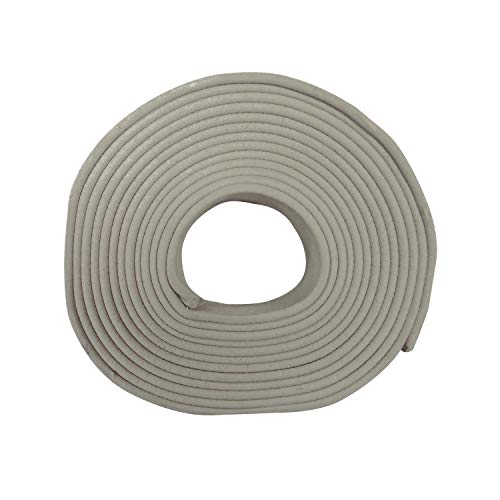 Frost King B2 Mortite Fingertip Caulking Cord, 1/8 in x 90 ftRope caulk: pliable putty you press into a gap in October and peel out in April, leaving no adhesive behind. | Seasonal window sealing | Published 1/8 in cord; fills gaps of roughly 1/16 in to 1/4 in when pressed | $6.67 · CHECK ON AMAZON |
#ad · how we are funded · price as of October 17, 2026
The standard outlet gasket
Frost King OS6H Foam Outlet and Switch Sealers, 2-1/2 in x 4 in
Published gap range
Fits standard US outlet and switch plate openings
#ad · how we are funded · price as of October 17, 2026
Fire-retardant foam gaskets cut to the standard 2-1/2 by 4 inch plate — the part, not a novelty.
Where the number comes fromFrost King publishes the gasket size (2-1/2 in x 4 in) and that the foam is UL-listed fire retardant plastic. There is no gap range: the gasket seals the plate to the wall, and the leak it stops is the one around the box.
- Published size
- 2-1/2" x 4"
- Material
- U.L. listed fire retardant plastic foam
- Quantity
- 6
- Install
- Behind the faceplate
- Visible after install
- No
- Mounting
- Behind the faceplate, no tools beyond a screwdriver
What it does well
- The fire-retardant rating is the spec that matters on anything going behind a faceplate
- Completely invisible once the plate is back on
- Two minutes per outlet with one screwdriver
Where it fails
- Only helps where the box is genuinely leaking — many are not
- Six per pack does one wall, not a house
- Does nothing about the much larger leaks around windows and doors
Who this is forExterior-wall outlets on the windward side, where you can feel air at the plate.
Seasonal window sealing
Frost King B2 Mortite Fingertip Caulking Cord, 1/8 in x 90 ft
Published gap range
Published 1/8 in cord; fills gaps of roughly 1/16 in to 1/4 in when pressed
#ad · how we are funded · price as of October 17, 2026
Rope caulk: pliable putty you press into a gap in October and peel out in April, leaving no adhesive behind.
Where the number comes fromFrost King publishes the cord diameter (1/8") and length (90 ft). Rope caulk deforms into the gap, so one cord covers a range — press two strands together for a wider gap.
- Published diameter
- 1/8 in
- Published length
- 90 ft
- Removal
- Peels out, no residue when fresh
- Tools
- None — fingertip pressure
- Color
- Gray
- Mounting
- Pressed in by hand, no tools
What it does well
- Genuinely removable, which is why renters and old-window owners keep buying it
- No adhesive to fail and no surface prep beyond wiping dust off
- 90 ft does a lot of window
Where it fails
- Left in through summer heat it gets harder to remove cleanly
- Seals a window shut — no ventilation until you pull it
- Looks like what it is: putty in a gap
Who this is forOld double-hung windows you want sealed for winter and openable in spring.
How we picked
- The tests are ordered so the largest leaks are found first — the opposite of the order people usually search in.
- Nothing here needs a tool you do not already own.
We have not tested these products and we do not claim to have. The full method, including what we refuse to claim, is on how we pick.
Questions people actually ask
- How do I find air leaks in my house from the inside?
- Close the windows, run the bathroom and kitchen extractor fans to depressurize the house, then move a lit incense stick slowly along door frames, window frames, the attic hatch, baseboards and exterior-wall outlets. Where the smoke bends, air is coming in.
- What is the best way to detect a draft?
- Incense smoke with the house slightly depressurized. It is more sensitive than your hand, it shows direction as well as presence, and it costs almost nothing. A windy day makes it better still.
- Do I need a thermal camera to find drafts?
- No. A camera shows temperature, which is useful for finding missing insulation, but the incense test finds moving air more directly and it is free. Save the camera for after you have fixed everything smoke can find.
- Why is my house so drafty all of a sudden?
- Usually a seal that has failed rather than a new hole: perished weatherstrip, a door that has dropped on its hinges, a warped fireplace damper, or an attic hatch knocked out of position. There is a fuller answer in why is my house so drafty.
- Should I run the furnace while draft testing?
- No. Turn it off first. You want the house slightly depressurized by the extractor fans, and you do not want to interfere with a combustion appliance's air supply while you are doing it.
Sources
Every specification on this page traces to a published manufacturer or retailer listing. Where a maker publishes no working gap range, we say so rather than estimating one.
Read next
Why is my house so drafty?
One mechanism, a handful of holes, and why the fix for a downstairs draft is often in the ceiling.
The best door sweeps, sorted by the gap they actually close
Six sweeps placed by the gap they close, from a slim vinyl blade to a brush for uneven floors.
How to seal windows for winter from the inside
The order of work that stops you filming over a leak you could have closed for free.
The best foundation vent covers for a cold floor
Cold floor over a crawl space? Covers help — but only after you have checked which kind of crawl space you have.