04 / HIDDEN LEAKS
Spray foam, caulk or backer rod?
Three products for three gap sizes. Using the wrong one wastes a tube, or worse, bows a window frame.
We earn a commission on some links here, at no extra cost to you. It does not change what we recommend or the order they appear in. How we are funded
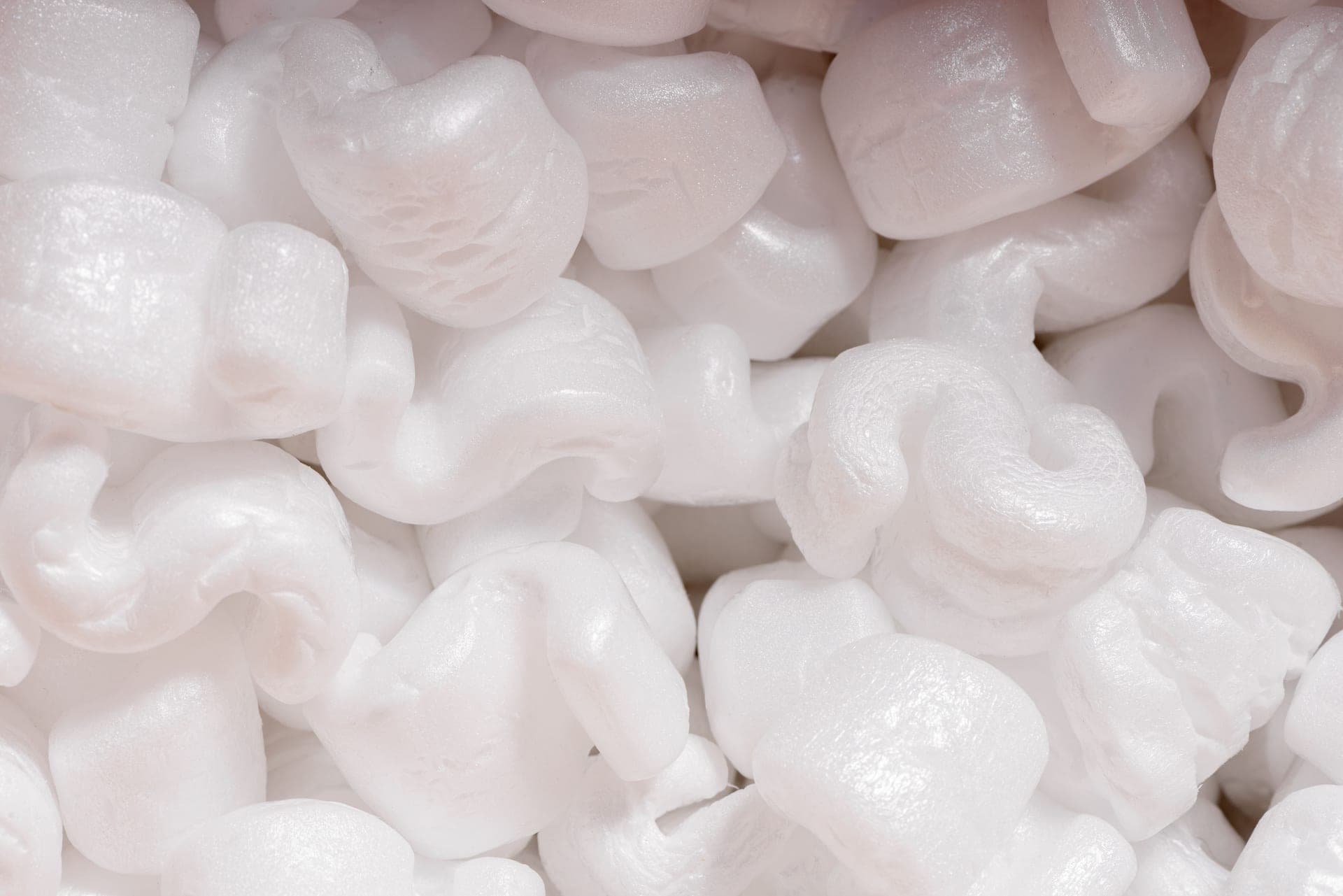
Under a quarter inch, caulk it directly. A quarter inch to about half, push backer rod in first, then caulk over it. Wider than that around framing and penetrations, use minimal-expanding foam. Never use expanding foam around a window or door frame that is not braced — it can bow the jamb.
| Gap | Use | Why |
|---|---|---|
| Hairline to 1/4 in | Caulk alone | The bead bridges it and bonds to both sides |
| 1/4 in to 1/2 in | Backer rod, then caulk | Rod gives the caulk a back to bond against and stops you wasting a tube |
| 1/2 in to 3 in, around framing | Minimal-expanding foam | Fills a volume caulk cannot bridge |
| Over 3 in | Rigid material, then seal | A gap that size is a construction defect, not a sealing job |
| Any width, moving joint | Flexible sealant, never rigid foam | Cured foam cracks when the joint moves |
Backer rod: the step everybody skips
Push a closed-cell foam rod into a deep gap before caulking and three things improve at once. You stop burning tube after tube into a bottomless crack. The caulk bonds to two sides instead of three, which lets the joint move without tearing. And the bead ends up the right depth relative to its width, which is what makes it last.
Caulk: for anything that will not move much
Ordinary paintable acrylic latex caulk handles almost every interior sealing job in this category: window and door frames to wall, baseboard to floor, around an electrical box. It paints, it is cheap, and it is forgiving. Silicone is better where water is involved and worse everywhere else, because nothing sticks to it afterwards — including paint.
Old caulk has to come out before new goes in. Caulk over caulk lifts as a sheet within a season. Softening gel and a plastic tool make that a five-minute job per window instead of a twenty-minute one.
Spray foam: powerful, and easy to regret
- Use minimal-expanding (window and door) foam anywhere near a frame. Standard expanding foam generates enough force to bow a jamb, and a bowed jamb means a door that no longer closes.
- Never around a window sash or a moving part. It cures rigid and it has to be cut out.
- Never inside an electrical box, and keep it well clear of any heat-producing appliance flue.
- Great for a rim joist, a pipe penetration or a gap around framing — the places it was designed for. The rim joist version is a job in its own right: best rim joist air sealing.
- It is permanent. Everything else on this page can be reversed with a blade and patience. Foam cannot.
Pick this if
- You are sealing a window or door frame to the wall — backer rod plus caulk. This is the single highest-value use of both.
- You are sealing a pipe or cable penetration into a cold space — minimal-expanding foam, unless it is near a flue.
- You are renting — caulk only, and be modest about it. Foam is not yours to leave behind.
- The joint moves — a flexible sealant, never foam.
Quick picks
Ranked for fit, not for hype. Tap a row to jump to the full write-up, or go straight to the listing.
| # | Product | Best for | Gap range | Price |
|---|---|---|---|---|
| 1 |  Frost King C21CP-C Caulk Saver Backer Rod, 3/8 in x 350 ftBacker rod: the foam you push into a deep gap so the caulk over it is a seal rather than a bottomless hole. | Deep gaps before caulking | Published 3/8 in diameter; backs gaps of roughly 1/4 in to 1/2 in | $34.98 · CHECK ON AMAZON |
| 2 | 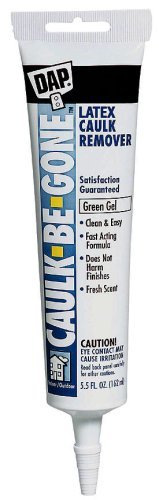 DAP Caulk-Be-Gone Odorless Gel Caulk Remover, 5.5 ozAn odorless gel for the perished caulk bead you have to get out before a new one will seal. | Old caulk around window frames | Not applicable — surface preparation | $13.92 · CHECK ON AMAZON |
| 3 |  DAP PRO Caulk Professional Plastic Caulk Remover ToolThe plastic tool that decides whether your new caulk bead looks like a repair or like a mistake — priced well above the hardware-aisle scraper it resembles. | Getting a clean bead | Not applicable — tool | $17.95 · CHECK ON AMAZON |
| 4 |  fowong Open Cell Foam Weather Stripping, 1 in x 1/2 in x 13 ftHalf-inch-thick open-cell foam for the gap nothing else reaches — an AC surround, a loose sash, a warped frame. | Large, irregular gaps | Published 1/2 in thick; fills gaps of roughly 1/8 in to 3/8 in | $16.99 · CHECK ON AMAZON |
#ad · how we are funded · price as of October 17, 2026
Deep gaps before caulking
Frost King C21CP-C Caulk Saver Backer Rod, 3/8 in x 350 ft
Published gap range
Published 3/8 in diameter; backs gaps of roughly 1/4 in to 1/2 in
#ad · how we are funded · price as of October 17, 2026
Backer rod: the foam you push into a deep gap so the caulk over it is a seal rather than a bottomless hole.
Where the number comes fromFrost King publishes the diameter (3/8") and length (350 ft). Backer rod is sized about 25% larger than the gap so it compresses in and stays put — a 3/8" rod suits a gap around 1/4" to 5/16".
- Published diameter
- 3/8 in
- Published length
- 350 ft
- Use
- Backing deep gaps before caulk
- Sizing rule
- Rod should be larger than the gap so it compresses in
- Color
- Gray
- Mounting
- Pressed into the gap ahead of the caulk
What it does well
- Stops you burning three tubes of caulk into one deep crack
- Gives the caulk the right two-sided bond instead of a three-sided one
- 350 ft is effectively a lifetime supply
Where it fails
- One diameter only — a wider gap needs a bigger rod
- Bulky roll to store
- Pointless on a gap shallow enough to caulk directly
Who this is forA gap deeper than about a quarter inch that you are about to caulk.
Old caulk around window frames
DAP Caulk-Be-Gone Odorless Gel Caulk Remover, 5.5 oz
Published gap range
Not applicable — surface preparation
#ad · how we are funded · price as of October 17, 2026
An odorless gel for the perished caulk bead you have to get out before a new one will seal.
Where the number comes fromDAP publishes this as an odorless gel caulk remover in a 5.5 oz size.
- Published form
- Odorless gel
- Size
- 5.5 oz
- Use
- Softening old caulk for removal
- Step
- Before re-caulking a frame
- Tool
- Use with a caulk removal tool
- Mounting
- Apply, wait, scrape
What it does well
- Odorless matters when you are working over a kitchen sink or in a bathroom
- Gel stays where you put it on a vertical bead
- Removes the bead without gouging the frame
Where it fails
- Slow — it is a wait, not a wipe
- Still needs mechanical scraping afterwards
- Not needed if the existing caulk is sound
Who this is forA window frame whose caulk has cracked away from the wood.
Getting a clean bead
DAP PRO Caulk Professional Plastic Caulk Remover Tool
Published gap range
Not applicable — tool
#ad · how we are funded · price as of October 17, 2026
The plastic tool that decides whether your new caulk bead looks like a repair or like a mistake — priced well above the hardware-aisle scraper it resembles.
Where the number comes fromDAP publishes this as a plastic caulk removal and finishing tool.
- Published use
- Caulk removal and finishing
- Material
- Plastic
- Damage risk
- Lower than a metal scraper on painted wood
- Profiles
- Multiple bead sizes
- Step
- During removal and after application
- Mounting
- Hand tool
What it does well
- Plastic will not gouge a painted frame the way a screwdriver does
- Shapes the new bead as well as removing the old one
- One tool covers both halves of the job, removal and finishing
Where it fails
- Priced like a professional tool, not like the plastic it is made of — check the figure before you add it
- Wears down on hard, fully cured silicone
- One tool does not fit every bead profile perfectly
- You still need the gel remover for a stubborn bead
Who this is forAnyone re-caulking a window frame who wants it to look deliberate.
Large, irregular gaps
fowong Open Cell Foam Weather Stripping, 1 in x 1/2 in x 13 ft
Published gap range
Published 1/2 in thick; fills gaps of roughly 1/8 in to 3/8 in
#ad · how we are funded · price as of October 17, 2026
Half-inch-thick open-cell foam for the gap nothing else reaches — an AC surround, a loose sash, a warped frame.
Where the number comes fromfowong publishes 1" wide x 1/2" thick x 13 ft. Open-cell foam compresses much further than rubber, which is why it covers a wider range — and also why it is not a long-life exterior seal.
- Material
- PU foam, PE cover
- Published width
- 1 in
- Published thickness
- 1/2 in
- Published length
- 13 ft
- Mounting
- Strong adhesive
- Mounting
- Self-adhesive
What it does well
- Half an inch of squash covers gaps rubber sections cannot
- The PE facing sheds water better than bare foam
- Cheap enough to over-buy and cut down
Where it fails
- Open-cell foam holds water if the facing is cut or torn
- Shortest life of any seal here in direct weather
- Too thick for a door that latches tightly
Who this is forA portable-AC surround, a basement sash, or any gap you can push a finger into.
How we picked
- Sort by gap width and joint movement, which are the two variables that decide the material.
- Publish the backer-rod sizing rule explicitly, since it is the step most often skipped.
We have not tested these products and we do not claim to have. The full method, including what we refuse to claim, is on how we pick.
The place these products earn their keep fastest is around window and door frames — the joint behind the trim, which is often open into the wall cavity. How to find drafts in your house shows how to locate it.
Questions people actually ask
- What is backer rod and do I need it?
- It is closed-cell foam rod pushed into a gap before caulking. You need it whenever the gap is deeper than about a quarter inch: it stops the caulk disappearing into the void and lets the bead bond to two sides rather than three, which is what stops it tearing.
- Can I use spray foam around a window?
- Only minimal-expanding window-and-door foam, and only in the gap between the frame and the rough opening. Standard expanding foam can bow the jamb hard enough to stop the window closing.
- What size backer rod do I need?
- About 25 percent larger than the gap so it compresses in. A 3/8 inch rod suits a gap of roughly a quarter to five sixteenths of an inch. If it drops in loose, go up a size.
- Do I have to remove old caulk first?
- Yes. Fresh caulk over old, failed caulk lifts as a sheet within a season. A softening gel and a plastic removal tool make it a five-minute job and avoid gouging the frame.
- Silicone or acrylic latex caulk?
- Acrylic latex for almost every interior air-sealing job: it paints and it is forgiving. Silicone where water is present, accepting that nothing will stick to it afterwards, paint included.
Sources
- Frost King — published caulk saver backer rod dimensions and use
- DAP — published odorless gel caulk remover, 5.5 oz
Every specification on this page traces to a published manufacturer or retailer listing. Where a maker publishes no working gap range, we say so rather than estimating one.
Read next
How to find drafts in your house
Five tests, no equipment, an hour — ordered so you find the big leaks before the small ones.
Outlet gaskets or caulk around the box?
The gasket seals the plate joint, the caulk seals the box gap. With the plate off, both is the only sensible answer.
How to seal windows for winter from the inside
The order of work that stops you filming over a leak you could have closed for free.
The best rim joist air sealing products, and how much foam the job actually takes
The longest continuous air leak in most houses. Which can of foam, and how much the job really takes.