04 / HIDDEN LEAKS
The best foundation vent covers for a cold floor
Closing the vents is the standard advice for cold floors over a crawl space. It is also the advice that causes moisture problems in the wrong crawl space, so this page starts with which one you have.
We earn a commission on some links here, at no extra cost to you. It does not change what we recommend or the order they appear in. How we are funded

Look in the crawl space first. If the soil is covered by a sound vapor barrier and the space is dry, covering the vents for winter will warm the floor above. If the ground is bare earth or has ever been wet, closing the vents can trap moisture — fix that before you close anything.
Why the floor over a crawl space is cold
A vented crawl space is, deliberately, outdoor air under your house. The vents are there so that moisture rising from the soil and leaking from plumbing can be carried away rather than sitting against timber. It is a design that has kept floors from rotting for a century.
It also means that in January the air directly beneath your floorboards is roughly the temperature of the air outside, and on a windy day it is moving. Wind hitting the windward wall pushes air in through those vents, across the void, and out the other side. Your floor is the lid of a wind tunnel.
That is why the floor above a crawl space is the one that is cold underfoot even when the room is warm, and why carpet helps so much less than people expect. You are feeling conduction into moving cold air, not a draft coming up through the boards.
The question to settle before you buy
Closing foundation vents in winter is common advice and it is often right. It is not universally right, and the cases where it goes wrong go wrong slowly and expensively, so it is worth five minutes with a torch.
- Sound vapor barrier over the soil, dry timber, no smell. Closing the vents for the heating season is reasonable. The moisture source is already controlled and you are removing a wind path.
- Bare soil, no barrier. Ground moisture is evaporating into the void continuously. The vents are the only thing removing it. Close them and that moisture condenses on the coldest surface available, which is your subfloor. Lay a barrier first.
- Standing water, damp joists, a musty smell, or any visible mold. Do not close anything. You have a moisture problem that ventilation is currently managing badly and sealing will manage worse.
Match the part to your gap
Measure at the widest point. Then read across. If your measurement sits on a boundary, take the larger band — a seal that is slightly too big compresses, and one that is too small does nothing at all.
| Your gap | Part type | Our pick | Price |
|---|---|---|---|
| Standard 8 x 16 in block vent | Rigid ABS recessed cover | 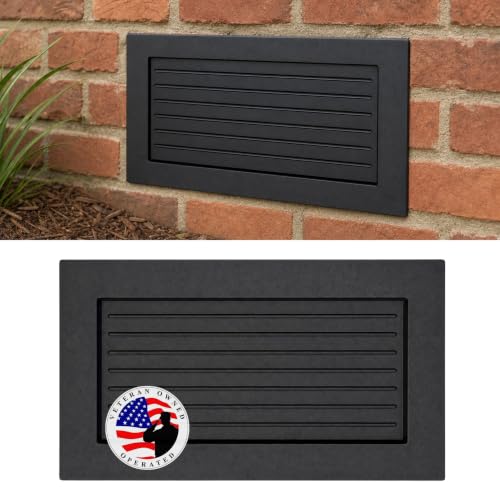 Kensal Home Recessed Foundation Vent Cover, fits 8 x 16 in, 0.25 in depthPublished to the size most block foundations actually are, in a UV-stabilized plastic that will not chalk on a sunny wall. | $29.99 · CHECK ON AMAZON |
| Whole house, 6.5 x 8.75 in vents | Cover set, 10 pack |  SwiftSeal Foundation Vent Covers, fits 6.5 x 8.75 in, 10 PackTen covers matches how the job is done. Leaving one vent open undoes most of the benefit of closing the rest. | $44.95 · CHECK ON AMAZON |
| Vents you will reopen each spring | Removable cover |  Vanity Vents Removable Crawl Space Vent CoverPublished as removable, which the moisture guidance actually requires you to do. | $21.97 · CHECK ON AMAZON |
| Odd-sized or damaged openings | Foam plug, 2 in thick |  Vanity Vents Crawl Space Vent Foam Inserts, 2 in ThickFills the cavity and trims to fit where no molded cover matches. Not for a damp crawl space. | $19.97 · CHECK ON AMAZON |
Measuring a foundation vent
Most foundation vents in block-built houses occupy the space of a single concrete block, which gives a nominal opening close to 8 in high by 16 in wide. That is the size to check first because it is the one most rigid covers are published for.
Measure the opening itself, not the metal louver insert sitting in it, and measure both directions at the widest point. Older houses and brick foundations vary considerably, and if yours is not close to a standard size the honest answer is a trimmable foam plug rather than a rigid cover that nearly fits.
One more thing to check while you are down there: the wall thickness. One of our picks publishes a shallow quarter-inch depth for thin foundation walls and a deeper version for thicker ones, and that is a real fitting constraint rather than a marketing distinction.
The picks
Quick picks
Ranked for fit, not for hype. Tap a row to jump to the full write-up, or go straight to the listing.
| # | Product | Best for | Gap range | Price |
|---|---|---|---|---|
| 1 | Kensal Home Recessed Foundation Vent Cover, fits 8 x 16 in, 0.25 in depthThe one here published against the 8 by 16 inch opening that a standard concrete block foundation vent actually is, in a UV-stabilized plastic that will not chalk on a south wall. | The standard 8 x 16 in block vent | Not a gap product — published fit for an 8 x 16 in opening | $29.99 · CHECK ON AMAZON |
| 2 | SwiftSeal Foundation Vent Covers, fits 6.5 x 8.75 in, 10 PackTen covers at a published fitted size, which is the right shape of purchase for a job where every vent has to be closed or none of them matter. | Doing every vent on the house | Not a gap product — sized to the vent opening | $44.95 · CHECK ON AMAZON |
| 3 | Vanity Vents Removable Crawl Space Vent CoverPublished as removable, which is the feature that decides whether you will actually reopen the vents when the weather turns. | Opening the vents again in spring | Not a gap product — a cover sized to the vent | $21.97 · CHECK ON AMAZON |
| 4 | Vanity Vents Crawl Space Vent Foam Inserts, 2 in ThickA plug rather than a cover — it fills the vent cavity, which stops the wind funnelling through in a way a flat panel over the face does not always manage. | Filling the opening rather than covering it | Not a gap product — a foam plug sized to the vent cavity | $19.97 · CHECK ON AMAZON |
| 5 |  Frost King C21CP-C Caulk Saver Backer Rod, 3/8 in x 350 ftBacker rod: the foam you push into a deep gap so the caulk over it is a seal rather than a bottomless hole. | Deep gaps before caulking | Published 3/8 in diameter; backs gaps of roughly 1/4 in to 1/2 in | $34.98 · CHECK ON AMAZON |
#ad · how we are funded · price as of October 16, 2026
The standard 8 x 16 in block vent
Kensal Home Recessed Foundation Vent Cover, fits 8 x 16 in, 0.25 in depth
Published gap range
Not a gap product — published fit for an 8 x 16 in opening
#ad · how we are funded · price as of October 16, 2026
The one here published against the 8 by 16 inch opening that a standard concrete block foundation vent actually is, in a UV-stabilized plastic that will not chalk on a south wall.
Where the number comes fromPublished to fit 8 in high by 16 in wide openings, in a shallow 0.25 in depth for thin foundation walls, in UV-stabilized ABS, fitted from outside. That is the most completely specified cover in this group, and 8 x 16 is the size most block foundations use.
- Published fit
- 8 in H x 16 in W
- Published depth
- 0.25 in — for thin foundation walls
- Material
- UV-stabilized ABS
- Fitted from
- Outside
- Finish
- Black
- Mounting
- Installed from outside, into the vent opening
What it does well
- Published to the 8 x 16 in size most block foundations actually have
- UV-stabilized, which matters on a wall that gets direct sun
- A deeper 1.25 in version is listed for thicker walls
Where it fails
- Rigid ABS has no tolerance — an opening that is not 8 x 16 will not take it
- Sold singly, so a house with ten vents is an expensive order
- Same crawl space moisture caution applies
Who this is forA standard block foundation with vents that measure 8 by 16 inches.
Doing every vent on the house
SwiftSeal Foundation Vent Covers, fits 6.5 x 8.75 in, 10 Pack
Published gap range
Not a gap product — sized to the vent opening
#ad · how we are funded · price as of October 16, 2026
Ten covers at a published fitted size, which is the right shape of purchase for a job where every vent has to be closed or none of them matter.
Where the number comes fromFoundation vents are closed as a set. Leaving one open leaves a path for the same cold air the other nine were bought to stop, which is why these sell in tens. Published fit here is 6.5 x 8.75 in; a small version at 5.5 x 7.5 in is listed separately. Measure the vent frame, not the brick opening.
- Published fit
- 6.5 x 8.75 in
- Pack
- 10 covers
- Fitted from
- Outside
- Smaller size listed
- 5.5 x 7.5 in
- Seasonal
- Winter; see the moisture caution
- Mounting
- Fitted over the vent from outside
What it does well
- Ten covers matches how the job is actually done — all vents or none
- Two published sizes rather than one universal claim
- Fitted from outside, so no crawling under the house
Where it fails
- **Closing crawl space vents is not automatically correct.** In a vented crawl space with a damp floor, blocking airflow can raise moisture — read the caution on the page before buying
- Only two published sizes, and foundation vents vary more than that
- Unbranded reseller listing
Who this is forA crawl space with a sound vapor barrier and a floor that goes cold every winter.
Opening the vents again in spring
Vanity Vents Removable Crawl Space Vent Cover
Published gap range
Not a gap product — a cover sized to the vent
#ad · how we are funded · price as of October 16, 2026
Published as removable, which is the feature that decides whether you will actually reopen the vents when the weather turns.
Where the number comes fromRemovability is a genuine specification in this category, not a marketing word. Vented crawl spaces are designed to breathe in summer; a cover that is awkward to take off tends to stay on all year, which is how a draft fix turns into a moisture problem.
- Published feature
- Removable
- Fitted from
- Outside
- Type
- DIY foundation vent cover
- Seasonal
- Designed to come off in spring
- Published dimensions
- None stated on the listing
- Mounting
- Fitted over the vent, designed for removal
What it does well
- Designed to be taken off again, which the moisture guidance actually requires
- No adhesive or fasteners into the masonry
- Same maker as the foam plugs, so a mixed approach is possible
Where it fails
- The listing publishes no fitted dimensions — measure and expect to check on arrival
- A removable cover is by definition less wind-tight than a plug
- Sold singly, so a whole house is several orders
Who this is forSomeone who intends to reopen the vents every spring and wants that to be easy.
Filling the opening rather than covering it
Vanity Vents Crawl Space Vent Foam Inserts, 2 in Thick
Published gap range
Not a gap product — a foam plug sized to the vent cavity
#ad · how we are funded · price as of October 16, 2026
A plug rather than a cover — it fills the vent cavity, which stops the wind funnelling through in a way a flat panel over the face does not always manage.
Where the number comes fromThe published spec that matters here is the 2 in thickness: that is how deep into the vent the foam sits. A plug that fills the cavity resists wind better than a panel taped over the outside, which can drum and lift. Cut to fit is expected with foam inserts.
- Published thickness
- 2 in
- Type
- Insert / plug
- Fitting
- Pushed into the opening
- Trimmable
- Yes
- Published R-value
- None claimed
- Mounting
- Pushed into the vent opening
What it does well
- Fills the cavity instead of bridging it, so wind cannot get behind the seal
- Trims to fit vents that no molded cover matches
- No fixings, no adhesive, no tools
Where it fails
- Foam in a damp crawl space vent will absorb water and hold it against the masonry
- Same crawl space moisture caution as every vent closure
- Removing a compressed foam plug each spring is a dirtier job than lifting a cover
Who this is forOdd-sized vents in a dry crawl space, where a molded cover will not fit.
Deep gaps before caulking
Frost King C21CP-C Caulk Saver Backer Rod, 3/8 in x 350 ft
Published gap range
Published 3/8 in diameter; backs gaps of roughly 1/4 in to 1/2 in
#ad · how we are funded · price as of October 16, 2026
Backer rod: the foam you push into a deep gap so the caulk over it is a seal rather than a bottomless hole.
Where the number comes fromFrost King publishes the diameter (3/8") and length (350 ft). Backer rod is sized about 25% larger than the gap so it compresses in and stays put — a 3/8" rod suits a gap around 1/4" to 5/16".
- Published diameter
- 3/8 in
- Published length
- 350 ft
- Use
- Backing deep gaps before caulk
- Sizing rule
- Rod should be larger than the gap so it compresses in
- Color
- Gray
- Mounting
- Pressed into the gap ahead of the caulk
What it does well
- Stops you burning three tubes of caulk into one deep crack
- Gives the caulk the right two-sided bond instead of a three-sided one
- 350 ft is effectively a lifetime supply
Where it fails
- One diameter only — a wider gap needs a bigger rod
- Bulky roll to store
- Pointless on a gap shallow enough to caulk directly
Who this is forA gap deeper than about a quarter inch that you are about to caulk.
What we would skip, and why
Nobody in this category ever declines to recommend something. That is what makes universal praise worth ignoring. Here is what we would not buy.
Closing the vents before you have looked at the crawl space
Settle this first. Foundation vents exist to let a crawl space dry out. In a crawl space with a sound vapor barrier over the soil and no standing water, closing them for winter is reasonable and it will make the floor above noticeably warmer. In a crawl space with bare earth, a damp floor or any history of standing water, blocking the airflow can trap moisture against joists and subfloor. Go and look with a torch before you order anything. If the ground is bare soil, the first purchase is a vapor barrier, not a vent cover.
Sealing the vents and calling the floor done
Vent covers reduce the wind blowing through the crawl space. They do nothing about the fact that the floor above is a thin layer of timber over an unheated void. If the floor is genuinely cold to walk on, the bigger lever is insulation between the joists, and the honest answer is that covers alone rarely transform it. The full picture is in cold air from under the house.
Leaving one vent open because it is awkward to reach
A crawl space with nine vents closed and one open does not have 90% of the benefit. Air needs an inlet and an outlet to move; close all but one and you have cut the through-draft substantially, but wind hitting that one opening still pressurizes the void. The awkward vent behind the shrub is the one that matters. This is why these products sell in tens.
Foam plugs in a crawl space that has ever been wet
Foam inserts seal well because they fill the cavity, and that is exactly the problem in a damp vent: the foam absorbs water and holds it against the masonry through the whole winter. In a dry crawl space they are an excellent, cheap, trimmable answer for odd-sized openings. In a damp one, use a rigid cover that can be lifted off, or do not close the vent at all.
How we picked
- We rank on published fit first, because foundation vents come in a small number of standard sizes and a rigid cover that is a half-inch out is useless. The 8 by 16 in opening of a standard concrete block is the size to check yours against.
- Removability second, and we treat it as a genuine specification rather than a convenience. The moisture guidance requires these to come off in spring, so a cover that is awkward to remove is a cover that will not be removed.
- Pack size third. This is an all-or-nothing job, so a ten-pack at a sane price beats a single cover at a cheap one.
- We have not tested these, we have not been under your house, and nothing here replaces looking at your own crawl space. How we pick sets out the method and its limits.
We have not tested these products and we do not claim to have. The full method, including what we refuse to claim, is on how we pick.
Complete the kit
The parts that decide whether the seal you just bought actually holds. Skip these and you will be doing the job again in March.
Deep gaps before caulking
Frost King C21CP-C Caulk Saver Backer Rod, 3/8 in x 350 ft
Backer rod: the foam you push into a deep gap so the caulk over it is a seal rather than a bottomless hole.

Large, irregular gaps
fowong Open Cell Foam Weather Stripping, 1 in x 1/2 in x 13 ft
Half-inch-thick open-cell foam for the gap nothing else reaches — an AC surround, a loose sash, a warped frame.

Removing old weatherstrip adhesive
Goo Gone Pro-Power Adhesive Remover Spray, 16 fl oz, with Scraper
The step everybody skips: the new tape will not stick to the residue the old tape left behind.
#ad · how we are funded · price as of October 16, 2026
What actually fixes a cold floor
We will be straight about the ceiling on this: vent covers reduce air movement under the floor and they are cheap, quick and reversible. They do not insulate the floor, and on a genuinely cold floor they are an improvement rather than a solution. The bigger opening in the same wall is usually the access hatch, and unlike the vents it carries no moisture trade-off at all — that one is covered in best crawl space access doors.
The lever that actually moves that problem is insulation in the floor structure, plus sealing the penetrations through the floor — pipes, cables, the gap around a soil stack — which are separate air paths straight into the room. Those are usually easier to reach than people assume and are covered in cold air from under the house.
If you are chasing a cold floor and are not sure the crawl space is the source at all, start with how to find drafts in your house — the pressure test in that guide will tell you in an afternoon and costs nothing.
Questions people actually ask
- Should I cover my crawl space vents in winter?
- If the crawl space is dry and the soil is covered by a sound vapor barrier, yes — it reduces wind moving under the floor and the floor above gets warmer. If the ground is bare earth, or the space has ever had standing water or a musty smell, closing the vents can trap moisture against the timber. Look before you buy.
- What size are foundation vents?
- Most vents in a block foundation occupy one block, giving an opening close to 8 in high by 16 in wide, and that is what most rigid covers are published to fit. Measure the opening rather than the louver insert, in both directions, and check the wall thickness too — some covers are published in shallow and deep versions.
- Do I need to cover every vent?
- Effectively yes. Air needs an inlet and an outlet, so leaving one vent open lets wind keep pressurising the void. That is why these covers are commonly sold in packs of ten — the awkward one behind the shrubbery is the one that undoes the rest.
- Will covering the vents make my floor warm?
- Warmer, not warm. Covers remove the wind moving through the crawl space, which is a real improvement you can feel. They do not insulate the floor above, so on a thin uninsulated floor they are a partial fix. Insulating between the joists is the change that transforms it.
Read next
Cold air coming up from under the house
Cold floors are usually the rim joist. The biggest accessible leak in a house, and rarely sealed.
How to find drafts in your house
Five tests, no equipment, an hour — ordered so you find the big leaks before the small ones.
Why is my house so drafty?
One mechanism, a handful of holes, and why the fix for a downstairs draft is often in the ceiling.
Spray foam, caulk or backer rod?
Three fillers, sorted by gap width and whether the joint moves. Including the backer-rod sizing rule.
The best crawl space access doors, matched to your opening
The hatch is not a vent, so there is no moisture trade-off — it should simply shut. Doors matched to published opening sizes, and how to measure yours.