04 / HIDDEN LEAKS
Cold air coming up from under the house
Cold floors, a draft at the baseboard, and a room that never warms up. The leak is usually below you rather than around you.
We earn a commission on some links here, at no extra cost to you. It does not change what we recommend or the order they appear in. How we are funded
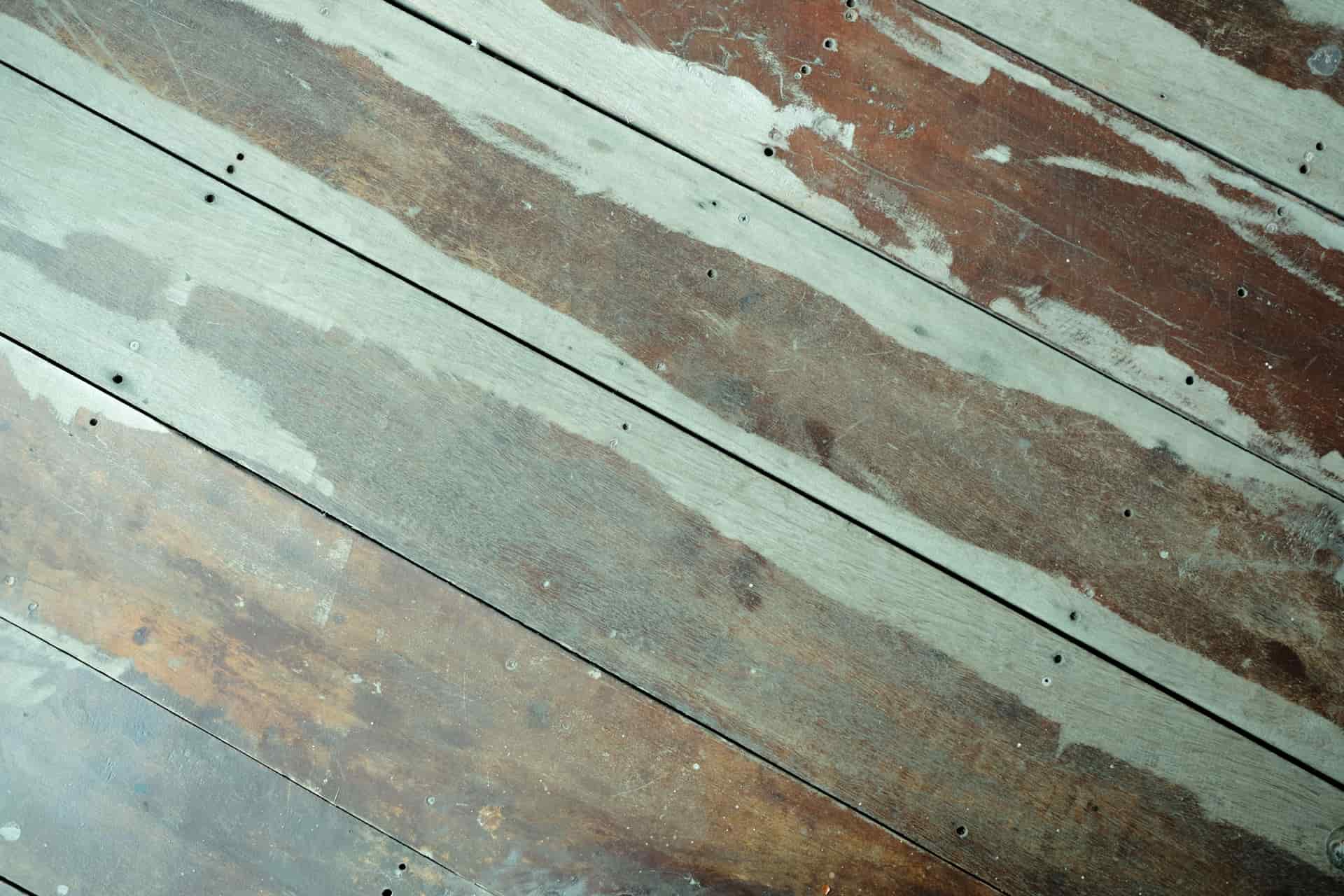
Cold floors over a crawlspace or unheated basement are usually the rim joist — the band of framing around the perimeter where the floor meets the foundation. Seal that first, then the penetrations through the floor for pipes and wires, then the baseboard gaps. Do not block required crawlspace ventilation without knowing your local rules.
The stack effect makes this worse than it looks. Warm air leaving at the top of the house has to be replaced, and the replacement is drawn in at the bottom — through whatever the lowest opening happens to be. If that is a vented crawlspace, cold outdoor air is being pulled up into your floor continuously, all winter.
The rim joist is usually the whole story
Around the perimeter of the floor, the joists sit on a sill plate on top of the foundation wall, and the band closing off their ends is the rim joist. It is a long, thin, continuous run of framing with joints at the top, the bottom and every joist end — and in a lot of houses it is bare wood against concrete with nothing sealing it.
It is also, unusually for this site, quite easy to reach: in a basement or a crawlspace with headroom you can see the whole thing — assuming the access hatch still opens and shuts. That combination — big leak, fully accessible, rarely sealed — makes it one of the highest-value afternoons available in a house.
- 1Work along the rim joist with a light and a lit incense stick on a windy day.
- 2Seal the joint where the sill plate meets the foundation, and where the rim joist meets the sill plate. Caulk for tight joints, minimal-expanding foam for wider ones.
- 3Seal around every penetration you find — pipes, wires, dryer ducts, hose bibs.
- 4Work in sections. It is repetitive and it is the part that actually moves the needle.
Then the holes through the floor
- Under sinks, where supply and waste pipes come up through the floor. Usually an oversized hole with a pipe in the middle of it.
- Behind the toilet and at any bath or shower penetration.
- At radiator or baseboard-heater pipes, which often pass through generous holes.
- Where wiring comes up into base cabinets and at exterior-wall outlets — foam gaskets there, per best outlet gaskets.
- Baseboard-to-floor gaps on exterior walls, which are the last and smallest of these.
Two constraints that are not optional
- Combustion air. If a furnace, boiler or water heater lives down there and draws its air from that space, do not tighten it up without understanding where its air comes from. A carbon monoxide alarm is not optional in any house with a fuel-burning appliance.
- Moisture. A crawlspace with standing water, damp soil or visible mold needs that dealt with before you seal anything. Sealing a wet space traps the moisture against your floor structure.
Quick picks
Ranked for fit, not for hype. Tap a row to jump to the full write-up, or go straight to the listing.
| # | Product | Best for | Gap range | Price |
|---|---|---|---|---|
| 1 |  Frost King C21CP-C Caulk Saver Backer Rod, 3/8 in x 350 ftBacker rod: the foam you push into a deep gap so the caulk over it is a seal rather than a bottomless hole. | Deep gaps before caulking | Published 3/8 in diameter; backs gaps of roughly 1/4 in to 1/2 in | $34.98 · CHECK ON AMAZON |
| 2 |  fowong Open Cell Foam Weather Stripping, 1 in x 1/2 in x 13 ftHalf-inch-thick open-cell foam for the gap nothing else reaches — an AC surround, a loose sash, a warped frame. | Large, irregular gaps | Published 1/2 in thick; fills gaps of roughly 1/8 in to 3/8 in | $16.99 · CHECK ON AMAZON |
| 3 |  Frost King OS6H Foam Outlet and Switch Sealers, 2-1/2 in x 4 inFire-retardant foam gaskets cut to the standard 2-1/2 by 4 inch plate — the part, not a novelty. | The standard outlet gasket | Fits standard US outlet and switch plate openings | $4.99 · CHECK ON AMAZON |
#ad · how we are funded · price as of October 17, 2026
Deep gaps before caulking
Frost King C21CP-C Caulk Saver Backer Rod, 3/8 in x 350 ft
Published gap range
Published 3/8 in diameter; backs gaps of roughly 1/4 in to 1/2 in
#ad · how we are funded · price as of October 17, 2026
Backer rod: the foam you push into a deep gap so the caulk over it is a seal rather than a bottomless hole.
Where the number comes fromFrost King publishes the diameter (3/8") and length (350 ft). Backer rod is sized about 25% larger than the gap so it compresses in and stays put — a 3/8" rod suits a gap around 1/4" to 5/16".
- Published diameter
- 3/8 in
- Published length
- 350 ft
- Use
- Backing deep gaps before caulk
- Sizing rule
- Rod should be larger than the gap so it compresses in
- Color
- Gray
- Mounting
- Pressed into the gap ahead of the caulk
What it does well
- Stops you burning three tubes of caulk into one deep crack
- Gives the caulk the right two-sided bond instead of a three-sided one
- 350 ft is effectively a lifetime supply
Where it fails
- One diameter only — a wider gap needs a bigger rod
- Bulky roll to store
- Pointless on a gap shallow enough to caulk directly
Who this is forA gap deeper than about a quarter inch that you are about to caulk.
Large, irregular gaps
fowong Open Cell Foam Weather Stripping, 1 in x 1/2 in x 13 ft
Published gap range
Published 1/2 in thick; fills gaps of roughly 1/8 in to 3/8 in
#ad · how we are funded · price as of October 17, 2026
Half-inch-thick open-cell foam for the gap nothing else reaches — an AC surround, a loose sash, a warped frame.
Where the number comes fromfowong publishes 1" wide x 1/2" thick x 13 ft. Open-cell foam compresses much further than rubber, which is why it covers a wider range — and also why it is not a long-life exterior seal.
- Material
- PU foam, PE cover
- Published width
- 1 in
- Published thickness
- 1/2 in
- Published length
- 13 ft
- Mounting
- Strong adhesive
- Mounting
- Self-adhesive
What it does well
- Half an inch of squash covers gaps rubber sections cannot
- The PE facing sheds water better than bare foam
- Cheap enough to over-buy and cut down
Where it fails
- Open-cell foam holds water if the facing is cut or torn
- Shortest life of any seal here in direct weather
- Too thick for a door that latches tightly
Who this is forA portable-AC surround, a basement sash, or any gap you can push a finger into.
The standard outlet gasket
Frost King OS6H Foam Outlet and Switch Sealers, 2-1/2 in x 4 in
Published gap range
Fits standard US outlet and switch plate openings
#ad · how we are funded · price as of October 17, 2026
Fire-retardant foam gaskets cut to the standard 2-1/2 by 4 inch plate — the part, not a novelty.
Where the number comes fromFrost King publishes the gasket size (2-1/2 in x 4 in) and that the foam is UL-listed fire retardant plastic. There is no gap range: the gasket seals the plate to the wall, and the leak it stops is the one around the box.
- Published size
- 2-1/2" x 4"
- Material
- U.L. listed fire retardant plastic foam
- Quantity
- 6
- Install
- Behind the faceplate
- Visible after install
- No
- Mounting
- Behind the faceplate, no tools beyond a screwdriver
What it does well
- The fire-retardant rating is the spec that matters on anything going behind a faceplate
- Completely invisible once the plate is back on
- Two minutes per outlet with one screwdriver
Where it fails
- Only helps where the box is genuinely leaking — many are not
- Six per pack does one wall, not a house
- Does nothing about the much larger leaks around windows and doors
Who this is forExterior-wall outlets on the windward side, where you can feel air at the plate.
How we picked
- Work from the biggest opening downward, because the rim joist usually dwarfs everything else.
- State the moisture and combustion constraints before recommending any sealing in a crawlspace.
We have not tested these products and we do not claim to have. The full method, including what we refuse to claim, is on how we pick.
What this will and will not fix
Sealing the rim joist and the floor penetrations addresses air leakage, and on a drafty floor that is usually the bigger half. What it does not do is add insulation — a sealed but uninsulated floor over an unheated crawlspace will still feel cold underfoot, because the floor surface is still near crawlspace temperature.
So expect the draft to stop and the floor to stay cool. If cold floors rather than moving air are the actual complaint, insulation between the joists is the next step, and that is a bigger project than this site covers. Being clear about which of the two you have is worth doing before you spend a weekend down there.
Questions people actually ask
- Why do I feel cold air at the bottom of my walls?
- Usually the rim joist — the band of framing where the floor meets the foundation. The stack effect pulls replacement air in at the lowest openings, and on a house over a vented crawlspace that means outdoor air being drawn up into the floor.
- Should I seal my crawlspace vents?
- Not on a hunch. Whether a crawlspace should be vented or sealed depends on climate and local code, and getting it wrong causes moisture problems worse than the draft. Sealing the floor above the crawlspace is the safe version of this job.
- Will sealing the rim joist make my floors warmer?
- It will stop the draft, which is usually the bigger complaint. It will not make the floor surface warm — that needs insulation between the joists, which is a larger project.
- What do I seal the rim joist with?
- Caulk for tight joints and minimal-expanding foam for wider ones, plus foam or caulk around every pipe and wire penetration. Check combustion air and moisture conditions before tightening the space up.
Sources
Every specification on this page traces to a published manufacturer or retailer listing. Where a maker publishes no working gap range, we say so rather than estimating one.
Read next
Why is my house so drafty?
One mechanism, a handful of holes, and why the fix for a downstairs draft is often in the ceiling.
Spray foam, caulk or backer rod?
Three fillers, sorted by gap width and whether the joint moves. Including the backer-rod sizing rule.
How to find drafts in your house
Five tests, no equipment, an hour — ordered so you find the big leaks before the small ones.
The best foundation vent covers for a cold floor
Cold floor over a crawl space? Covers help — but only after you have checked which kind of crawl space you have.
The best crawl space access doors, matched to your opening
The hatch is not a vent, so there is no moisture trade-off — it should simply shut. Doors matched to published opening sizes, and how to measure yours.
The best rim joist air sealing products, and how much foam the job actually takes
The longest continuous air leak in most houses. Which can of foam, and how much the job really takes.