04 / HIDDEN LEAKS
Outlet gaskets or caulk around the box?
They close different parts of the same air path. One takes two minutes, the other takes five, and doing both while the plate is off is obviously the answer.
We earn a commission on some links here, at no extra cost to you. It does not change what we recommend or the order they appear in. How we are funded

A gasket seals the joint between the faceplate and the wall surface. Caulk seals the gap between the electrical box and the drywall behind it, which is usually the bigger opening. The gasket is faster and reversible; the caulk closes more. With the plate already off, do both — the caulk costs you three extra minutes.
| Faceplate gasket | Caulk around the box | |
|---|---|---|
| Seals | Plate-to-wall joint | Box-to-drywall gap |
| Relative size of that gap | Small | Usually larger, sometimes much larger |
| Time per outlet | About 2 minutes | About 5 minutes |
| Reversible | Yes, completely | No, but harmless |
| Visible when done | No | No |
| Cost per outlet | Pennies | Pennies |
| Needs the power off | Yes | Yes |
The path, from attic to faceplate
Air does not appear at your outlet. It enters the wall cavity somewhere — commonly the attic floor above, or the rim joist at the base of the wall — and travels down or up the stud bay. The electrical box is simply the first place it finds an exit into the room.
That exit has three parts: the gap where the box passes through the drywall, the knockouts and wire entries in the box itself, and the joint where the faceplate meets the wall. A gasket closes the third. Caulk closes the first. Nothing safely closes the second from the room side, which is why neither product ever gets you to zero.
Why the honest answer is 'both'
The whole cost of this job is switching off the breaker and taking the plate off. Once you have done that, the gasket is thirty seconds and the caulk bead is three minutes. Choosing between them optimizes the cheap part of the job and ignores the expensive part, which is your time getting there.
Pick this if
- You are renting — gasket only. It is completely reversible and leaves nothing behind.
- You own the house and the plate is already off — both, always.
- The gap around the box is more than about a quarter inch — backer rod first, then caulk. A deep gap swallows caulk without ever bridging.
- The wall is interior, between two heated rooms — neither. There is nothing cold on the other side.
Quick picks
Ranked for fit, not for hype. Tap a row to jump to the full write-up, or go straight to the listing.
| # | Product | Best for | Gap range | Price |
|---|---|---|---|---|
| 1 |  Frost King OS6H Foam Outlet and Switch Sealers, 2-1/2 in x 4 inFire-retardant foam gaskets cut to the standard 2-1/2 by 4 inch plate — the part, not a novelty. | The standard outlet gasket | Fits standard US outlet and switch plate openings | $4.99 · CHECK ON AMAZON |
| 2 |  Frost King C21CP-C Caulk Saver Backer Rod, 3/8 in x 350 ftBacker rod: the foam you push into a deep gap so the caulk over it is a seal rather than a bottomless hole. | Deep gaps before caulking | Published 3/8 in diameter; backs gaps of roughly 1/4 in to 1/2 in | $34.98 · CHECK ON AMAZON |
| 3 | 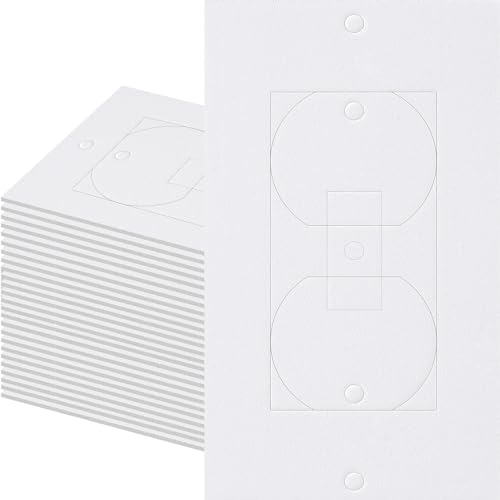 Outlet Insulators Draft Sealers, EVA Foam, 30 PackEVA rather than open-cell foam, cut for duplex, toggle and rocker plates — the pack that fits modern rocker switches. | Rocker switches and mixed plates | Fits duplex, toggle and rocker plate openings | $7.99 · CHECK ON AMAZON |
#ad · how we are funded · price as of October 17, 2026
The standard outlet gasket
Frost King OS6H Foam Outlet and Switch Sealers, 2-1/2 in x 4 in
Published gap range
Fits standard US outlet and switch plate openings
#ad · how we are funded · price as of October 17, 2026
Fire-retardant foam gaskets cut to the standard 2-1/2 by 4 inch plate — the part, not a novelty.
Where the number comes fromFrost King publishes the gasket size (2-1/2 in x 4 in) and that the foam is UL-listed fire retardant plastic. There is no gap range: the gasket seals the plate to the wall, and the leak it stops is the one around the box.
- Published size
- 2-1/2" x 4"
- Material
- U.L. listed fire retardant plastic foam
- Quantity
- 6
- Install
- Behind the faceplate
- Visible after install
- No
- Mounting
- Behind the faceplate, no tools beyond a screwdriver
What it does well
- The fire-retardant rating is the spec that matters on anything going behind a faceplate
- Completely invisible once the plate is back on
- Two minutes per outlet with one screwdriver
Where it fails
- Only helps where the box is genuinely leaking — many are not
- Six per pack does one wall, not a house
- Does nothing about the much larger leaks around windows and doors
Who this is forExterior-wall outlets on the windward side, where you can feel air at the plate.
Deep gaps before caulking
Frost King C21CP-C Caulk Saver Backer Rod, 3/8 in x 350 ft
Published gap range
Published 3/8 in diameter; backs gaps of roughly 1/4 in to 1/2 in
#ad · how we are funded · price as of October 17, 2026
Backer rod: the foam you push into a deep gap so the caulk over it is a seal rather than a bottomless hole.
Where the number comes fromFrost King publishes the diameter (3/8") and length (350 ft). Backer rod is sized about 25% larger than the gap so it compresses in and stays put — a 3/8" rod suits a gap around 1/4" to 5/16".
- Published diameter
- 3/8 in
- Published length
- 350 ft
- Use
- Backing deep gaps before caulk
- Sizing rule
- Rod should be larger than the gap so it compresses in
- Color
- Gray
- Mounting
- Pressed into the gap ahead of the caulk
What it does well
- Stops you burning three tubes of caulk into one deep crack
- Gives the caulk the right two-sided bond instead of a three-sided one
- 350 ft is effectively a lifetime supply
Where it fails
- One diameter only — a wider gap needs a bigger rod
- Bulky roll to store
- Pointless on a gap shallow enough to caulk directly
Who this is forA gap deeper than about a quarter inch that you are about to caulk.
Rocker switches and mixed plates
Outlet Insulators Draft Sealers, EVA Foam, 30 Pack
Published gap range
Fits duplex, toggle and rocker plate openings
#ad · how we are funded · price as of October 17, 2026
EVA rather than open-cell foam, cut for duplex, toggle and rocker plates — the pack that fits modern rocker switches.
Where the number comes fromThe listing publishes the plate types covered (duplex, toggle, rocker) and the EVA foam material. No gap dimension applies.
- Published quantity
- 30
- Material
- EVA foam
- Plate types
- Duplex, toggle, rocker
- Install
- Behind the faceplate
- Color
- White
- Mounting
- Behind the faceplate
What it does well
- Covers rocker plates, which the older foam packs do not
- EVA is denser than open-cell foam and compresses more evenly
- Thirty gaskets covers a house
Where it fails
- No published fire-retardant rating — the Frost King foam publishes UL listing and this does not
- No named manufacturer
- Denser foam needs the plate screw done up a little further
Who this is forA house with modern rocker switches and a lot of plates to do.
How we picked
- Compare by which section of the air path each product actually closes.
- Recommend on effort versus the size of the section closed, given you have the plate off either way.
We have not tested these products and we do not claim to have. The full method, including what we refuse to claim, is on how we pick.
The larger version of this same question — what to use on gaps around pipes, vents and framing — is in spray foam versus caulk versus backer rod.
Questions people actually ask
- Should I caulk around my electrical boxes?
- Around the outside of the box where it passes through the drywall, yes — it closes a bigger gap than a faceplate gasket does. Never caulk or foam inside the box itself.
- Is a gasket or caulk better for a drafty outlet?
- Caulk closes more of the leak; the gasket is faster and reversible. Since the effort is in getting the plate off, do both unless you are renting.
- What caulk should I use around an electrical box?
- An ordinary paintable acrylic latex caulk is fine — the joint does not move and it is not exposed. Push backer rod in first if the gap is deeper than about a quarter inch, or you will empty a tube into one hole.
- Will sealing outlets make a noticeable difference?
- On an exterior wall in a windy house you will feel the difference at the plate itself. Whether you feel it in the room depends on how much of your total leakage is at outlets, which is usually a small share. Do the doors and windows first.
Sources
- Frost King — published outlet sealer material and installation position
- Frost King — published backer rod sizing (3/8 in diameter caulk saver)
Every specification on this page traces to a published manufacturer or retailer listing. Where a maker publishes no working gap range, we say so rather than estimating one.
Read next
The best outlet gaskets, and an honest word on what they fix
Two minutes and a screwdriver per outlet — genuinely worth it on exterior walls, and honestly small.
Spray foam, caulk or backer rod?
Three fillers, sorted by gap width and whether the joint moves. Including the backer-rod sizing rule.
Cold air coming from an outlet or light switch
The outlet is the exit, not the leak. Where the air really comes from, and the twenty-minute fix.