04 / HIDDEN LEAKS
Cold air coming from an outlet or light switch
It surprises people every winter, and the explanation says something useful about the whole wall.
We earn a commission on some links here, at no extra cost to you. It does not change what we recommend or the order they appear in. How we are funded
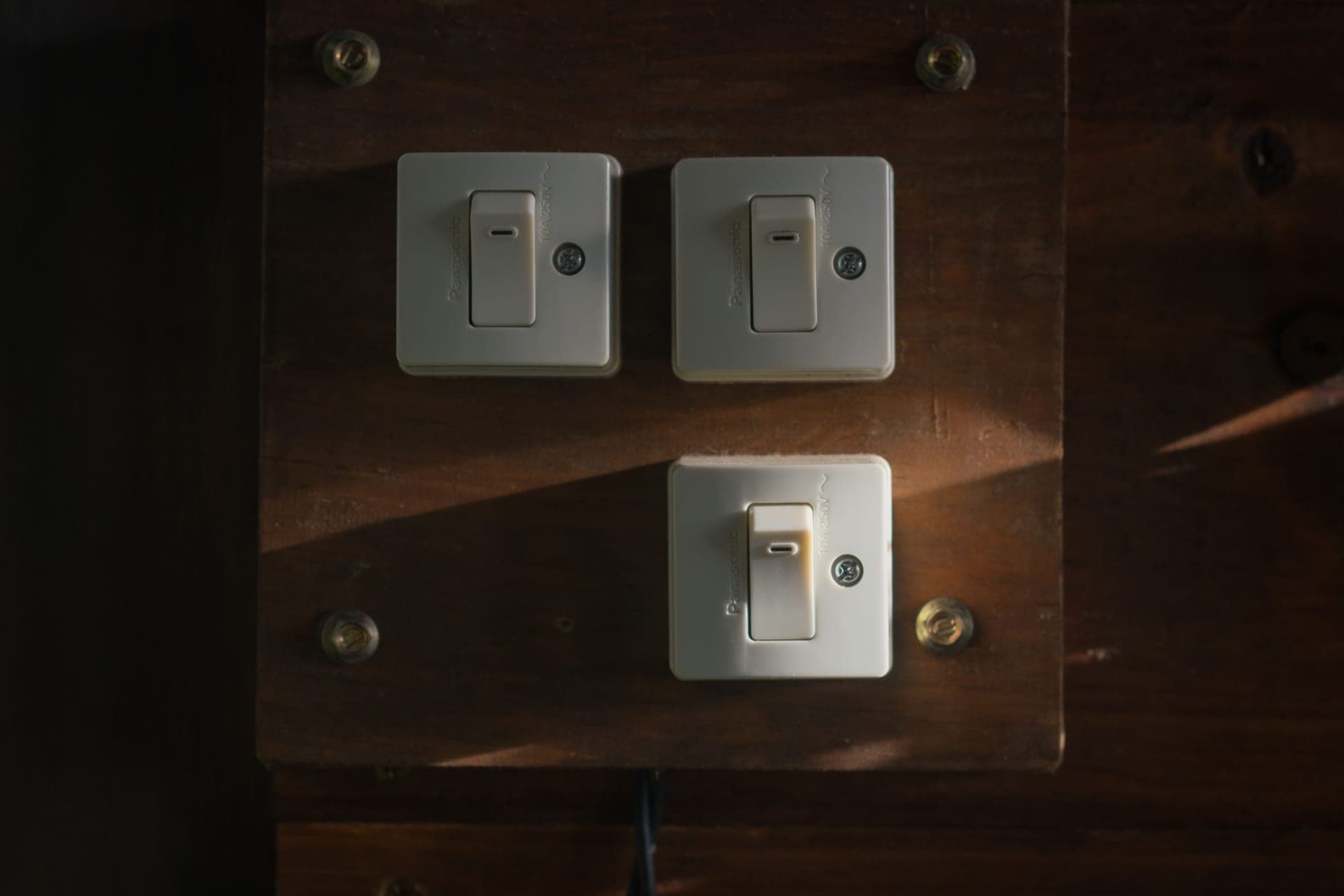
Cold air at an outlet is air that entered the wall cavity somewhere else — usually the attic above or the rim joist below — traveled down the stud bay, and found the electrical box as its exit into the room. The box is the exit, not the leak. Gasket the faceplate, caulk around the box, and seal the cavity's real entry point if you can reach it.
This is one of the most common winter searches in this whole category, and it usually arrives with a note of alarm. It is not dangerous in itself, and it is telling you something genuinely useful: the wall cavity behind that outlet is connected to somewhere cold.
The path, explained
- 1Air enters the stud cavity at a top plate penetration in the attic, or at the rim joist where the floor meets the foundation.
- 2The cavity between two studs is an open vertical shaft, sometimes running a whole floor of the house.
- 3The stack effect drives air along it — down in winter on the cold side of the house, and up on the warm side.
- 4The electrical box is a cup pushed through the drywall, with a gap around its edge and holes where the cables enter.
- 5That gap is the path of least resistance into the room, so the air comes out there.
Check whether it is really leaking
- Run the bathroom extractor fans with all the windows shut to depressurize the house slightly.
- Hold the back of your hand an inch from the faceplate. Moving air is unmistakable.
- Or hold a lit incense stick beside the plate and watch the smoke bend.
- Check several outlets around the house. Exterior walls and walls shared with a garage are the ones that leak; interior partitions usually do not.
The twenty-minute fix
- 1Switch off the circuit at the breaker and confirm it is dead.
- 2Remove the faceplate.
- 3Look at the gap between the electrical box and the drywall. If you can see a gap, run a bead of acrylic latex caulk around it — this closes more of the leak than anything else you will do here.
- 4If the gap is deeper than about a quarter inch, push backer rod in first.
- 5Fit a foam gasket over the outlet or switch, flat against the wall.
- 6Refit the plate, snug not tight. Restore power.
- 7Fit safety caps in unused outlets on exterior walls — they close the last small opening in the same path.
The bigger fix, if you can reach it
Everything above treats the symptom. The cure is closing the point where the cavity connects to a cold space: the top plate penetrations in the attic, and the rim joist in the basement or crawlspace. Both are accessible in a lot of houses, both are unglamorous, and sealing them does more for the whole floor than gasketing every outlet in it.
If you are working in an attic, work on boards, wear a mask, and stay off the ceiling between the joists. If your attic has knob-and-tube wiring or you find anything you cannot identify, that is a job to hand over.
Quick picks
Ranked for fit, not for hype. Tap a row to jump to the full write-up, or go straight to the listing.
| # | Product | Best for | Gap range | Price |
|---|---|---|---|---|
| 1 |  Frost King OS6H Foam Outlet and Switch Sealers, 2-1/2 in x 4 inFire-retardant foam gaskets cut to the standard 2-1/2 by 4 inch plate — the part, not a novelty. | The standard outlet gasket | Fits standard US outlet and switch plate openings | $4.99 · CHECK ON AMAZON |
| 2 |  Tondiamo Foam Draft Sealers for Switches, 30 Pack, WhiteThirty foam gaskets in one bag, which is the quantity the job actually takes once you start counting the switches on exterior walls. | Doing every switch in the house | Fits standard US wall plate openings; no gap dimension applies | $8.49 · CHECK ON AMAZON |
| 3 | 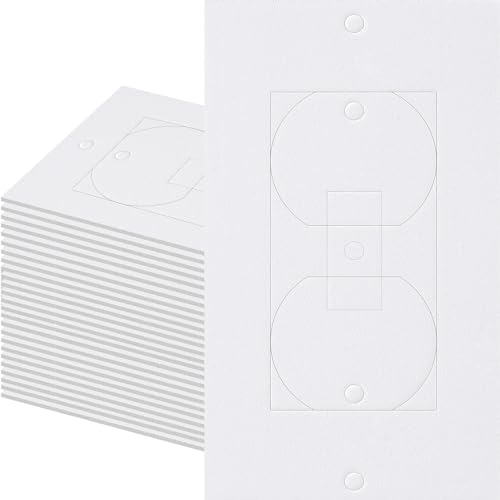 Outlet Insulators Draft Sealers, EVA Foam, 30 PackEVA rather than open-cell foam, cut for duplex, toggle and rocker plates — the pack that fits modern rocker switches. | Rocker switches and mixed plates | Fits duplex, toggle and rocker plate openings | $7.99 · CHECK ON AMAZON |
#ad · how we are funded · price as of October 17, 2026
The standard outlet gasket
Frost King OS6H Foam Outlet and Switch Sealers, 2-1/2 in x 4 in
Published gap range
Fits standard US outlet and switch plate openings
#ad · how we are funded · price as of October 17, 2026
Fire-retardant foam gaskets cut to the standard 2-1/2 by 4 inch plate — the part, not a novelty.
Where the number comes fromFrost King publishes the gasket size (2-1/2 in x 4 in) and that the foam is UL-listed fire retardant plastic. There is no gap range: the gasket seals the plate to the wall, and the leak it stops is the one around the box.
- Published size
- 2-1/2" x 4"
- Material
- U.L. listed fire retardant plastic foam
- Quantity
- 6
- Install
- Behind the faceplate
- Visible after install
- No
- Mounting
- Behind the faceplate, no tools beyond a screwdriver
What it does well
- The fire-retardant rating is the spec that matters on anything going behind a faceplate
- Completely invisible once the plate is back on
- Two minutes per outlet with one screwdriver
Where it fails
- Only helps where the box is genuinely leaking — many are not
- Six per pack does one wall, not a house
- Does nothing about the much larger leaks around windows and doors
Who this is forExterior-wall outlets on the windward side, where you can feel air at the plate.
Doing every switch in the house
Tondiamo Foam Draft Sealers for Switches, 30 Pack, White
Published gap range
Fits standard US wall plate openings; no gap dimension applies
#ad · how we are funded · price as of October 17, 2026
Thirty foam gaskets in one bag, which is the quantity the job actually takes once you start counting the switches on exterior walls.
Where the number comes fromThis is not a gap part. The gasket sits behind the faceplate and closes the path between the plastic box and the wall board, so the only fit question is whether it matches your plate type. The listing publishes switches as the intended use. Count your exterior-wall switches before ordering: people reliably undercount, which is the whole argument for a thirty pack over a six pack.
- Published quantity
- 30
- Intended use
- Switches, per the listing
- Material
- Foam
- Install
- Behind the plate
- Color
- White
- Mounting
- Behind the switch or outlet plate
What it does well
- Thirty gaskets covers a whole house, where a six pack covers about one room
- Cheapest per gasket of anything on this page
- Switches on exterior walls leak as much as outlets do and get ignored
Where it fails
- Publishes no fire-retardant or UL rating, where Frost King does — if that matters to you, buy the Frost King pack above instead
- Generic brand with no maker data sheet behind the listing
- Not a fix for a leaking wall cavity, only for the plate
Who this is forWorking through every switch on an exterior wall in one go.
Rocker switches and mixed plates
Outlet Insulators Draft Sealers, EVA Foam, 30 Pack
Published gap range
Fits duplex, toggle and rocker plate openings
#ad · how we are funded · price as of October 17, 2026
EVA rather than open-cell foam, cut for duplex, toggle and rocker plates — the pack that fits modern rocker switches.
Where the number comes fromThe listing publishes the plate types covered (duplex, toggle, rocker) and the EVA foam material. No gap dimension applies.
- Published quantity
- 30
- Material
- EVA foam
- Plate types
- Duplex, toggle, rocker
- Install
- Behind the faceplate
- Color
- White
- Mounting
- Behind the faceplate
What it does well
- Covers rocker plates, which the older foam packs do not
- EVA is denser than open-cell foam and compresses more evenly
- Thirty gaskets covers a house
Where it fails
- No published fire-retardant rating — the Frost King foam publishes UL listing and this does not
- No named manufacturer
- Denser foam needs the plate screw done up a little further
Who this is forA house with modern rocker switches and a lot of plates to do.
How we picked
- Explain the air path before recommending a product, because the path determines what a gasket can and cannot achieve.
- Safety steps are stated first and are not optional.
We have not tested these products and we do not claim to have. The full method, including what we refuse to claim, is on how we pick.
Full comparison of the two products in play here: outlet gaskets versus caulk. Ranked gasket picks: best outlet gaskets.
Questions people actually ask
- Why is cold air coming from my light switch?
- Air entered the wall cavity elsewhere — usually the attic above or the rim joist below — and the electrical box is its exit into the room. The switch is not the leak; it is the hole the leak found.
- Is cold air from an outlet dangerous?
- The draft itself is not. Scorch marks, melted plastic or brittle insulation behind the faceplate are, and they need an electrician rather than a gasket. Always switch the circuit off before removing a plate.
- How do I stop a draft from an electrical outlet?
- Switch off the circuit, remove the plate, caulk the gap between the box and the drywall, fit a foam gasket, refit the plate. The caulk closes more of the leak than the gasket does, and you are already there.
- Can I put insulation inside the electrical box?
- No. Loose insulation or foam inside a box can trap heat around connections and interfere with the terminals. Seal the outside of the box and use a purpose-made faceplate gasket, nothing else.
- Do outlets on interior walls need gaskets?
- Generally not — there is nothing cold on the other side. Spend the pack on exterior walls, garage-adjacent walls and anything backing onto an attic or crawlspace.
Sources
Every specification on this page traces to a published manufacturer or retailer listing. Where a maker publishes no working gap range, we say so rather than estimating one.
Read next
The best outlet gaskets, and an honest word on what they fix
Two minutes and a screwdriver per outlet — genuinely worth it on exterior walls, and honestly small.
Outlet gaskets or caulk around the box?
The gasket seals the plate joint, the caulk seals the box gap. With the plate off, both is the only sensible answer.
Why is my house so drafty?
One mechanism, a handful of holes, and why the fix for a downstairs draft is often in the ceiling.
The best tools for finding a draft, and whether you need one
Most people need none of these — an incense stick finds the big leaks free. For the rest, which tool detects what.