04 / HIDDEN LEAKS
The best tools for finding a draft, and whether you need one
Two of these find cold surfaces, two find moving air, and one shows you the whole wall. They are not substitutes for each other, which is why so many people buy the wrong one.
We earn a commission on some links here, at no extra cost to you. It does not change what we recommend or the order they appear in. How we are funded
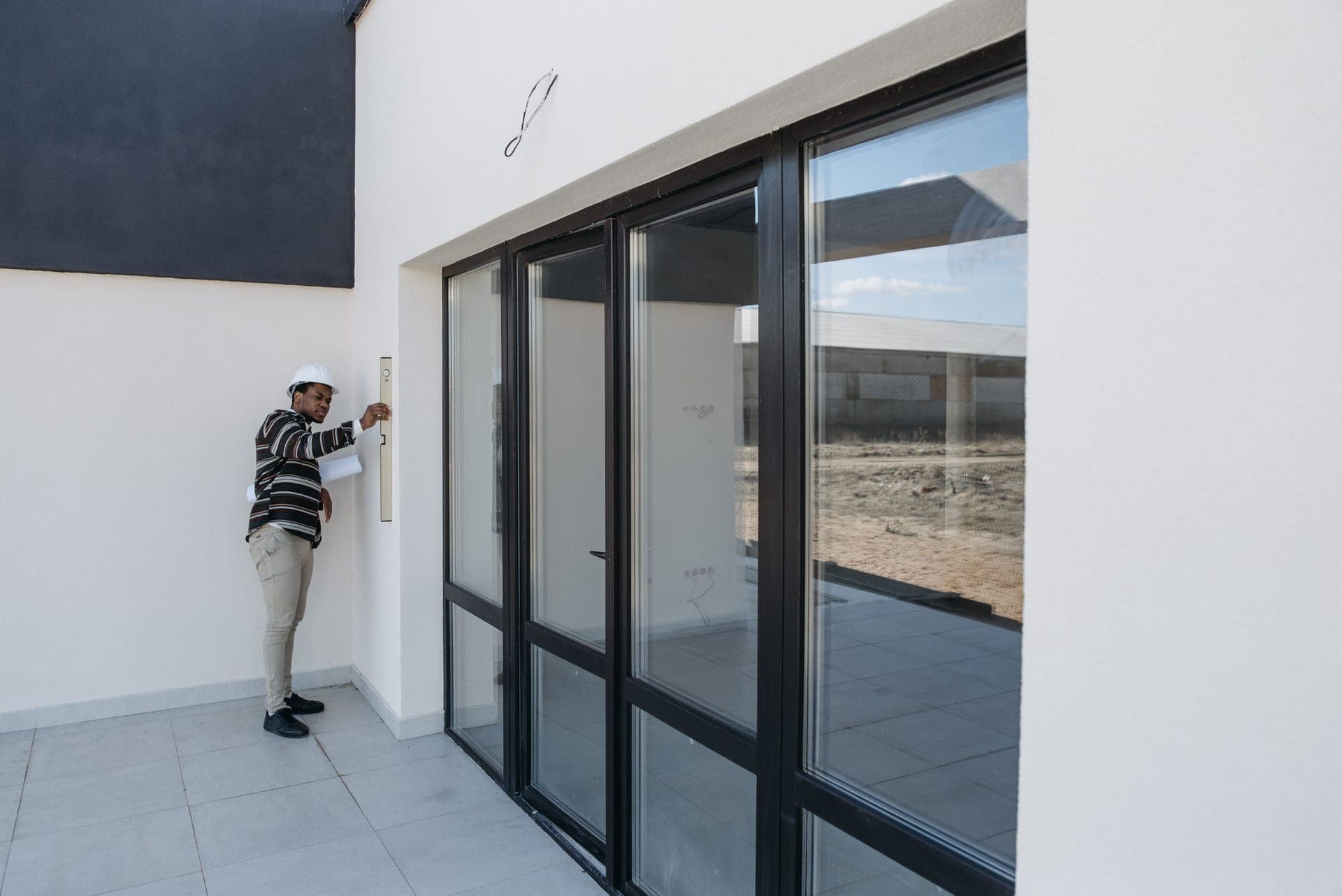
Most people should buy nothing: a lit incense stick finds every leak that is worth your first hundred dollars of sealing, and how to find drafts in your house is that method in five tests. If you have done that and still cannot find it, buy the BLACK+DECKER TLD100 at around sixty dollars — it reads surface temperature and shows you cold spots. If you need to see air MOVING rather than infer it, buy a smoke pencil instead. Those are different jobs.
The distinction that decides your purchase
Every tool sold for this falls into one of two groups, and they answer different questions. Getting this wrong is the single most common disappointment in the category, and it is not the tools' fault.
| Type | Detects | Tells you | Does not tell you |
|---|---|---|---|
| Infrared thermometer (TLD100, IR1) | Surface temperature | Where a surface is colder than the rest of the room | Whether any air is moving — insulation gaps read identically to leaks |
| Thermal camera (FLIR ONE) | Surface temperature, as an image | The whole pattern at once: missing insulation, thermal bridges, leak plumes | Same limitation, better resolved |
| Smoke pencil / smoke pen | Air movement | That air is moving, where, and in which direction | How much air, or how much it costs you |
| Blower door (professional) | Whole-house leakage rate | A real measured number in air changes per hour | Where the leaks are, without a smoke source alongside |
Read the second column again, because the consequence is counter-intuitive: a cold surface is not a draft. A wall with no insulation in it reads beautifully cold on an infrared tool while being perfectly airtight. A window frame with air pouring through it may read only a couple of degrees cold if the air moving past has not had time to chill the surface.
So a temperature tool points you at places worth investigating, and a smoke source confirms whether air is actually moving there. Owning one of each is genuinely more useful than owning an expensive example of either. Together they cost less than the cheap thermal camera.
Who should buy nothing
This is the honest majority case, and it deserves stating before the picks rather than after them.
If you have a cold room and have not yet gone around it with a lit incense stick on a windy day, with the bathroom extractor fan running to pull the house slightly negative, you have not run out of free method. That test finds the gap under the door, the sash meeting rail, the outlet on the exterior wall, the attic hatch and the rim joist — which between them are the overwhelming majority of the air leakage in a typical house, and all of the cheap wins.
A tool earns its place when the free method has been exhausted and the answer is still missing. In practice that means one of three situations:
- 1A cold spot with no findable opening — a wall that is cold in one area, a ceiling that is cold in a patch, a floor that is cold along one line. These are insulation and thermal bridge questions, and a temperature tool is the only thing that will show them.
- 2A leak you can feel but cannot locate — most often air arriving at a baseboard from somewhere in the wall cavity, with the actual opening several feet away. A smoke source traces the path; a thermometer will not.
- 3You need to prove it to somebody — a landlord, a builder within a warranty period, a contractor who says the window is fine. A smoke plume on video, or a thermal image, is evidence. A statement that the room feels cold is not.
Reading an infrared tool without fooling yourself
Three failure modes, all common, all avoidable.
- Shiny surfaces lie. Foil tape, bare metal, polished stone and glass at a shallow angle all reflect rather than emit, so an infrared reading off them is partly a reading of whatever is behind you. Take readings off matte surfaces — paint, plaster, timber, carpet.
- Mild weather gives you nothing. These tools read temperature DIFFERENCE. With a 10 degree difference between indoors and out, a real leak might show as half a degree of surface cooling. Aim for 20 degrees or more.
- A spot is not a sweep. The TLD100 and the IR1 read one spot at a time, and the spot grows with distance — the IR1 publishes a 10:1 ratio, meaning a 1 inch spot at 10 inches and a 4 inch spot at 40. Work close and move slowly, or you will average the leak away.
What a thermal camera adds, and what it does not
It shows the pattern, and the pattern is often the whole answer. A spot thermometer tells you a point on the ceiling is four degrees cold. A thermal image shows you that the cold area is a rectangle the size of an insulation batt, with a sharp edge, which identifies the problem outright.
What it does not add is a different kind of information. It is the same surface-temperature measurement, mapped. It still cannot see air moving, still fails on shiny surfaces, and still needs a real temperature difference. And at the consumer price band the native sensor is genuinely low resolution, so fine detail — the exact line of a leak at a window frame — is beyond it.
Worth it if you will use it again on plumbing, electrical or insulation work, or if you are sealing a whole house. Hard to justify for one cold bedroom.
Quick picks
Ranked for fit, not for hype. Tap a row to jump to the full write-up, or go straight to the listing.
| # | Product | Best for | Gap range | Price |
|---|---|---|---|---|
| 1 | 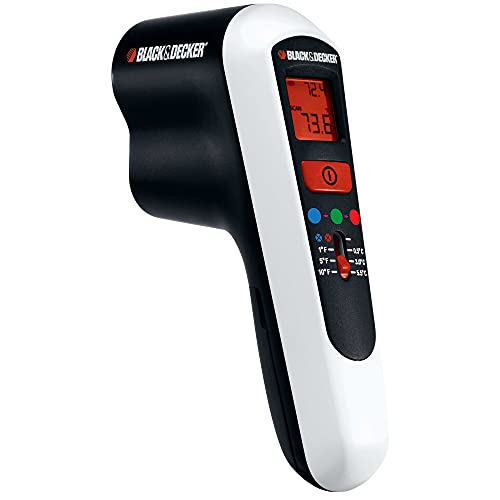 BLACK+DECKER Thermal Leak Detector (TLD100)A spot infrared thermometer with a colored light: you set a reference temperature on one wall, then sweep the room and it turns blue where the surface is colder than your reference. It finds cold spots, not air movement. | The one tool most people should buy, if they buy one at all | Not applicable — this is a measuring tool, not a seal | $63.50 · CHECK ON AMAZON |
| 2 | 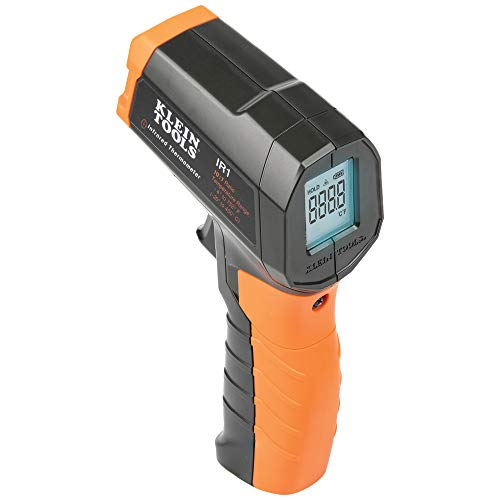 Klein Tools IR1 Infrared Thermometer with Targeting Laser, 10:1 RatioA plain laser-pointed infrared thermometer with a number on the screen instead of a colored light. Same physics as the TLD100, no interpretation layer, and about half the price. | The cheapest tool that still tells you something true | Not applicable — this is a measuring tool, not a seal | $29.98 · CHECK ON AMAZON |
| 3 |  Smoke Pencil ONE Air Leak Detection Handheld Smoke StickA battery fogger that puffs a dense, cool, non-staining plume on demand. It is the only type of tool on this page that shows you air MOVING, which is the thing you are trying to stop. | Actually seeing the air move, rather than inferring it | Not applicable — this is a diagnostic tool, not a seal | $39.99 · CHECK ON AMAZON |
| 4 |  REGIN Smoke Pen, 3 Hours of WickThe pen heating-and-ventilation technicians have carried for decades: a wick that smolders and puffs when you squeeze the bulb. No battery, no fluid, no electronics to fail in a cold crawl space. | A trade-standard smoke source with nothing to recharge | Not applicable — this is a diagnostic tool, not a seal | $53.49 · CHECK ON AMAZON |
| 5 |  FLIR ONE Thermal Imaging Camera for Android USB-C, 80 x 60 Native SensorA real thermal camera that plugs into a phone, from the company that defined the category. It shows the whole wall as a picture instead of one spot at a time — and it costs about four times the tool that answers most questions. | Seeing the whole wall at once, if the budget is not the issue | Not applicable — this is a measuring tool, not a seal | $249.00 · CHECK ON AMAZON |
#ad · how we are funded · price as of October 17, 2026
The one tool most people should buy, if they buy one at all
BLACK+DECKER Thermal Leak Detector (TLD100)
Published gap range
Not applicable — this is a measuring tool, not a seal
#ad · how we are funded · price as of October 17, 2026
A spot infrared thermometer with a colored light: you set a reference temperature on one wall, then sweep the room and it turns blue where the surface is colder than your reference. It finds cold spots, not air movement.
Where the number comes fromNothing here closes a gap. The reason it earns a place on a sealing site is that it tells you WHICH gap to spend money on, which is the decision that wastes the most money in this category.
- Type
- Non-contact infrared surface thermometer with color indication
- Reads
- Surface temperature, compared against a reference you set
- Indication
- Blue for colder than reference, red for warmer, green for at reference
- Sensitivity
- Published as adjustable from 1 to 10 degrees F of difference
- Power
- 9V battery
- Mounting
- Handheld
What it does well
- Finds the cold surface instantly without touching anything, which is how you locate a leak behind trim or under a window stool
- The adjustable sensitivity is the useful part — set it tight and a half-degree difference lights up
- Costs a fraction of a thermal camera and answers the same question on a single wall
Where it fails
- It reads a spot, not a picture — you have to sweep it methodically or you will miss the leak between two readings
- A cold surface is not always a draft: poor insulation and a thermal bridge both read cold with no air moving at all
- Useless in mild weather, because it needs a real indoor-to-outdoor temperature difference to show anything
Who this is forSomeone who has felt a draft, cannot find it with a hand or a smoke test, and wants to stop guessing before buying parts.
The cheapest tool that still tells you something true
Klein Tools IR1 Infrared Thermometer with Targeting Laser, 10:1 Ratio
Published gap range
Not applicable — this is a measuring tool, not a seal
#ad · how we are funded · price as of October 17, 2026
A plain laser-pointed infrared thermometer with a number on the screen instead of a colored light. Same physics as the TLD100, no interpretation layer, and about half the price.
Where the number comes fromA surface-temperature reading is the input to the buying decision, not the fix. Use it to decide which of four window walls actually deserves a kit.
- Type
- Non-contact infrared thermometer, numeric readout
- Distance-to-spot ratio
- 10:1, per the published specification
- Published range
- -4 to 752 degrees F
- Targeting
- Single laser pointer
- Extras
- Auto-hold and max/min, per the listing
- Mounting
- Handheld
What it does well
- A trade-brand tool at a consumer price, and it does the one thing a draft hunt needs
- The numeric readout is more honest than a color: you see a 9-degree difference as 9 degrees, not as 'blue'
- The 10:1 ratio is published, so you know how big an area each reading covers
Where it fails
- No color indication and no reference mode, so you are comparing numbers in your head as you walk
- Shiny surfaces — foil tape, bare metal, glass at an angle — read badly with any infrared thermometer, including this one
- Like all of these, it finds cold surfaces, which is not the same thing as finding moving air
Who this is forSomeone who already owns tools, wants a number rather than a traffic light, and will not pay sixty dollars for a draft hunt.
Actually seeing the air move, rather than inferring it
Smoke Pencil ONE Air Leak Detection Handheld Smoke Stick
Published gap range
Not applicable — this is a diagnostic tool, not a seal
#ad · how we are funded · price as of October 17, 2026
A battery fogger that puffs a dense, cool, non-staining plume on demand. It is the only type of tool on this page that shows you air MOVING, which is the thing you are trying to stop.
Where the number comes fromThis finds the leak path. It does not tell you what size part to buy, so the gap still has to be measured afterwards with a tape and a folded card.
- Type
- Handheld fogger (air-leak smoke stick)
- Output
- Continuous or puffed plume, on demand
- Fluid
- Refillable fog juice, included per the listing
- Power
- Rechargeable
- Residue
- Marketed as non-staining; we have not tested that claim
- Mounting
- Handheld
What it does well
- Shows direction as well as location, which no temperature tool can do
- Works in mild weather, because it does not need an indoor-outdoor temperature difference
- Dense enough to read on video, which is useful if you are trying to convince a landlord
Where it fails
- Consumable: you buy fluid forever, and it is the running cost nobody mentions
- A plume reacts to the fan, the furnace and you walking past, so you have to still the room first
- Costs more than a box of incense sticks that finds the same big leaks
Who this is forSomeone chasing a leak they cannot locate, or documenting one for a landlord or a builder.
A trade-standard smoke source with nothing to recharge
REGIN Smoke Pen, 3 Hours of Wick
Published gap range
Not applicable — this is a diagnostic tool, not a seal
#ad · how we are funded · price as of October 17, 2026
The pen heating-and-ventilation technicians have carried for decades: a wick that smolders and puffs when you squeeze the bulb. No battery, no fluid, no electronics to fail in a cold crawl space.
Where the number comes fromShows the path of the leak only. Sizing the part is a separate measurement.
- Type
- Wick-based smoke pen, squeeze bulb
- Output
- Short puffs on demand
- Consumable
- Replaceable wicks; 3 hours published per set
- Power
- None required
- Trade use
- Sold as a heating and ventilation airflow tool
- Mounting
- Handheld
What it does well
- Nothing to charge, so it works after six months in a toolbox
- Puffs are small and controllable, which makes it better than a fogger in a tight space like a sill or an outlet box
- Wicks are cheap and last long enough that the running cost is close to nothing
Where it fails
- The plume is thinner than a fogger's, so it is harder to see in a bright room and harder to film
- A smoldering wick has a smell, and in a small closed room you will notice it
- It is a tool built for professionals doing this weekly, not an obvious buy for one afternoon
Who this is forSomeone who would rather own a tool with no battery, or who is doing a whole house rather than one door.
Seeing the whole wall at once, if the budget is not the issue
FLIR ONE Thermal Imaging Camera for Android USB-C, 80 x 60 Native Sensor
Published gap range
Not applicable — this is a measuring tool, not a seal
#ad · how we are funded · price as of October 17, 2026
A real thermal camera that plugs into a phone, from the company that defined the category. It shows the whole wall as a picture instead of one spot at a time — and it costs about four times the tool that answers most questions.
Where the number comes fromA thermal image is a map of surface temperature. It will show you a missing batt of insulation and a leaking window frame in the same frame, which is exactly why it is useful and exactly why it is easy to over-read.
- Type
- Smartphone-attached thermal imager
- Native resolution
- 80 x 60 infrared (240 x 180 after FLIR's MSX processing)
- Connection
- USB-C, Android
- Blending
- MSX overlays visible-light edges on the thermal image
- Note
- An iOS version is a separate product
- Mounting
- Plugs into a phone's USB-C port
What it does well
- A picture beats a spot reading: you see the pattern of a leak, not one number at a time
- MSX edge overlay makes the image readable, which matters a lot at this sensor size
- FLIR publishes its native sensor resolution honestly, which many cheaper thermal cameras do not
Where it fails
- Four times the price of the tool that answers the question for most houses
- 80 x 60 native is genuinely low resolution — the upscaled number on the box is processing, not sensor
- Easy to misread: cold surfaces look dramatic on screen whether or not any air is moving through them
Who this is forSomeone sealing a whole house, or someone who will use it again on insulation, plumbing or electrical work.
What we would skip, and why
Nobody in this category ever declines to recommend something. That is what makes universal praise worth ignoring. Here is what we would not buy.
Phone apps that claim to be thermal cameras
A phone's camera sensor cannot see infrared in the band that surface temperature lives in. These apps apply a false-color filter to an ordinary photograph. The image looks exactly like a thermal image and contains none of the information, which makes it worse than useless — it is confidently wrong.
Unbranded thermal cameras advertising a large resolution
Read for the NATIVE sensor resolution, which is often 80 x 60 or lower, against the headline figure, which is an upscaled output. FLIR publishes both numbers. Many sellers publish only the big one. You are not buying a bad product so much as a differently-specified one than the listing implies, and at this price band that matters.
A blower door, for a homeowner
It is the right tool and the correct measurement — a whole-house air leakage figure in air changes per hour — and it is professional equipment requiring a calibrated fan, a manometer and the training to interpret it. If you want that number, hire an energy auditor. Do not buy the kit.
A handheld anemometer
It reads air speed, which sounds exactly right and is the wrong measurement. At a leaking window the velocity is low and highly local, so the readings swing wildly with a half-inch of hand movement and tell you nothing you could act on. A smoke plume answers the same question instantly and for a tenth of the price.
What to do with what you find
The tool is not the fix, and it is worth being clear-eyed that nothing on this page makes your house warmer. What it does is stop you spending money in the wrong place, which in this category is the main way money gets wasted.
Once you have located something, the fix pages take over. A cold line along the bottom of an exterior wall is usually the rim joist — best rim joist air sealing. Cold at an outlet on an exterior wall is cold air coming from an outlet or light switch. A cold ceiling patch near the attic hatch is how to stop a draft from the attic door. A cold floor over a crawl space is cold air coming up from under the house.
And if what the tool reveals is a wall that is uniformly cold with no air movement at all, that is an insulation job rather than an air sealing one. Worth knowing before you buy another roll of weather stripping — which is exactly the sixty dollars of value one of these tools can deliver.
How we picked
- We grouped these by what they physically detect — surface temperature or air movement — because that distinction decides which one answers your question, and almost no listing in this category makes it.
- We have tested none of them. The specifications quoted are the published ones: sensor type, published range, native resolution, consumable life. Where a listing publishes an upscaled resolution we name the native figure as well.
- No tool here gets credit for finding leaks a free method already finds. That is why this page opens by telling most readers to buy nothing. The full method is published.
We have not tested these products and we do not claim to have. The full method, including what we refuse to claim, is on how we pick.
Questions people actually ask
- Do I need a tool to find drafts in my house?
- Usually not. A lit incense stick, with the windows shut and the extractor fans running to pull the house slightly negative, finds every leak worth your first round of sealing. A tool earns its place when that has been done and a cold spot still has no findable opening.
- What is the best tool for finding air leaks?
- It depends which question you are asking. For a cold surface with no obvious opening, an infrared thermometer such as the BLACK+DECKER TLD100. For tracing air that is actually moving, a smoke pencil or smoke pen. They detect different things and are not substitutes.
- Do thermal leak detectors actually work?
- Yes, at what they measure, which is surface temperature rather than air movement. That distinction matters: an uninsulated wall reads cold while being airtight, and a leaking frame may read only slightly cold. They find places worth investigating, not leaks directly.
- Do I need a thermal camera to find drafts?
- No. A camera shows the pattern of a cold area, which is genuinely useful for identifying missing insulation, and it costs about four times the spot thermometer that answers most questions. Buy one if you will use it for insulation, plumbing or electrical work as well.
- Are phone thermal camera apps any good?
- No. A phone camera sensor cannot detect infrared in the band surface temperature lives in, so these apps are applying a false-color filter to a normal photograph. The result looks like a thermal image and contains none of the information.
- What is a smoke pencil used for?
- Making air movement visible. It releases a dense cool plume that bends toward a leak, which shows you both the location and the direction of flow. It is the only type of tool here that detects air rather than temperature, and it works in mild weather when temperature tools cannot.
- What temperature difference do I need for an infrared tool to work?
- Aim for at least 20 degrees Fahrenheit between inside and outside, with the heating running. These tools read differences, so on a mild day a genuine leak may produce less than a degree of surface cooling and you will conclude the house is tight when it is not.
- Can I rent a thermal camera instead of buying one?
- Often, from tool hire outlets, and for a one-off whole-house survey that is the sensible route. Book it for a cold day, run the extractor fans first, and walk the whole house in one session rather than treating it as a single-room check.
Sources
- U.S. Department of Energy - published guidance on detecting air leaks in a home
- U.S. Department of Energy - published guidance on professional home energy assessments and blower door testing
- FLIR - published ONE series native and processed resolution specifications
Every specification on this page traces to a published manufacturer or retailer listing. Where a maker publishes no working gap range, we say so rather than estimating one.
Read next
How to find drafts in your house
Five tests, no equipment, an hour — ordered so you find the big leaks before the small ones.
Why is my house so drafty?
One mechanism, a handful of holes, and why the fix for a downstairs draft is often in the ceiling.
The best rim joist air sealing products, and how much foam the job actually takes
The longest continuous air leak in most houses. Which can of foam, and how much the job really takes.
Cold air coming from an outlet or light switch
The outlet is the exit, not the leak. Where the air really comes from, and the twenty-minute fix.
How to measure a door gap properly
The index-card method, the three-point rule, and how to read your number against a published seal size.