03 / GARAGE
The best adhesive for bonding a garage door threshold
First answer: if your kit came with adhesive, that is the one to use. This page is for the re-bond, the kit that arrived without it, and the slab that will not dry.
We earn a commission on some links here, at no extra cost to you. It does not change what we recommend or the order they appear in. How we are funded

If your threshold kit came with adhesive, use that — it is matched to the strip. If you need your own, choose a polyurethane whose maker publishes both concrete and PVC in its substrate list. On a damp slab, choose one that publishes damp or green concrete use. Avoid silicone, and avoid self-leveling sealant.
This page exists because of a sentence on our own threshold roundup: the adhesive is where these installs fail. A garage door threshold is a strip of PVC or rubber glued to a concrete floor, driven over by a car, soaked by every rainstorm and frozen every winter. The strip almost never fails. The bond does.
Before you buy anything: check the box
Nearly every threshold seal kit on the market includes its own adhesive or epoxy, chosen by the manufacturer to suit that specific strip material. That adhesive is already paid for, it is what the fitting instructions assume, and using something else can void the kit's warranty.
So the honest shape of this page is narrow. You need to buy adhesive separately in three situations: you are re-bonding a threshold that has lifted, your kit arrived without adhesive or the sachet had gone off, or the supplied adhesive is wrong for your conditions — most often because your slab will not dry out and the supplied product needs a dry surface.
The two things the label has to say
This is the whole selection criterion, and it eliminates most of the aisle in about ten seconds.
- 1Concrete must be on the published substrate list. Not 'masonry' by implication — concrete, named.
- 2Vinyl or PVC must also be on it. This is the half people miss. Plenty of construction adhesives bond beautifully to concrete and say nothing about plastics, and some solvent-based products attack PVC.
- 3Then check the form. For holding a strip down you want a construction adhesive. For sealing the seam afterwards you want a non-sag sealant. They are different products and a lot of people buy one expecting the other.
- 4Then check moisture tolerance, if your slab is a problem. This is where the published specs genuinely diverge.
Match the part to your gap
Measure at the widest point. Then read across. If your measurement sits on a boundary, take the larger band — a seal that is slightly too big compresses, and one that is too small does nothing at all.
| Your gap | Part type | Our pick | Price |
|---|---|---|---|
| Slab clean and properly dry | Polyurethane construction adhesive | 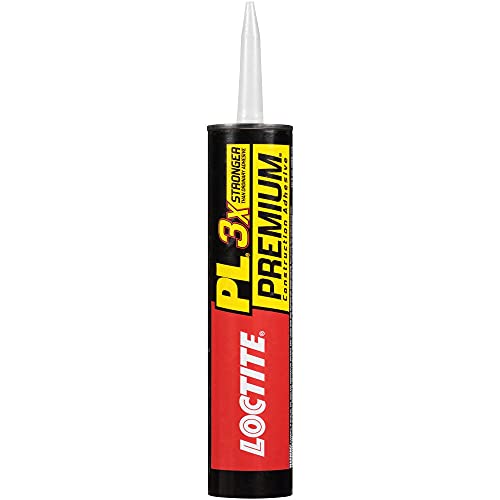 Loctite PL Premium Polyurethane Construction Adhesive, 10 fl ozLoctite publishes concrete AND rigid/cellular vinyl-PVC in one substrate list. That pairing is the whole job. | $6.48 · CHECK ON AMAZON |
| Slab damp and will not dry out | PU elastomeric sealant, damp-rated |  Sika Sikaflex-1a Polyurethane Sealant, 10.1 fl ozSika publishes green and damp concrete use, plus ASTM C920. The only pick here that states it. | $14.99 · CHECK ON AMAZON |
| Nothing heavy to weight it down | Fast-set construction adhesive |  Loctite PL Premium Fast Grab Polyurethane Construction Adhesive20-minute set per Loctite. Positioned by the maker for interior work, so it is the situational pick. | $10.98 · CHECK ON AMAZON |
| Threshold already bonded, seam open | Non-sag concrete sealant |  Loctite PL Concrete Non-Sag Polyurethane SealantFor the joint along the edge, not for holding the strip down. Buy non-sag, never self-leveling. | $114.69 · CHECK ON AMAZON |
Prep is most of the result
No adhesive on this page rescues a badly prepared slab, and the failure mode is always the same: the bond looks fine for a season, then lifts in patches after the first freeze because moisture was trapped underneath it.
- 1Strip the old bead completely. Softening gel and a plastic scraper — the kit items below. Adhesive over old failed adhesive fails again on the same line.
- 2Degrease. A garage slab has oil in it whether you can see it or not, and oil is the second most common bond killer after water.
- 3Scrub, rinse, then wait. Concrete holds moisture well below its surface. A slab that looks dry after an afternoon frequently is not.
- 4Test it. Tape a square of plastic sheet down flat overnight. If there is condensation under it in the morning, the slab is still releasing moisture — use the damp-rated pick or wait for a drier week.
- 5Check the temperature. Every product here has a minimum application temperature. Cold slab, weak bond.
- 6Dry-fit the strip first, then lay the bead, then weight it down for the full published cure with the door left open.
That plastic-sheet test is worth the overnight wait. It is the difference between doing this once and doing it again next autumn, and it costs nothing.
Quick picks
Ranked for fit, not for hype. Tap a row to jump to the full write-up, or go straight to the listing.
| # | Product | Best for | Gap range | Price |
|---|---|---|---|---|
| 1 | Loctite PL Premium Polyurethane Construction Adhesive, 10 fl ozThe one whose published substrate list covers both halves of this job — concrete and rigid or cellular vinyl and PVC — in a single moisture-curing polyurethane. | Bonding PVC to a dry slab | Not a gap product — a structural bond between the threshold and the slab | $6.48 · CHECK ON AMAZON |
| 2 | Sika Sikaflex-1a Polyurethane Sealant, 10.1 fl ozThe only pick here whose maker publishes that it can be used on green and damp concrete — which is the condition that defeats most threshold installs. | A slab that will not fully dry | Not a gap product — an elastomeric bond and seal on concrete | $14.99 · CHECK ON AMAZON |
| 3 | Loctite PL Premium Fast Grab Polyurethane Construction AdhesiveThe faster-setting sibling, for the case where you have nothing heavy enough to hold a threshold flat while a slower adhesive cures. | When you cannot weight it down | Not a gap product — a structural bond with a shorter working time | $10.98 · CHECK ON AMAZON |
| 4 | Loctite PL Concrete Non-Sag Polyurethane SealantThe dedicated concrete sealant, and the one where getting the variant right matters — non-sag holds a bead, self-leveling runs across the floor. | Sealing the joint after the bond | Not a gap product — a flexible weather seal at the threshold-to-slab joint | $114.69 · CHECK ON AMAZON |
#ad · how we are funded · price as of October 17, 2026
Bonding PVC to a dry slab
Loctite PL Premium Polyurethane Construction Adhesive, 10 fl oz
Published gap range
Not a gap product — a structural bond between the threshold and the slab
#ad · how we are funded · price as of October 17, 2026
The one whose published substrate list covers both halves of this job — concrete and rigid or cellular vinyl and PVC — in a single moisture-curing polyurethane.
Where the number comes fromThere is no gap dimension here. What matters instead is the substrate list, and Loctite publishes one that names both concrete and cement-based products AND rigid and cellular vinyl/PVC trim and molding. That combination is exactly what a PVC threshold on a concrete floor needs, and it is why this leads.
- Type
- One-component polyurethane, moisture-curing
- Published substrates
- Concrete, masonry, cement-based products, rigid and cellular vinyl/PVC
- Published set time
- 30 minutes
- Published full cure
- 24 hours
- Exterior rated
- Yes, per Loctite
- Mounting
- Gun-applied bead under the threshold, then weighted while it cures
What it does well
- Loctite publishes concrete AND vinyl/PVC in the same substrate list, which most construction adhesives do not
- Moisture-curing polyurethane stays flexible, so it tolerates a slab that moves seasonally
- Loctite states it can be applied to wet and frozen surfaces without shrinking on exterior work, which is unusual in this class
Where it fails
- Polyurethane is genuinely permanent — removal later means scraping the slab
- Foams slightly as it cures, so an over-thick bead can lift the threshold if you do not weight it down
- Gets everywhere and does not wipe off cured; mask the slab and wear gloves
- If your threshold kit shipped with its own adhesive, use that instead — see the note at the top of this page
Who this is forRe-bonding a threshold on a slab you can get properly dry, or a kit that arrived without adhesive.
A slab that will not fully dry
Sika Sikaflex-1a Polyurethane Sealant, 10.1 fl oz
Published gap range
Not a gap product — an elastomeric bond and seal on concrete
#ad · how we are funded · price as of October 17, 2026
The only pick here whose maker publishes that it can be used on green and damp concrete — which is the condition that defeats most threshold installs.
Where the number comes fromSika publishes the property that actually matters for a garage floor: "Sikaflex-1a can be used in green and damp concrete applications." It also publishes conformance to ASTM C920, Type S, Grade NS, Class 35 — a named standard, which is rare in this aisle.
- Type
- One-component moisture-cured polyurethane, non-sag
- Published standard
- ASTM C920, Type S, Grade NS, Class 35
- Damp concrete
- Published as usable on green and damp concrete
- Movement class
- Class 35 per the ASTM designation
- Form
- Elastomeric sealant rather than a structural adhesive
- Mounting
- Gun-applied bead, non-sag so it holds its shape on the slab
What it does well
- Publishes a named standard (ASTM C920) instead of a marketing adjective
- Sika publishes damp and green concrete use, which is the single most common reason these bonds fail
- Non-sag, so the bead stays where you lay it rather than flowing across the floor
Where it fails
- It is a sealant first and an adhesive second — for pure bond strength the construction adhesive above is the stronger choice
- The specific retail listing we verified is the white 10.1 fl oz variant; check the color you are ordering against your threshold
- Damp-tolerant is not the same as wet-tolerant, and no adhesive fixes a slab with standing water
- Polyurethane again, so removal later is a scraping job
Who this is forA garage floor in a damp climate, or a slab you have cleaned and still cannot get bone dry before the weather turns.
When you cannot weight it down
Loctite PL Premium Fast Grab Polyurethane Construction Adhesive
Published gap range
Not a gap product — a structural bond with a shorter working time
#ad · how we are funded · price as of October 17, 2026
The faster-setting sibling, for the case where you have nothing heavy enough to hold a threshold flat while a slower adhesive cures.
Where the number comes fromLoctite publishes a 20-minute set and a 24-hour full cure, with what it calls an extended repositioning time. The trade-off against standard PL Premium is stated in the cons: Loctite positions Fast Grab for interior projects, and a garage threshold is a wetter, colder location than that.
- Published set time
- 20 minutes
- Published full cure
- 24 hours
- Repositioning
- Extended, per Loctite
- VOC
- Low VOC, under 2% by weight per Loctite
- Loctite positions it for
- Interior projects — see cons
- Mounting
- Gun-applied bead, positioned quickly
What it does well
- 20-minute set means less time holding or weighting the threshold down
- Extended repositioning time, so you can still adjust the strip after laying the bead
- Low VOC and no strong solvent odor, which matters in a closed garage
Where it fails
- Loctite positions this one for interior projects, while standard PL Premium is published for exterior and for wet or frozen surfaces. A garage threshold sits in the wetter category, so this is the situational pick rather than the default
- Loctite's "up to 8 times stronger than traditional adhesives" is the manufacturer's comparative claim and names no test we can check — we are repeating it as their claim, not as a measurement
- Faster set means less time to correct a misaligned strip
Who this is forA threshold you cannot realistically weight down for hours, on a dry slab in a garage that stays reasonably warm.
Sealing the joint after the bond
Loctite PL Concrete Non-Sag Polyurethane Sealant
Published gap range
Not a gap product — a flexible weather seal at the threshold-to-slab joint
#ad · how we are funded · price as of October 17, 2026
The dedicated concrete sealant, and the one where getting the variant right matters — non-sag holds a bead, self-leveling runs across the floor.
Where the number comes fromLoctite publishes that it requires no primer on concrete, brick, stone or masonry, and that it bonds to concrete, brick, stucco, metal, wood, vinyl and fiberglass. No numeric gap applies; what applies is the non-sag versus self-leveling distinction described in the cons.
- Type
- Polyurethane sealant, non-sag formula
- Primer on concrete
- Not required, per Loctite
- Published substrates
- Concrete, brick, stucco, metal, wood, vinyl, fiberglass
- Movement
- Stays flexible; published as resisting weather, stress and movement
- Critical variant note
- Non-sag, NOT self-leveling — see cons
- Mounting
- Gun-applied bead along the threshold edge after it is bonded down
What it does well
- No primer needed on concrete, which removes a step people skip anyway
- Non-sag holds its shape on a horizontal joint instead of flowing away from it
- Loctite publishes vinyl among the substrates, so it is compatible with a PVC threshold edge
Where it fails
- **Easy to buy the wrong one.** Loctite sells a SELF-LEVELING concrete sealant with confusingly similar naming and part numbers. Self-leveling is for filling cracks in a floor and will run away from a threshold edge. Read the cartridge, not the search result
- It is a sealant, not a structural adhesive — it will not hold a threshold down on its own
- **Sold by the case.** The only listing for this exact variant is a 12-cartridge pack, so the price shown is for twelve. One threshold seam needs one. If you want a single tube, buy it off a trade counter shelf — we link the case because it is the listing that verifiably exists, not because twelve is the right quantity for this job
Who this is forSealing the seam along a threshold that is already bonded down, or closing the joint where it meets the door jambs.
What we would skip, and why
Nobody in this category ever declines to recommend something. That is what makes universal praise worth ignoring. Here is what we would not buy.
Buying any adhesive at all before checking the box
We are putting this first because it is the honest answer for most readers. Every threshold kit we cover in best garage door threshold seals ships with its own adhesive or epoxy, matched by the manufacturer to that strip's material. Using it is free, it is what the instructions assume, and substituting something else can void whatever warranty the kit carries. Open the box first.
Pure silicone sealant
Silicone is the wrong tool twice over here. Its bond to concrete is weak compared with a polyurethane, and — the part people discover later — nothing sticks to cured silicone, including more silicone. If a silicone bead fails you cannot simply re-bond over it; you have to grind the residue off the slab first. Polyurethane is the class you want.
Self-leveling concrete sealant, for this job
This is a genuine buying trap because the naming is so close. Self-leveling sealant is designed to flow into a horizontal crack and settle flat — which is exactly what you do not want at a threshold, where it will run away from the edge you are trying to seal. Loctite sells both a self-leveling and a non-sag concrete sealant with similar part numbers. Read the cartridge.
Anything sold only as an 'all-purpose' glue
A tube that lists no substrates is a tube that has not committed to bonding PVC to concrete. Some solvent-based adhesives actively attack PVC. Every pick on this page was chosen because its manufacturer publishes a substrate list you can check — if a product will not tell you what it bonds, that is the answer.
How we picked
- Read the manufacturer's own published substrate list and require BOTH concrete and vinyl/PVC to appear on it.
- Prefer polyurethane over silicone, because silicone bonds poorly to concrete and cannot be bonded over once cured.
- Prefer a product that publishes a named standard or a stated moisture tolerance over one that publishes adjectives.
- Rank by the slab condition the reader actually has — dry, damp, or unable to be weighted — rather than by raw strength.
- Say plainly, first, that most readers should use the adhesive already in their kit.
We have not tested these products and we do not claim to have. The full method, including what we refuse to claim, is on how we pick.
Complete the kit
The parts that decide whether the seal you just bought actually holds. Skip these and you will be doing the job again in March.

Removing old weatherstrip adhesive
Goo Gone Pro-Power Adhesive Remover Spray, 16 fl oz, with Scraper
The step everybody skips: the new tape will not stick to the residue the old tape left behind.
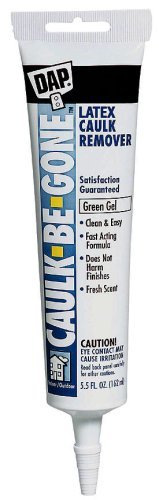
Old caulk around window frames
DAP Caulk-Be-Gone Odorless Gel Caulk Remover, 5.5 oz
An odorless gel for the perished caulk bead you have to get out before a new one will seal.

Getting a clean bead
DAP PRO Caulk Professional Plastic Caulk Remover Tool
The plastic tool that decides whether your new caulk bead looks like a repair or like a mistake — priced well above the hardware-aisle scraper it resembles.
#ad · how we are funded · price as of October 17, 2026
One honest limit
If your threshold keeps lifting in the same spot despite good prep, the adhesive is probably not your problem. Recurring failure in one place usually means the slab is cracked or spalling there, or water is running under the strip from a driveway that slopes toward the garage. Fresh adhesive on a failing substrate buys you another season at best.
That diagnosis, and the question of whether you should be using a threshold at all rather than a bottom seal on the door, is covered in bottom seal vs threshold seal and garage door seal for an uneven floor.
Questions people actually ask
- What adhesive should I use for a garage door threshold?
- Use the adhesive that came with your threshold kit — it is matched to the strip material and using something else can void the warranty. If you need your own, choose a polyurethane construction adhesive whose manufacturer publishes both concrete and vinyl/PVC in its substrate list.
- Can I use silicone to glue a garage door threshold down?
- It is a poor choice. Silicone bonds weakly to concrete compared with polyurethane, and once cured nothing adheres to it — including more silicone — so a failed bead has to be ground off the slab before you can retry.
- Will construction adhesive stick to a damp garage floor?
- Some will and most will not. Sika publishes that Sikaflex-1a can be used on green and damp concrete; Loctite publishes that PL Premium can be applied to wet and frozen surfaces on exterior work. Damp-tolerant is not the same as wet — no adhesive bonds through standing water.
- How do I know if my slab is dry enough?
- Tape a square of plastic sheet flat to the slab overnight. Condensation under it in the morning means the concrete is still releasing moisture. Either wait for a drier spell or use a product published as suitable for damp concrete.
- What is the difference between non-sag and self-leveling sealant?
- Non-sag holds the shape of the bead where you lay it. Self-leveling flows out flat and is designed for filling cracks in a floor. For a threshold edge you want non-sag — self-leveling will run away from the joint. The two are sold under confusingly similar names and part numbers.
- Do I need to remove the old adhesive first?
- Yes. New adhesive laid over an old failed bead fails along the same line. Soften it with a gel remover, scrape it back with a plastic tool so you do not gouge the slab, then degrease and dry.
Sources
- Loctite — PL Premium product page (published substrate list including concrete and rigid/cellular vinyl-PVC; 30 min set, 24 h full cure)
- Sika — Sikaflex-1a product page (published green and damp concrete use; ASTM C920 Type S, Grade NS, Class 35)
- Loctite — PL Concrete Non-Sag sealant product page (no primer required on concrete; published substrates)
- Loctite — PL Premium Fast Grab product page (published 20 min set, 24 h cure, low VOC, positioned for interior projects)
Every specification on this page traces to a published manufacturer or retailer listing. Where a maker publishes no working gap range, we say so rather than estimating one.
Read next
The best garage door threshold seals
Floor-bonded strips for a slab that dips or slopes, with published load ratings and the prep that decides the bond.
Sealing a garage door on an uneven floor
Measure the dip first. Past about a quarter inch, only a floor-bonded threshold can close it.
Bottom seal or threshold seal?
One attaches to the door, one bonds to the floor. A daylight test decides it in thirty seconds.