01 / DOORS
Will a door sweep keep bugs out?
A draft tolerates a pinhole. An insect uses one. That single difference changes which sweep you should buy, and it is why a sweep that fixed your cold floor can still be letting things in.
We earn a commission on some links here, at no extra cost to you. It does not change what we recommend or the order they appear in. How we are funded
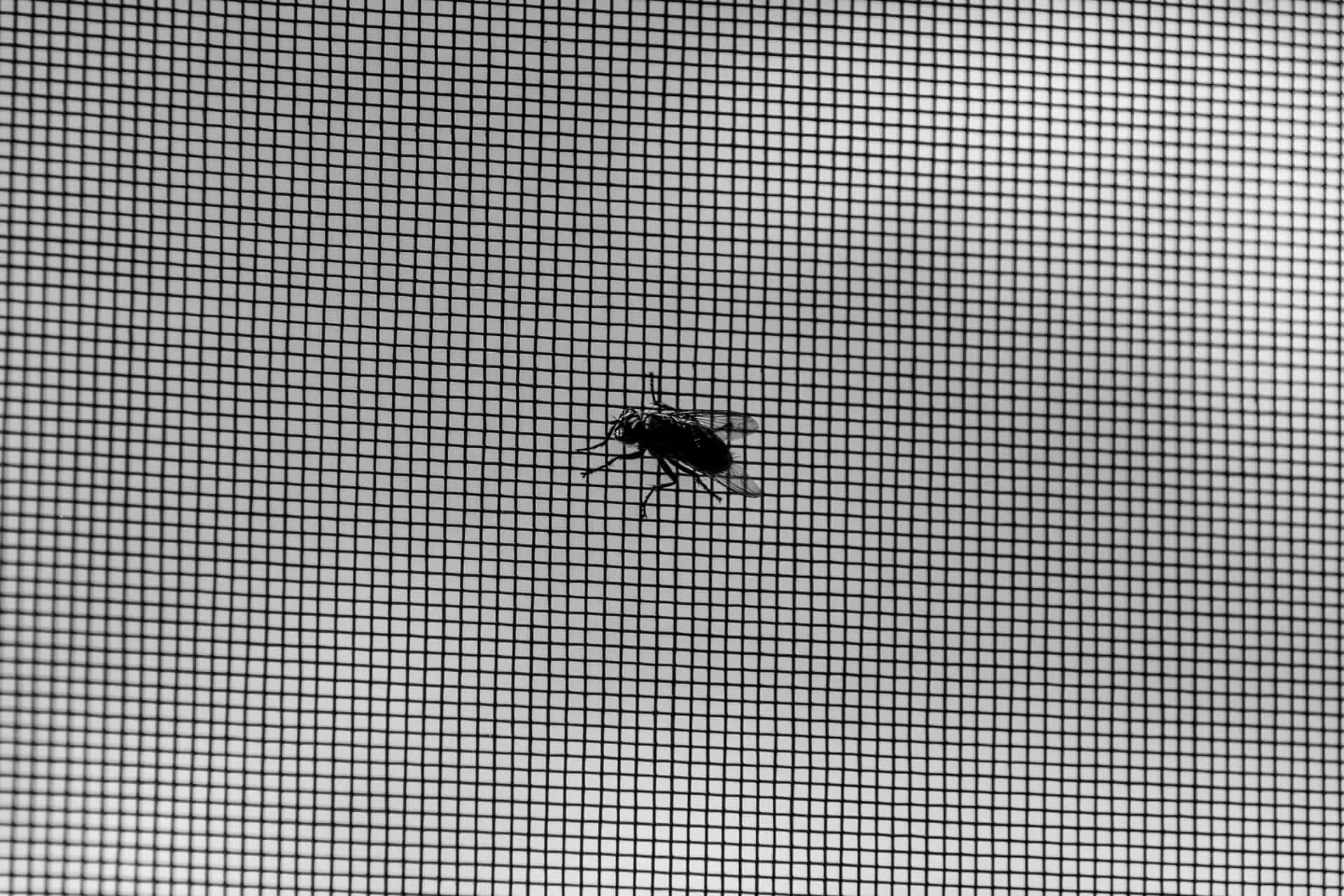
Yes, but only a sweep that makes continuous contact — which rules out bristle and brush sweeps, because insects walk between the bristles. A screw-mounted aluminum-and-rubber sweep like the Frost King A79WHA closes the bottom properly. The part most people get wrong is that on a door with a working sweep, insects usually come in at the jamb and the head instead, so the bottom on its own is half a job.
Why this is a different question from the draft
Everything else on this site is about air, and air is forgiving. A seal that closes 95 percent of a gap stops roughly 95 percent of the draft, and you feel the difference. Insects do not work that way. A seal that closes 95 percent of a gap leaves a 5 percent opening, and a 5 percent opening is a doorway.
That is the whole reason this page exists separately from best door sweeps. The ranking there is built around which part covers your measured gap, because that is what decides the draft. Here the ranking is built around which part makes unbroken contact, because a sweep can cover your gap on paper and still have a hundred small openings along its length.
It also explains the most common complaint in this category, which is that someone fitted a sweep, the room got warmer, and the ants kept coming. Both things are true at once. The sweep did its air job and failed its insect job, and nothing was defective.
The sizes you are actually sealing against
It is worth knowing the numbers, because they are smaller than people expect and they rule out whole categories of product. These are published body widths from pest-management guidance, not our measurements:
| Pest | Needs a gap of about | What that means for the seal |
|---|---|---|
| German cockroach | 1/16 in | No bristle sweep. The spacing between bristles is larger than this. |
| Common ant | 1/16 in or less | Continuous contact, full width, including the ends. |
| Spider (body, not legs) | 1/8 to 1/4 in | A compressed rubber or vinyl sweep handles this. |
| Mouse | 1/4 in | Covered separately in best door sweeps to keep mice out — chewing changes the answer. |
Where insects actually get in, in order
On a door that already has a functioning bottom seal, the entry points run in a fairly predictable order. Working down this list in order is what separates a fix from a frustration.
- 1The bottom corners. Almost every sweep stops a fraction short of the jamb at each end, because that is where the carrier was cut. Two openings, each a quarter inch wide, at floor level, in the darkest part of the doorway. This is the single most-missed insect entry on a house.
- 2The jamb gap on the latch side. A door that latches with a satisfying thunk still has a measurable gap above and below the strike. Insects use the vertical faces far more than people assume, because they are climbing surfaces.
- 3The head. Less common, but it is where flying insects end up, and it is the edge nobody checks because you cannot feel a draft from above your head.
- 4The threshold-to-floor joint. Not the door gap — the joint where the threshold itself meets the flooring or the slab. Often opened up by years of foot traffic, and completely invisible with the door shut.
- 5The sweep's own fixing holes. Only on screw-mounted sweeps, only if the old sweep left holes behind, and genuinely a route for ants.
The first item is why the picks below include a foam sealant as well as a sweep. No sweep made closes its own end corners, so that gap is a separate purchase or it stays open.
The sweep type, decided
There are four types sold for the bottom of a door, and for this job three of them are compromised. Measuring your gap first is still the first step — the method is in how to measure a door gap — because a seal that is too small for the gap never touches the threshold and a seal that is far too big holds the door open at the bottom, which creates the very opening you are trying to close.
| Type | As a draft seal | As an insect seal | Why |
|---|---|---|---|
| Aluminum carrier + rubber blade | Very good | Good | Solid face, compressed, screw-mounted so it holds its line. |
| Adhesive silicone blade | Good | Fair | Solid face, but the tape lets go at the ends first — and the ends are the problem. |
| Brush / bristle | Very good on uneven floors | Poor | Insects walk between bristles. This is inherent, not a quality issue. |
| Floor-laid fabric stopper | Fair | Poor | Not attached, not compressed, and it moves every time the door opens. |
The uncomfortable case is an uneven floor. A brush sweep is the right answer for a floor that varies across the doorway, and a brush sweep is the wrong answer for insects. If that is your door, the honest sequence is to fix the floor relationship with a threshold rather than compensate for it with bristles — best door thresholds covers that — and then fit a solid-faced sweep onto a surface it can actually seal against.
Screen doors and sliding screens are a separate problem
If the door in question is a screen, none of the above applies in the same way, because a screen door is not trying to be an air seal. The job there is purely mechanical: close the gap where the sliding screen panel meets the frame, which on most patio installations is a visible quarter-inch channel running the full height of the door.
That gap is the reason people with brand-new screens still get insects on the patio side. It is fixed with a dedicated bug seal strip for the screen slider rather than with anything from the door-sweep aisle, and one of the picks below is exactly that part. The wider job of sealing a patio slider is covered in best weather stripping for sliding glass doors.
What a sweep will not do, stated plainly
- It will not solve an infestation. If insects are already established inside, closing the door gap changes nothing about the population that is already in the wall. This is an exclusion measure, which is one part of pest control and not the whole of it.
- It will not stop flying insects. They use the open door, the window, and the gap at the head. A bottom seal is close to irrelevant to them.
- It will not stop anything that chews. A rodent treats a rubber sweep as a mild inconvenience. That is a different material question and it has its own page.
- It will not fix a door that does not close. If the slab is warped or the hinges have dropped, no seal compresses evenly, and the sweep is being asked to do the door's job.
Quick picks
Ranked for fit, not for hype. Tap a row to jump to the full write-up, or go straight to the listing.
| # | Product | Best for | Gap range | Price |
|---|---|---|---|---|
| 1 |  Frost King A79WHA Premium Aluminum and Reinforced Rubber Door Sweep, 2 x 36 in, WhiteA screw-on aluminum carrier with a reinforced rubber blade — the version of this part that survives a winter of a storm door slamming into it. | Exterior doors, screw-mounted | Roughly 1/4 in to 3/4 in | CHECK PRICE |
| 2 |  Randall Extreme Temperature Door Weatherstrip Set, Top 36 in and Two Sides 84 inA head-and-jamb set sized for a standard 36 by 80 in door, sold as the three pieces you need rather than a roll you cut badly. For insects it matters more than the sweep does. | The three edges a sweep does not touch | Not published as a numeric range; a compression seal set for the head and jamb gaps of a standard door frame | $54.99 · CHECK ON AMAZON |
| 3 |  Cottonwood Hardware Sliding Screen Door Seal Strip, 84 inThe part for the gap most people never seal: the gap down the leading edge of a sliding SCREEN door, which is a bug path in summer and an air path in autumn. | The screen slider, not the glass one | Not published as a gap range; published as an 84 in strip | $16.99 · CHECK ON AMAZON |
| 4 |  Great Stuff Smart Dispenser Pestblock Insulating Foam Sealant, GrayThe rim joist is where mice get in as well as where air does, and this is the same foam with a pest-deterrent additive for the spots that are both. | A rim joist that is also a mouse route | Published as a gaps-and-cracks class sealant | $10.97 · CHECK ON AMAZON |
| 5 |  Xcluder Versa-Line Door Sweep, Mill Aluminum, 36 inA metal-framed sweep whose seal is cored with steel wool fill fabric — the only pick here built for gnawing rather than just for draft. | Rodent exclusion specifically | Sized to the door; the seal must contact the threshold along its full width | $62.50 · CHECK ON AMAZON |
#ad · how we are funded · price as of October 17, 2026
Exterior doors, screw-mounted
Frost King A79WHA Premium Aluminum and Reinforced Rubber Door Sweep, 2 x 36 in, White
Published gap range
Roughly 1/4 in to 3/4 in
#ad · how we are funded · price as of October 17, 2026
A screw-on aluminum carrier with a reinforced rubber blade — the version of this part that survives a winter of a storm door slamming into it.
Where the number comes fromFrost King does not publish a numeric working range for this sweep. The 2-inch face and the rubber blade's projection put it in the quarter-inch-to-three-quarter-inch band once mounted; the blade must touch the threshold under light compression, not bend flat. Measure before you buy.
- Carrier
- Aluminum
- Blade
- Reinforced rubber
- Published size
- 2" x 36"
- Mounting
- Screws (supplied)
- Maker's claim
- Lifetime guarantee on weathersealing ability
- Mounting
- Screws through the door face, above the threshold
What it does well
- Screws, not adhesive — nothing to peel off in July
- Cuts down with a hacksaw for a narrower door
- The rubber blade is replaceable in practice; the carrier is what lasts
Where it fails
- You are drilling into the door face — renters should look at an adhesive or slide-on option
- No published gap range, so measuring first is not optional
- The matte white profile vanishes on white trim and stands out on a stained or dark door
Who this is forAn exterior door you own, with a gap you can see daylight through and a threshold that is basically flat.
The three edges a sweep does not touch
Randall Extreme Temperature Door Weatherstrip Set, Top 36 in and Two Sides 84 in
Published gap range
Not published as a numeric range; a compression seal set for the head and jamb gaps of a standard door frame
#ad · how we are funded · price as of October 17, 2026
A head-and-jamb set sized for a standard 36 by 80 in door, sold as the three pieces you need rather than a roll you cut badly. For insects it matters more than the sweep does.
Where the number comes fromRandall publishes the three piece LENGTHS (one 36 in head, two 84 in jambs) rather than a working gap range, which is the usual pattern for a perimeter set. Fold index cards into your frame gap first: a compression seal wants to be slightly thicker than the gap it closes, never thinner.
- Pieces
- 3 — one head, two jambs
- Lengths
- 36 in and 2 x 84 in
- Fits
- A standard 36 x 80 in door frame
- Mounting
- Self-adhesive
- Rated for
- Temperature extremes, per the maker
- Mounting
- Adhesive-backed, applied to the door stop
What it does well
- Correct lengths in the box, which means three clean runs instead of four joins
- Closes the head and jamb gaps, which is where crawling insects enter a door that already has a sweep
- Compression rubber rather than open-cell foam, so it survives an exterior door's weather
Where it fails
- No published gap range, so you still have to measure and judge
- Sized for one common door; a 32 in or 30 in door means trimming the head piece
- Adhesive on a dusty or previously-taped stop needs real cleaning first or it lifts
Who this is forAnyone sealing a door against insects or weather who has already dealt with the bottom.
The screen slider, not the glass one
Cottonwood Hardware Sliding Screen Door Seal Strip, 84 in
Published gap range
Not published as a gap range; published as an 84 in strip
#ad · how we are funded · price as of October 17, 2026
The part for the gap most people never seal: the gap down the leading edge of a sliding SCREEN door, which is a bug path in summer and an air path in autumn.
Where the number comes fromThis seals the vertical edge of a sliding screen door where it meets the frame, rather than the bottom of a glass slider. The listing publishes an 84 in length, which is a standard patio screen height. No working gap range is published, so match it to the edge gap you can see daylight through.
- Published length
- 84 in
- Seals
- The vertical leading edge of a screen slider
- Material
- Rubber
- Also stops
- Insects, per the listing
- Published gap range
- None
- Mounting
- Applied along the leading edge of the sliding screen panel
What it does well
- Addresses the screen door edge, which every other pick on this page ignores
- 84 in matches a standard patio screen without joining pieces
- Does a summer job and a winter job with one part
Where it fails
- A screen door is not a weather barrier — this improves it, it does not make it one
- No published working gap range
- Only useful if your slider actually has a screen panel
Who this is forA patio slider whose screen panel does not meet the frame cleanly.
A rim joist that is also a mouse route
Great Stuff Smart Dispenser Pestblock Insulating Foam Sealant, Gray
Published gap range
Published as a gaps-and-cracks class sealant
#ad · how we are funded · price as of October 17, 2026
The rim joist is where mice get in as well as where air does, and this is the same foam with a pest-deterrent additive for the spots that are both.
Where the number comes fromWorth being clear about what this does and does not do. It is foam, and foam alone does not stop a determined rodent: a mouse will chew through cured foam given a reason. What the sill-plate line usually needs where there is an active route is metal mesh packed into the gap first and foam over it. Treat this can as the air seal in a pest-prone spot, not as the exclusion itself.
- Class
- Gaps and cracks
- Additive
- Pest deterrent
- Dispenser
- Reclosable
- Color
- Gray
- Not a substitute for
- Metal mesh in an active rodent route
- Mounting
- Straw dispenser, cures in place
What it does well
- Same air seal as the standard can, in the places that are also a pest route
- Gray reads as a deliberate repair against concrete rather than a cream-colored blob
- Reclosable dispenser
Where it fails
- Foam is not rodent-proof on its own, whatever the additive; mesh goes in first
- Costs more than the plain gaps-and-cracks can for the same sealing job
- No published gap figure in inches
Who this is forThe sill-plate line in a basement that has had mice.
Rodent exclusion specifically
Xcluder Versa-Line Door Sweep, Mill Aluminum, 36 in
Published gap range
Sized to the door; the seal must contact the threshold along its full width
#ad · how we are funded · price as of October 17, 2026
A metal-framed sweep whose seal is cored with steel wool fill fabric — the only pick here built for gnawing rather than just for draft.
Where the number comes fromXcluder publishes the construction (a weather seal lined with its fill fabric) rather than a numeric working gap range. Treat it like any face-mount sweep: it closes the gap the carrier can be dropped into. Sizes are sold by door width, so measure the door, not the gap, when choosing length.
- Seal core
- Xcluder fill fabric (stainless steel wool + poly fibers)
- Frame
- Metal
- Mounting
- Screws
- Maker's claim
- "A barrier impenetrable to rodents and other pests"
- Also does
- Weather sealing, per the maker
- Mounting
- Screws through the door face
What it does well
- The seal is cored with steel wool, which is the material the exclusion guidance actually names
- Metal frame, so the carrier itself is not a chew target
- Does the draft job and the exclusion job with one part
Where it fails
- Costs several times what a plain aluminum-and-rubber sweep costs
- "Impenetrable" is the manufacturer's word, not a measured result, and we have not tested it
- Still only seals the bottom — the corners and the frame sides are a separate job
Who this is forAnyone who has actually seen a mouse, rather than someone who just wants the cold air stopped.
The order to buy in
If you only do one thing, do the bottom with a solid-faced screw-mounted sweep, and run a bead of the foam sealant into each bottom corner once it is on. That is under thirty dollars and it closes the two openings that matter most.
If insects are a recurring problem rather than a one-off, add the jamb and head set. It is the step people skip and it is the step that changes the result, because a sealed bottom with open vertical faces simply moves the traffic a few inches to the side.
And before any of it, shut the door and look at the frame from inside with the lights off in daytime. Every point of daylight is an insect route, and it takes ten seconds. The fuller version of that inspection is in how to find drafts in your house, which finds the same openings using the same five minutes.
How we picked
- We judged this on gap tolerance, not on pest-control claims. For an insect the only question is whether the seal makes continuous contact across the full width of the opening, so a published working range and a solid sealing face are what earn a place here.
- We did not test any of these against insects, and we publish no exclusion rate. The figures we use are published gap ranges and published dimensions, compared against the body widths that the pest-management literature gives for common household insects.
- A product whose maker claims pest exclusion but publishes no working range is treated the same as any other: the claim is attributed to the maker, in their words. The full method is published.
We have not tested these products and we do not claim to have. The full method, including what we refuse to claim, is on how we pick.
Questions people actually ask
- Do door sweeps keep bugs out?
- A solid-faced sweep that compresses against the threshold does, for crawling insects, along the length it actually contacts. A brush or bristle sweep does not, because insects pass between the bristles. The two openings a sweep never closes are its own end corners at the jamb, and those need a sealant.
- Will a brush door sweep keep bugs out?
- No, and this is a design limitation rather than a quality problem. The spacing between nylon bristles is wider than a cockroach or an ant needs. Brush sweeps are the better choice for uneven floors and for debris, which is why they exist, but for insects you want a solid rubber or silicone blade.
- How small a gap can an insect get through?
- Published pest-management guidance puts a German cockroach at about 1/16 in and common ants at that or less. That is the number a seal has to beat, and it is why near-contact is not good enough — unlike a draft, where near-contact gets you most of the benefit.
- Where do bugs come in around a door that already has a sweep?
- In order: the bottom corners where the sweep stops short of the jamb, the vertical jamb gap on the latch side, the head, and the joint where the threshold meets the floor. The corners are the most commonly missed, because they are small, dark, and invisible with the door closed.
- Will weather stripping keep bugs out?
- Jamb and head weather stripping helps more than people expect, because the vertical faces of a door frame are a climbing route. It has the same requirement as the sweep: it has to be compressed, continuous, and unbroken at the corners where two runs meet.
- What stops bugs coming in around a sliding screen door?
- A bug seal strip made for the screen slider, fitted into the channel where the moving panel meets the frame. That channel is a deliberate clearance gap, it runs the full height of the door, and no door-sweep product addresses it.
- Is a door sweep enough on its own for ants?
- Rarely. Ants follow a scent trail to a specific opening, and if you close the bottom they will test the jamb, the threshold joint and the old screw holes within a day or two. Sealing the whole perimeter is what breaks the route, not sealing one edge of it.
Sources
- University of California IPM - published guidance on exclusion and gap sizes for household insects
- EPA - published integrated pest management guidance, exclusion before treatment
Every specification on this page traces to a published manufacturer or retailer listing. Where a maker publishes no working gap range, we say so rather than estimating one.
Read next
The best door sweeps, sorted by the gap they actually close
Six sweeps placed by the gap they close, from a slim vinyl blade to a brush for uneven floors.
The best door sweeps for keeping mice out
Mice get through 1/4 inch and gnaw to widen it. The sweeps that close that gap, and the material point most guides skip.
How to measure a door gap properly
The index-card method, the three-point rule, and how to read your number against a published seal size.
The best weather stripping for doors, by published thickness
V-strip, D-section, silicone and foam placed against the gap each published thickness can actually seal.
The best weather stripping for sliding glass doors
Pile survives the sliding action; foam and bulb seals do not. The strips that publish a pile height, plus the interlock and screen-edge joints nobody seals.
How to find drafts in your house
Five tests, no equipment, an hour — ordered so you find the big leaks before the small ones.