01 / DOORS
The best weather stripping for sliding glass doors
Foam and bulb seals fail on a slider because the panel shreds them. Pile survives, and the number that matters is the pile height, not the roll length.
We earn a commission on some links here, at no extra cost to you. It does not change what we recommend or the order they appear in. How we are funded
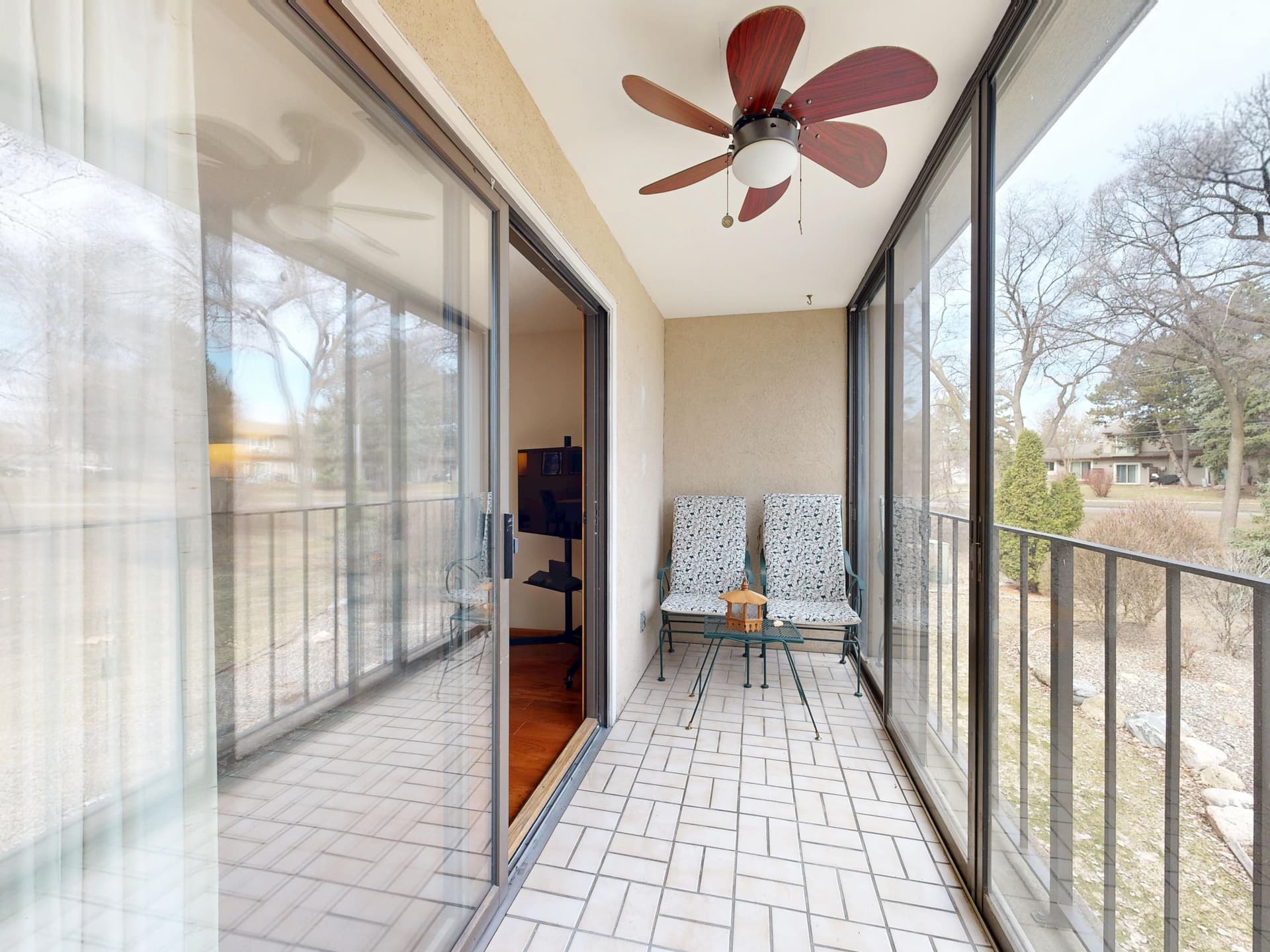
Use pile — the fuzzy brush strip — anywhere the sliding panel moves against the frame. Foam and bulb seals are shredded by the sliding action within weeks. The spec to match is the pile height, which has to bridge the panel-to-frame gap, and the backing width, which has to fit the channel.
Why a sliding door needs a different material
On a hinged door, the door and the frame meet face to face. They come together, they compress whatever is between them, and they separate. Nothing rubs. That is why foam tape, V-seal and bulb seals all work on a hinged door — they are compression seals and compression is what the door gives them.
A sliding door never compresses anything. The panel travels parallel to the frame, past the seal, on every open and every close. A compression seal in that position is not being compressed, it is being scrubbed. Foam rolls up and peels. A rubber bulb is dragged over, folded and eventually torn off its backing.
Pile is woven fiber standing off a backing strip, and it is built for exactly this. The fibers bend as the panel passes and stand back up afterwards. Look at the factory seal in any aluminum or vinyl slider and it is pile, because the people who built the door had the same constraint you do.
The three separate joints on one patio door
People talk about sealing "the patio door" as if it were one gap. It is at least three, they leak differently, and they take different parts.
- The panel-to-frame channel. Where the moving panel runs past the fixed frame, top and bottom and at the jamb it closes against. This is the sliding joint, and it is pile.
- The interlock. Where the moving panel's stile meets the fixed panel's stile when the door is shut. The two surfaces meet and stop — nothing slides once the door is closed — so this joint takes a bulb or a silicone seal and seals properly.
- The screen panel. If your door has a screen slider, its leading edge almost never meets the frame cleanly. In summer it is how insects get in. In autumn it is a straight air path to the glass.
A fourth, which is not a weatherstrip job at all: the joint between the whole frame and the rough opening in the wall. On a door installed more than twenty years ago that is often the biggest leak of the four, and it is behind the trim. The diagnosis is in how to find drafts in your house.
Match the part to your gap
Measure at the widest point. Then read across. If your measurement sits on a boundary, take the larger band — a seal that is slightly too big compresses, and one that is too small does nothing at all.
| Your gap | Part type | Our pick | Price |
|---|---|---|---|
| Panel-to-frame, tight channel | Pile weatherstrip, 3/16 in pile |  Pile Weather Stripping for Sliding Windows and Doors, 16.5 ft x 11/32 in x 3/16 inPublishes both backing width and pile height, which is the pair of numbers that decides the fit. | $7.99 · CHECK ON AMAZON |
| Panel-to-frame, deeper channel | Brush weatherstrip, 0.4 in brush |  ZOMPAGO Brush Weather Stripping, 0.2 in x 0.4 in x 66 ftTaller brush for a deeper channel, and 66 ft covers every slider in the house. | $9.99 · CHECK ON AMAZON |
| Where the two panels meet | Silicone bulb seal |  Protalwell Silicone D-Section Door Seal, 3/8 in W x 5/16 in T, 20 ftThe interlock stile is a static joint, not a sliding one — so a bulb seal is allowed here and seals harder than pile. | $11.99 · CHECK ON AMAZON |
| Screen panel leading edge | Rubber edge seal, 84 in |  Cottonwood Hardware Sliding Screen Door Seal Strip, 84 inThe gap nobody seals. Summer bug path, autumn air path, and the screen slider has one on every door. | $16.99 · CHECK ON AMAZON |
Measuring for pile
Two numbers, and both are usually printed on the old strip if enough of it survives to read. The backing width is how wide the strip's base is, and it has to drop into the channel without being forced. The pile height is how far the fibers stand off that base, and it has to be at least as tall as the gap between the panel and the frame, or it is not touching anything.
If the old strip is gone entirely, measure the channel with a drill bit or the shank of a screwdriver for width, and use the index-card method for the panel gap. Buy pile slightly taller than the gap rather than slightly shorter — a brush that is a little too tall compresses, and one that is too short does nothing at all.
The picks
Quick picks
Ranked for fit, not for hype. Tap a row to jump to the full write-up, or go straight to the listing.
| # | Product | Best for | Gap range | Price |
|---|---|---|---|---|
| 1 | Pile Weather Stripping for Sliding Windows and Doors, 16.5 ft x 11/32 in x 3/16 inPile — the fuzzy brush strip — is the correct material for a sliding door, and this is the one here that publishes both its width and its pile height. | The sliding panel's own track seal | Published 3/16 in pile height | $7.99 · CHECK ON AMAZON |
| 2 | ZOMPAGO Brush Weather Stripping, 0.2 in x 0.4 in x 66 ftThe same pile idea in a 66 ft roll, which is the length that stops the job stalling halfway through the second door. | Doing every slider in the house | Published 0.4 in brush height | $9.99 · CHECK ON AMAZON |
| 3 | Protalwell Silicone D-Section Door Seal, 3/8 in W x 5/16 in T, 20 ftSilicone rather than EPDM or foam: it costs more per foot and it is the one profile that does not stiffen when the temperature drops. | Cold climates | Published 5/16 in thick; suits a measured gap of roughly 3/16 in to 5/16 in | $11.99 · CHECK ON AMAZON |
| 4 | Cottonwood Hardware Sliding Screen Door Seal Strip, 84 inThe part for the gap most people never seal: the gap down the leading edge of a sliding SCREEN door, which is a bug path in summer and an air path in autumn. | The screen slider, not the glass one | Not published as a gap range; published as an 84 in strip | $16.99 · CHECK ON AMAZON |
| 5 |  3M Indoor Window Insulation Kit for Patio Doors, 2149W-6A single sheet published at 6 ft 8 in by 19.5 ft — enough to film a patio slider, which is where most of a room's draft actually comes from. | Sliding patio doors | Published sheet: 6 ft 8 in x 19.5 ft, one large opening | $13.53 · CHECK ON AMAZON |
#ad · how we are funded · price as of October 17, 2026
The sliding panel's own track seal
Pile Weather Stripping for Sliding Windows and Doors, 16.5 ft x 11/32 in x 3/16 in
Published gap range
Published 3/16 in pile height
#ad · how we are funded · price as of October 17, 2026
Pile — the fuzzy brush strip — is the correct material for a sliding door, and this is the one here that publishes both its width and its pile height.
Where the number comes fromOn a sliding door the seal has to survive being dragged across, every time. That rules out foam and bulb seals, which is why factory sliding doors use pile. The published numbers here are 11/32 in backing width and 3/16 in pile height — the pile height is the figure that has to bridge the gap between the sliding panel and the frame.
- Published pile height
- 3/16 in
- Published backing width
- 11/32 in
- Length
- 16.5 ft
- Fitting
- Self-adhesive
- Built for
- Sliding windows and door frames
- Mounting
- Self-adhesive, into the frame channel beside the sliding panel
What it does well
- Pile is the one material that survives a sliding action instead of being shredded by it
- Publishes a pile height, which is the number that decides whether it closes your gap
- Enough length in one roll for a typical patio door and its frame
Where it fails
- Pile slows air, it does not stop it dead the way a compressed bulb does
- Self-adhesive backing is only as good as the surface prep — clean the channel first
- An unbranded reseller listing rather than an established weatherseal maker
Who this is forA sliding patio door whose factory pile has flattened or fallen out.
Doing every slider in the house
ZOMPAGO Brush Weather Stripping, 0.2 in x 0.4 in x 66 ft
Published gap range
Published 0.4 in brush height
#ad · how we are funded · price as of October 17, 2026
The same pile idea in a 66 ft roll, which is the length that stops the job stalling halfway through the second door.
Where the number comes fromThe listing publishes a 0.2 in backing and a 0.4 in brush height across a 66 ft roll. That taller brush suits a slightly wider frame channel than the 3/16 in pile above. As always on a slider, measure the channel and the panel gap rather than guessing from the old strip.
- Published brush height
- 0.4 in
- Published backing width
- 0.2 in
- Length
- 66 ft
- Fitting
- Self-adhesive
- Best use
- Multiple sliding doors or windows
- Mounting
- Self-adhesive into the frame channel
What it does well
- 66 ft covers a patio door, a slider and the sliding windows in one purchase
- Taller brush suits the deeper frame channels the thin pile cannot fill
- Lowest cost per foot of the sliding-door seals here
Where it fails
- A 0.4 in brush is too tall for a tight channel — measure before ordering
- Same pile caveat: it slows air rather than sealing hard
- Unbranded reseller listing with no maker's specification sheet behind it
Who this is forA house with more than one sliding opening to reseal.
Cold climates
Protalwell Silicone D-Section Door Seal, 3/8 in W x 5/16 in T, 20 ft
Published gap range
Published 5/16 in thick; suits a measured gap of roughly 3/16 in to 5/16 in
#ad · how we are funded · price as of October 17, 2026
Silicone rather than EPDM or foam: it costs more per foot and it is the one profile that does not stiffen when the temperature drops.
Where the number comes fromThe listing publishes a 3/8 in width and a 5/16 in thickness across a 20 ft roll. Thickness is the figure that matters: our general rule, published at /how-we-pick, is that a compressible seal works from about half its thickness up to its full thickness, which puts this one at roughly 3/16 to 5/16 in.
- Material
- Silicone
- Published width
- 3/8 in
- Published thickness
- 5/16 in
- Published length
- 20 ft
- Profile
- D-section
- Mounting
- Self-adhesive
What it does well
- Silicone keeps its flexibility through a hard freeze, which is the whole reason to pay more than foam
- Publishes both the material and the section, which most listings in this category do not
- Does not chalk or crack in sunlight the way vinyl does
Where it fails
- More expensive per foot than foam or EPDM
- Adhesive on silicone is fussier than on rubber — surface prep matters more
- Black only in this section, which shows on a white frame
Who this is forA door or hatch in a house that gets a real winter.
The screen slider, not the glass one
Cottonwood Hardware Sliding Screen Door Seal Strip, 84 in
Published gap range
Not published as a gap range; published as an 84 in strip
#ad · how we are funded · price as of October 17, 2026
The part for the gap most people never seal: the gap down the leading edge of a sliding SCREEN door, which is a bug path in summer and an air path in autumn.
Where the number comes fromThis seals the vertical edge of a sliding screen door where it meets the frame, rather than the bottom of a glass slider. The listing publishes an 84 in length, which is a standard patio screen height. No working gap range is published, so match it to the edge gap you can see daylight through.
- Published length
- 84 in
- Seals
- The vertical leading edge of a screen slider
- Material
- Rubber
- Also stops
- Insects, per the listing
- Published gap range
- None
- Mounting
- Applied along the leading edge of the sliding screen panel
What it does well
- Addresses the screen door edge, which every other pick on this page ignores
- 84 in matches a standard patio screen without joining pieces
- Does a summer job and a winter job with one part
Where it fails
- A screen door is not a weather barrier — this improves it, it does not make it one
- No published working gap range
- Only useful if your slider actually has a screen panel
Who this is forA patio slider whose screen panel does not meet the frame cleanly.
Sliding patio doors
3M Indoor Window Insulation Kit for Patio Doors, 2149W-6
Published gap range
Published sheet: 6 ft 8 in x 19.5 ft, one large opening
#ad · how we are funded · price as of October 17, 2026
A single sheet published at 6 ft 8 in by 19.5 ft — enough to film a patio slider, which is where most of a room's draft actually comes from.
Where the number comes from3M publishes the sheet size (6'-8" x 19.5 ft) for one large window or patio door. It is film: it insulates the opening, it does not seal a measured gap.
- Published sheet
- 6'-8" x 19.5 ft
- Openings
- 1 large window or patio door
- Tape
- Scotch window film mounting tape
- Model
- 2149W-6
- Install
- Indoor
- Mounting
- Scotch window film mounting tape, hair dryer shrink
What it does well
- One continuous sheet, so no seam across the middle of a slider
- Patio doors are usually the biggest single leak in a living room
- Same tape quality as the small kits
Where it fails
- The door cannot be used while it is filmed — plan the season around it
- A sheet this size needs two people to hang straight
- Not a substitute for sealing the slider's own weatherstrip
Who this is forA sliding patio door you can live without opening until spring. If you need the door, seal it instead — see our patio-door guide.
What we would skip, and why
Nobody in this category ever declines to recommend something. That is what makes universal praise worth ignoring. Here is what we would not buy.
Foam tape anywhere the panel slides
This is the single most common mistake on a patio door and it is worth being blunt about. Open-cell foam tape is cheap, it is on the same shelf, and it lasts about three weeks on a slider. The panel drags across it on every use, rolls the edge, and peels it off. Foam belongs on a hinged door's stop, where the surfaces meet face-to-face and never rub. On a slider, use pile.
A bulb seal in the sliding track
Same reasoning, slightly less obvious. A rubber or silicone bulb seals beautifully because it compresses — but compressing against a moving panel means being dragged flat and then torn. The one place a bulb is right on a patio door is the interlock, where the two panels meet when closed and do not move against each other. That is a static joint and it is in the gap table above.
Sealing the door and ignoring the frame
A sliding patio door is a big assembly in a big rough opening, and on an older installation the leak is frequently not the panel at all — it is the joint between the frame and the wall, hidden behind the architrave. Before buying pile, run the back of your hand around the outside of the frame on a windy day. If that is where the air is, the fix is caulk and backer rod, not weatherstrip.
Expecting weatherstrip to fix a door that is off its rollers
A slider that has dropped on worn rollers no longer meets its frame squarely, and no amount of pile closes a tapered gap. The tell is a door that is heavy to move and rides differently at one end. Rollers are adjustable on almost every patio door — there are usually two screws behind small caps at the bottom of the panel — and adjusting them is free.
How we picked
- We start from the mechanical constraint, because on a slider it eliminates most of the category before price is even considered: the seal is dragged across on every single use. That rules out foam and, in the track, bulb seals. Pile is what survives, which is why factory sliding doors are built with it.
- Among pile strips we rank on published dimensions. The two numbers that matter are the backing width, which has to fit the channel, and the pile height, which has to bridge the gap. Most listings publish one; the better ones publish both.
- We then cover the two joints that pile does not serve: the interlock where the panels meet, and the leading edge of the screen panel. Different joints, different parts.
- We do not test any of this. The method is published in full, including what we do not do.
We have not tested these products and we do not claim to have. The full method, including what we refuse to claim, is on how we pick.
Complete the kit
The parts that decide whether the seal you just bought actually holds. Skip these and you will be doing the job again in March.

Removing old weatherstrip adhesive
Goo Gone Pro-Power Adhesive Remover Spray, 16 fl oz, with Scraper
The step everybody skips: the new tape will not stick to the residue the old tape left behind.

Deep gaps before caulking
Frost King C21CP-C Caulk Saver Backer Rod, 3/8 in x 350 ft
Backer rod: the foam you push into a deep gap so the caulk over it is a seal rather than a bottomless hole.
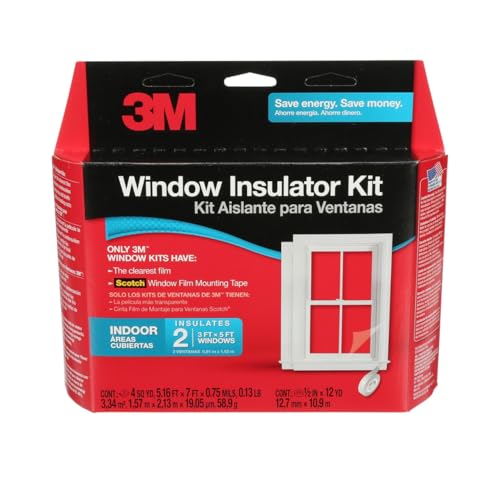
Trying it on one room
3M Indoor Window Insulator Kit, Two Pack
The two-window box: the right way to find out whether film solves your problem before committing a whole house to it.
#ad · how we are funded · price as of October 17, 2026
If the glass itself is the problem
Weatherstrip fixes air leaks. It does nothing about a large single-glazed or failed double-glazed panel radiating cold into the room, and a patio door is mostly glass. If the draft you feel standing near the door persists after the seals are sound, what you are feeling is probably convection off cold glass rather than infiltration — cold air falling down the pane and across the floor. A wide stopper along the floor line will not stop that either, but it does blunt where it spills into the room: best draft stoppers for sliding glass doors.
That is a different problem with different answers: window film, heavy curtains, or eventually the glass itself. We cover the comparison honestly in window film vs thermal curtains, including the cases where neither is worth the money.
Questions people actually ask
- What kind of weather stripping works on a sliding glass door?
- Pile — woven brush fiber on a backing strip — anywhere the panel slides past the frame. Foam and rubber bulb seals are destroyed by the sliding action within weeks. The one exception is the interlock where the two panels meet when closed, which is a static joint and can take a bulb or silicone seal.
- How do I know what pile height to buy?
- The pile height has to be at least as tall as the gap between the sliding panel and the frame. Measure that gap with the index-card method, then buy pile slightly taller rather than slightly shorter — too tall compresses, too short touches nothing. The backing width has to fit the channel, which you can measure with a screwdriver shank.
- Why does my patio door still feel cold after sealing it?
- Most likely convection rather than infiltration. A large pane of cold glass chills the air against it, which falls and runs across the floor — it feels exactly like a draft but no air is entering the house. Weatherstrip cannot fix that; film, curtains or better glazing can.
- Do I need to seal the screen door too?
- Only if you have one and it does not meet the frame cleanly. A screen slider is not a weather barrier, but its leading edge is a straight path for insects in summer and for air in autumn. It is a cheap fix and almost nobody does it.
Read next
Sealing drafts on sliding patio and French doors
Meeting stile, jambs, track and astragal — where sliders and French doors actually leak, and what seals each.
Foam, V-seal or silicone: which weather stripping your door needs
Three materials, three gap bands, one spec table. Choose by measured gap, not by shelf price.
How to measure a door gap properly
The index-card method, the three-point rule, and how to read your number against a published seal size.
Window film or thermal curtains?
One seals the air path, one covers the surface. Which symptom you have decides which you buy.
The best insulated dog doors for cold weather
One flap is a curtain over a hole. The insulated doors that publish their flap size, pet limit and door-thickness range — and how to measure for one.
The best weather stripping for French doors and double doors
French doors leak down the middle, not the edges. Stop seals, astragal seals and a bottom for each leaf — and the free flush-bolt check that comes first.
The best draft stoppers for sliding glass doors, and the part of the draft they do not fix
Standard stoppers are 36 in; a slider is 60 to 72 in. The ones long enough, and what they cannot fix.