01 / DOORS
The best draft stoppers for sliding glass doors, and the part of the draft they do not fix
Every draft stopper on the shelf is built for a hinged door half the width of your patio door. These are the ones long enough to matter, and an honest account of how much they change.
We earn a commission on some links here, at no extra cost to you. It does not change what we recommend or the order they appear in. How we are funded
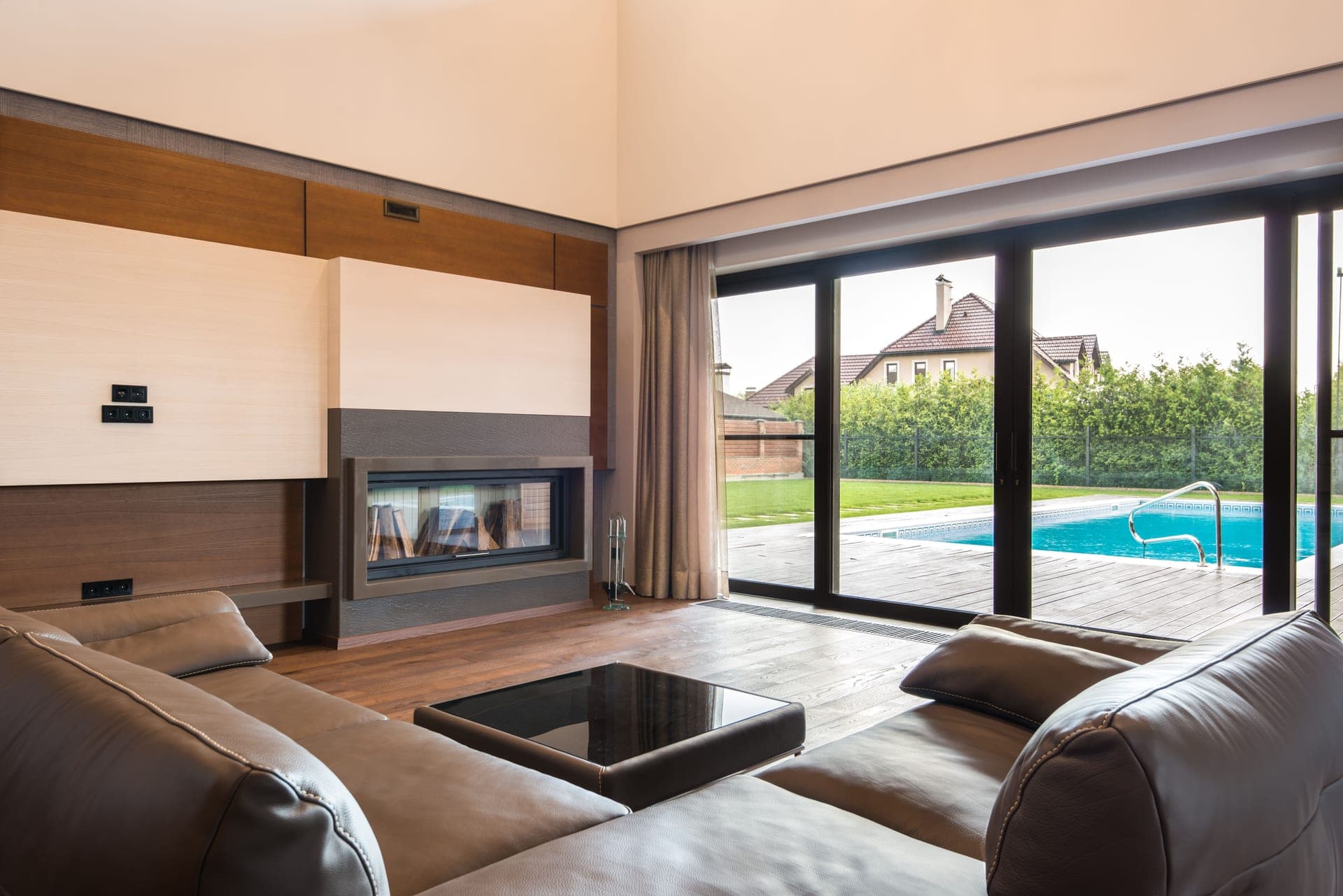
Buy by length: measure the opening between the frame jambs, and expect 60 in or 72 in rather than the 36 in a standard stopper is built for. Lay it on the floor against the inside face, never in the track. It closes the floor-level draft, but not the interlock or the worn pile in the channels.
Why the stopper you already tried did not work
There is a specific, boring reason patio doors have a reputation for defeating draft stoppers, and it is not the door. It is that virtually every draft stopper on sale is built for a hinged door. Look at the published sizes across the category and they cluster between 30 and 38 inches, because that is what an interior or entry door is.
A residential sliding glass door is nominally 60 or 72 inches across the opening. Laying a 36 inch stopper along the bottom of one covers roughly half the floor line and leaves the other half open, and air does not politely queue for the covered part. That is the whole mechanism behind every review that says it made no difference.
So the first thing this page does is filter for length. Everything ranked below is published at 60 inches or more. That is a much smaller field than the general draft stopper category, and it is the only field that is relevant to you.
What a slider actually leaks through
This is the part most pages in this category skip, and it changes what you should expect from the purchase. A sliding glass door has four leak paths and a floor-level stopper only addresses one of them.
- The interlock. Where the moving panel meets the fixed one when closed, the two stiles hook together. When the seal in that joint has hardened, you get a vertical draft running the full height of the door, right in the middle. A stopper on the floor does nothing about it.
- The pile in the channels. The moving panel slides in channels lined with pile weatherstrip. Pile wears flat, and once it does the panel rattles in its channel and air moves freely past it.
- The track at the bottom. This is the one a stopper helps with, and even here it is partial: the stopper sits on the floor in front of the track, so it blocks the cold air spilling into the room rather than sealing the track itself.
- The glass. A slider is the largest single pane in most houses. If the cold you feel is a radiant chill standing near it rather than a draft moving across your ankles, no stopper of any length changes it.
The honest summary: buy a stopper for the floor-level draft, which is real and which you will feel go away the same evening. Then fix the interlock and the pile, which is the actual repair and costs less than you would guess. The parts are in best weather stripping for sliding glass doors, and the diagnosis is walked through in sliding and French door drafts.
Match the part to your gap
Measure at the widest point. Then read across. If your measurement sits on a boundary, take the larger band — a seal that is slightly too big compresses, and one that is too small does nothing at all.
| Your gap | Part type | Our pick | Price |
|---|---|---|---|
| 72 in opening, cheapest that fits | Weighted tube, 72 in |  Home District Weighted Faux Suede Patio Door Draft Blocker, 72 in, Light Brown72 in is the width most residential sliders are. Measure between the jambs first. | $22.99 · CHECK ON AMAZON |
| 60 in opening | Tube with washable cover, 60 in |  Sunolga Door Draft Stopper with Removable Washable Cover, 60 in, GrayThe other standard width, and the one people buy 72 in for by mistake. | $26.99 · CHECK ON AMAZON |
| Busy doorway, or road noise | Heavily weighted tube, 72 in |  MAGZO Door Draft Stopper, 72 in, Weighted, GrayMass is what stops a stopper wandering on a door you walk through daily. | $40.99 · CHECK ON AMAZON |
| 72 in, dark floor or bronze frame | Tube with washable cover, 72 in | 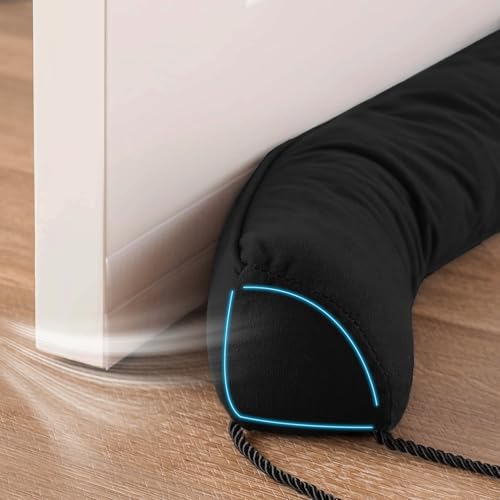 Sunolga Door Draft Stopper with Removable Washable Cover, 72 in, BlackSame washable design at full width. Black, where light brown would look wrong. | $39.99 · CHECK ON AMAZON |
| Inside and outside of the track | Two separate tubes, 60 in each |  Gisafai Long Door Draft Stopper, 60 in, 2 Pieces, GrayThe only way to cover both faces, because a slider cannot take a twin stopper. | $50.99 · CHECK ON AMAZON |
Never put it in the track
Worth its own section because it is the one way to do real damage with an otherwise harmless product. The bottom of a slider is not a flat threshold like a hinged door has. It is an extruded track with a raised rail the rollers ride on, and on almost every unit there are weep holes through the outer edge that let rainwater drain back outside.
Pushing a fabric tube down into that track does four bad things at once: it fouls the rollers, it stops the panel closing fully so the latch never engages properly, it blocks the drainage so water backs up inside the track, and it destroys the stopper. If you find yourself closing the door onto the stopper, it is in the wrong position.
The right position is on the floor, inside the room, pushed up against the inside face of the closed panel. That is also why length matters more than thickness here: you are bridging the floor line, not filling a slot.
One side or two
On a hinged door the best stoppers are twins: two tubes joined by a membrane that passes under the door, so one tube sits on each face and the pair travels with the door as it swings. It is a genuinely good design and it is the reason we recommend twins on the hinged-door page.
It cannot be used here. A sliding panel moves sideways along its track, so a connecting membrane would be dragged through the track on every open and close, over the rail and through whatever grit has blown in. It would not last a season and it would not do the track any favors either.
If one stopper inside is not enough, the answer on a slider is two independent pieces, one on the floor inside and one on the patio side against the outer face. That is what the two-piece pick here is for. Be realistic about the outside one: it sits in the weather, no maker here publishes an outdoor rating, and it will weather.
Living with one on a door you actually use
A patio door is different from the spare-room door most draft stoppers end up at. You walk through it, the dog walks through it, and in most houses it is the route to the yard several times a day. Two practical consequences follow, and they drive two of the picks here.
The first is that a light tube gets kicked. Every time the door opens, something nudges it, and by the end of a week it is bunched at one end with a foot of bare floor showing. This is what the weight specification is actually for, and it is worth paying for on a busy doorway even though nothing about weight makes it seal better when it is sitting correctly.
The second is dirt. A patio threshold collects grit, grass, leaves and mud in a way an interior doorway does not, and a fabric tube on that floor picks all of it up. A removable, washable cover is a much better feature here than it would be anywhere else in this category, which is why two of the five picks have one.
What we would skip, and why
Nobody in this category ever declines to recommend something. That is what makes universal praise worth ignoring. Here is what we would not buy.
Buying a standard 36 in draft stopper for a patio door
This is the mistake the whole page exists for. Almost every draft stopper sold is built for a hinged interior or entry door and published at 30 to 38 in. A residential patio slider is nominally 60 in or 72 in across the opening. A 36 in stopper laid at a slider covers about half of it and leaves the rest of the floor line open, which is why people report that a draft stopper 'did nothing' on a patio door. The products on best door draft stoppers are the right parts for a hinged door and the wrong length for this one.
Expecting a twin, straddling stopper to work on a slider
On a hinged door the best design is a twin: two tubes joined by a thin membrane that passes under the door, so a tube sits against each face and the whole thing swings with the door. That cannot work here. A sliding panel travels sideways along a track, so a connecting membrane would be dragged through the track every time the door opened, and the track is exactly where the grit is. If you want both faces covered on a slider, you need two independent pieces, which is why one pick here is a two-piece set.
Treating a stopper as the repair rather than the stopgap
A fabric tube on the floor does not touch the two places a slider usually leaks worst: the INTERLOCK, where the two panels meet when closed, and the worn pile weatherstrip in the channels the panel slides through. Those are the actual repair, they are inexpensive, and they are covered in best weather stripping for sliding glass doors. A stopper is the no-tools, nothing-attached, working-tonight fix for the cold pooling at your feet. It is genuinely worth having and it is not the whole job.
Laying the stopper in the track
The bottom of a slider is not a flat threshold. It is a track with a raised rail the rollers run on and, on most units, weep holes that must stay clear to drain rainwater out. A stopper belongs on the FLOOR against the inside face of the door, not in the track. Pushed into the track it fouls the rollers, stops the door closing properly, blocks the drainage it needs, and gets shredded. If the door closes onto it, it is in the wrong place.
Judging these on a noise claim
Several listings here mention noise, and none names a test, a frequency or a door. We publish no decibel or percentage figure from any of them. What is verifiable before you buy is the published length, whether the cover comes off, roughly how heavy it is, and how many pieces are in the box. Those are what the picks are ranked on, because they are what decides whether it fits and stays put.
What else to do on the same afternoon
If you are already at the door with a tape measure, two free checks are worth making before you decide the door is the problem.
- 1Close and lock the door, then run the back of a hand slowly down the interlock where the two panels meet. A draft you can feel there is a seal problem, not a floor problem, and no stopper will touch it.
- 2Look at the rollers. Almost every slider has adjustment screws behind small caps at the bottom of the moving panel. A panel riding low or unevenly does not sit into its weatherstrip properly, and adjusting it costs nothing.
- 3Check the pile in the channel with a fingertip. If it is flattened and gray rather than upright, that is the part to replace.
- 4Stand a foot back from the glass with the door shut. If it feels cold there with no air moving, the issue is the glazing rather than a leak, and why is my house so drafty covers telling those apart.
Complete the kit
The parts that decide whether the seal you just bought actually holds. Skip these and you will be doing the job again in March.

Removing old weatherstrip adhesive
Goo Gone Pro-Power Adhesive Remover Spray, 16 fl oz, with Scraper
The step everybody skips: the new tape will not stick to the residue the old tape left behind.

Deep gaps before caulking
Frost King C21CP-C Caulk Saver Backer Rod, 3/8 in x 350 ft
Backer rod: the foam you push into a deep gap so the caulk over it is a seal rather than a bottomless hole.

Cold climates
Protalwell Silicone D-Section Door Seal, 3/8 in W x 5/16 in T, 20 ft
Silicone rather than EPDM or foam: it costs more per foot and it is the one profile that does not stiffen when the temperature drops.
#ad · how we are funded · price as of October 16, 2026
How we picked
- We rank on published length against a real opening first, because on a patio door length is the specification that decides whether the product works at all. Every pick states it, and the table places each one against the two standard slider widths.
- Weight and whether it stays put second. A patio door is a high-traffic threshold, and the commonest complaint about a light tube there is that it ends up kicked into a heap at one end.
- Washable covers and piece count third, treated as use decisions rather than a ranking. A door onto a yard collects grit; a door that leaks on both faces needs two pieces.
- No maker in this group publishes a working gap range, and that is inherent rather than an omission: a stopper rests on a floor instead of filling a measured slot. We did not test these and we publish no noise figures. Prices come from the live price layer and are dated; the full method is published.
We have not tested these products and we do not claim to have. The full method, including what we refuse to claim, is on how we pick.
Questions people actually ask
- What size draft stopper do I need for a sliding glass door?
- Measure the opening between the frame jambs at floor level, not the panel that slides. Most residential sliders come out at about 60 in or 72 in, against the 30 to 38 in that standard draft stoppers are built for. If your measurement falls between the two sizes, buy the longer one, because a fabric tube tolerates being slightly long and cannot be stretched.
- Why didn't a draft stopper work on my patio door?
- Almost always because it was too short. Nearly every stopper on sale is sized for a hinged door at 30 to 38 in, which covers about half a patio slider and leaves the rest of the floor line open. The other common reason is that the leak was at the interlock in the middle of the door or in the worn pile in the channels, neither of which a floor-level stopper touches.
- Can I put a draft stopper in the sliding door track?
- No. The track carries the rollers and usually has weep holes that drain rainwater back outside. A tube pushed into it fouls the rollers, stops the door latching properly, blocks the drainage and gets shredded. It belongs on the floor inside the room, pressed against the inside face of the closed panel.
- Do twin draft stoppers work on sliding doors?
- Not well. A twin works on a hinged door because the connecting membrane passes under the door and swings with it. A sliding panel travels sideways along a track, so that membrane would be dragged through the track and over the rail every time you opened the door. For both faces of a slider, use two independent pieces instead.
- Will a draft stopper fix a drafty sliding glass door?
- It will fix the cold spilling across the floor, which is usually what people notice first, and it does that immediately with nothing attached. It will not fix the interlock where the two panels meet or the flattened pile in the channels, which are often the bigger leaks. Treat it as the same-day stopgap and the weatherstrip as the repair.
- Can I use a draft stopper on the outside of a patio door?
- You can, and one pick here is a two-piece set intended for exactly that, but be realistic about it. None of these publishes an outdoor rating, and a fabric tube left on a patio is exposed to rain, sun and whatever blows against it. Expect it to weather, and take it in if the forecast is bad.
Read next
The best weather stripping for sliding glass doors
Pile survives the sliding action; foam and bulb seals do not. The strips that publish a pile height, plus the interlock and screen-edge joints nobody seals.
Sealing drafts on sliding patio and French doors
Meeting stile, jambs, track and astragal — where sliders and French doors actually leak, and what seals each.
The best door draft stoppers when you cannot drill the door
No-drill stoppers ranked by published fit, including the one that states an actual gap range.
Do draft stoppers actually work?
Yes at the one thing they do, no at most of what people expect. And when a sweep is the better buy.
How to measure a door gap properly
The index-card method, the three-point rule, and how to read your number against a published seal size.