01 / DOORS
The best barn door seals, and the gap you cannot close
A barn door hangs in front of the opening instead of inside it. That one fact sets a ceiling on what any seal can do — and decides which four parts are worth buying.
We earn a commission on some links here, at no extra cost to you. It does not change what we recommend or the order they appear in. How we are funded
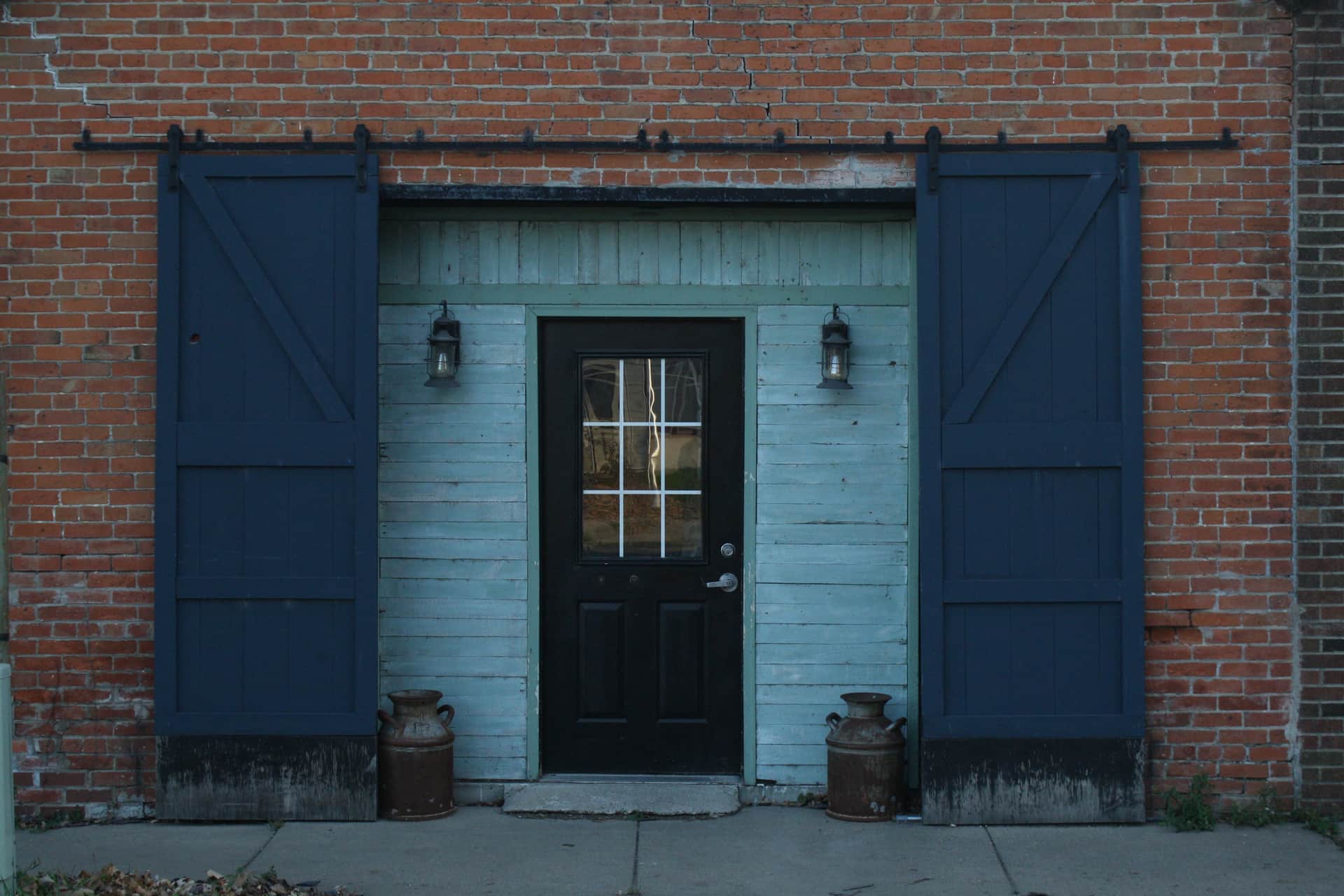
The best general answer is a long-bristle brush strip — the ZOMPAGO 0.9 in brush — fixed to the wall trim so the door slides against it, because 0.9 in covers the half to three-quarter inch standoff that standard barn door hardware produces. If you want the best actual seal and will accept seeing it, a 3 in silicone flap beats any brush. Neither makes a barn door airtight, and nothing sold does.
Why a barn door is a harder problem than it looks
Every other door in your house closes INTO an opening. The slab comes to rest against a stop on three sides, which gives any seal two parallel faces to work between, and a sweep at the bottom has a threshold to press onto. That geometry is what makes sealing a normal door straightforward.
A barn door closes in FRONT of an opening. It hangs from a rail above, standing off the wall by whatever distance the hardware's rollers and standoffs produce — commonly half to three quarters of an inch — and it overlaps the opening rather than entering it. There is no stop, no jamb, no threshold and no compression anywhere.
So there are four gaps, and not one of them can be closed the way a normal door's gaps are closed:
- 1The wall-side gap, running the full height of both vertical edges, set by the hardware standoff. The biggest single opening and the one all the products below target.
- 2The head gap, between the top of the slab and the rail or the wall above it. Usually the second biggest and almost always ignored.
- 3The floor gap, under the slab. A barn door is hung with clearance so it does not scrape, and that clearance is typically more generous than a hinged door's.
- 4The leading edge, where the slab stops against the wall or a stop block. The only gap with any chance of real compression, and only if you have fitted a stop.
Brush or flap: the decision that matters
Everything sold for this falls into one of two mechanisms, and they fail differently. This is the choice, and it is mostly about whether you can see the seal.
| Brush strip | Silicone flap | |
|---|---|---|
| How it works | Bristles lean into the slab | A flat flap overlaps the gap and is pressed down |
| Air seal | Partial — leaks between bristles | Better — a continuous face |
| Sound | Slight improvement | Slight improvement, marginally better |
| Light | Cuts it substantially | Blocks it |
| Visibility | Discreet, reads as a dark line | Visible, reads as a strip of trim |
| Survives the sliding action | Very well — bristles bend and recover | Adhesive is doing real work; it will eventually lose |
| Tolerates an out-of-plumb door | Yes — bristles compress unevenly | Poorly — a flap needs consistent overlap |
In practice the pattern that works best on most installations is a brush on the two vertical edges, where the door is in constant contact and a flap would be shredded, and a flap across the head, where nothing touches it and the seal quality is free. Nobody sells it as a kit, so it is two purchases.
What to do about the floor gap
This is where people make the one genuinely damaging mistake. A blade sweep on the bottom of a barn door drags sideways across the floor for the whole length of the slide, every time, which is a load the adhesive was never designed for. It peels, and on a wood floor it can score a visible arc.
Bristles solve that, because they clear whatever they are passing over and recover afterwards. A brush sweep on the bottom edge is one of the few places in this whole site where we would recommend a brush over a blade without qualification. The broader comparison of sweep types is in door sweep vs door bottom seal.
What this is worth, honestly
If the barn door is an interior one between two heated rooms, no seal here will change your heating. There is no temperature difference across the door for a seal to work against — the reasoning is set out in do you need a door sweep on an interior door? — and the real reasons to fit these are light, privacy, smell and dust.
If the barn door is on a pantry, a laundry or a utility room, the dust and smell case is strong and these parts are genuinely worth fitting. If it is on a bathroom or a bedroom and privacy is the point, brush seals on the vertical edges plus a flap at the head is as far as the product category goes, and it is a meaningful improvement rather than a solution.
And if the barn door is in front of an exterior opening, or at the top of a basement stair, or onto an attached garage — then you have a real thermal problem on your hands and a barn door is the wrong door for it. The honest recommendation there is a hinged door in a frame, sealed properly as best weather stripping for doors describes.
Match the part to your gap
Measure at the widest point. Then read across. If your measurement sits on a boundary, take the larger band — a seal that is slightly too big compresses, and one that is too small does nothing at all.
| Your gap | Part type | Our pick | Price |
|---|---|---|---|
| Up to 1/4 in | Pile strip |  Pile Weather Stripping for Sliding Windows and Doors, 16.5 ft x 11/32 in x 3/16 inPublished 3/16 in pile. For the trim edge on a door that hangs close to the wall. | $7.99 · CHECK ON AMAZON |
| 1/4 to 1/2 in | Brush strip, short bristle |  ZOMPAGO Brush Weather Stripping, 0.2 in x 0.4 in x 66 ftPublished 0.4 in brush. The long roll, so one purchase does several doors. | $9.99 · CHECK ON AMAZON |
| 1/2 to 3/4 in | Brush strip, long bristle | ZOMPAGO Brush Weather Stripping, 0.9 in x 0.4 in x 32.8 ftPublished 0.9 in brush — the typical standoff of a barn door on standard hardware. | $22.99 · CHECK ON AMAZON |
| Any, with flat trim each side | Silicone flap |  TORRAMI Silicone Weather Stripping, 3 in x 20 ft, WhiteA 3 in flap overlaps the gap rather than filling it. Better seal, visible. | $28.99 · CHECK ON AMAZON |
| The floor gap under the slab | Adhesive brush sweep |  Vannesse Door Sweep with Brush, 39 in, Self-AdhesiveBristles clear the floor as the door slides. A blade sweep would drag and peel. | $11.69 · CHECK ON AMAZON |
Quick picks
Ranked for fit, not for hype. Tap a row to jump to the full write-up, or go straight to the listing.
| # | Product | Best for | Gap range | Price |
|---|---|---|---|---|
| 1 | ZOMPAGO Brush Weather Stripping, 0.9 in x 0.4 in x 32.8 ftThe tall version of a brush strip: a 0.9 in bristle on a 0.4 in adhesive base. On a sliding barn door, where the slab hangs off the wall and no jamb exists, a tall brush is the only thing that bridges the gap without touching the wall. | A barn door's wall-side gap, where the brush has real distance to cross | 0.9 in bristle length; crosses a gap of roughly 1/2 to 3/4 in while staying in contact | $22.99 · CHECK ON AMAZON |
| 2 | TORRAMI Silicone Weather Stripping, 3 in x 20 ft, WhiteA 3 in wide flexible silicone strip rather than a bristle. Fixed to the wall so the door closes against it, it gives a barn door something to seal to — which is the thing a barn door fundamentally lacks. | A wide flat overlap, where a brush would look wrong | 3 in wide flexible flap; spans the overlap it is mounted across rather than filling a measured gap | $28.99 · CHECK ON AMAZON |
| 3 | ZOMPAGO Brush Weather Stripping, 0.2 in x 0.4 in x 66 ftThe same pile idea in a 66 ft roll, which is the length that stops the job stalling halfway through the second door. | Doing every slider in the house | Published 0.4 in brush height | $9.99 · CHECK ON AMAZON |
| 4 | Vannesse Door Sweep with Brush, 39 in, Self-AdhesiveAn adhesive sweep with bristles instead of a blade. Bristles part over carpet pile rather than dragging on it, which is the one place a blade sweep genuinely fails. | An interior door over carpet | Not published as a numeric range; bristles compress to the surface they meet | $11.69 · CHECK ON AMAZON |
| 5 | Pile Weather Stripping for Sliding Windows and Doors, 16.5 ft x 11/32 in x 3/16 inPile — the fuzzy brush strip — is the correct material for a sliding door, and this is the one here that publishes both its width and its pile height. | The sliding panel's own track seal | Published 3/16 in pile height | $7.99 · CHECK ON AMAZON |
#ad · how we are funded · price as of October 17, 2026
A barn door's wall-side gap, where the brush has real distance to cross
ZOMPAGO Brush Weather Stripping, 0.9 in x 0.4 in x 32.8 ft
Published gap range
0.9 in bristle length; crosses a gap of roughly 1/2 to 3/4 in while staying in contact
#ad · how we are funded · price as of October 17, 2026
The tall version of a brush strip: a 0.9 in bristle on a 0.4 in adhesive base. On a sliding barn door, where the slab hangs off the wall and no jamb exists, a tall brush is the only thing that bridges the gap without touching the wall.
Where the number comes fromZOMPAGO publishes the bristle length (0.9 in) and base width (0.4 in). That is enough to size against: you want a bristle noticeably longer than the gap so it leans into the surface, and the published 0.9 in covers the 1/2 to 3/4 in that a typical barn door sits off its wall.
- Bristle length
- 0.9 in
- Base width
- 0.4 in
- Roll length
- 32.8 ft
- Mounting
- Self-adhesive
- Also sold as
- A 0.2 in and a 0.4 in bristle version for tighter gaps
- Mounting
- Self-adhesive base, applied to the door edge or the wall trim
What it does well
- Long enough bristle to cross a real barn-door gap, which the short versions cannot
- One roll does the head and both sides of two doors
- Brush is the only seal type that tolerates a door sliding against it thousands of times
Where it fails
- A brush leaks air between the bristles — this reduces a draft, it does not stop one
- Does nothing for sound, and barn-door buyers usually want sound
- Adhesive base on a rough or stained timber trim needs cleaning and often a mechanical fixing too
Who this is forSomeone cutting the draft, light and dust around a sliding barn door and accepting the ceiling on what is possible.
A wide flat overlap, where a brush would look wrong
TORRAMI Silicone Weather Stripping, 3 in x 20 ft, White
Published gap range
3 in wide flexible flap; spans the overlap it is mounted across rather than filling a measured gap
#ad · how we are funded · price as of October 17, 2026
A 3 in wide flexible silicone strip rather than a bristle. Fixed to the wall so the door closes against it, it gives a barn door something to seal to — which is the thing a barn door fundamentally lacks.
Where the number comes fromPublished as a width (3 in) and a length (20 ft), not a gap range — correct for a flap seal. A flap works by overlapping the gap and being pressed flat, so what matters is having enough flat surface each side of the gap to bond to.
- Width
- 3 in
- Length
- 20 ft
- Material
- Silicone
- Mounting
- Self-adhesive
- Listed uses
- Garage door tops and sides, barn doors, sliding doors
- Mounting
- Self-adhesive, applied to the wall trim, the door edge or a garage door's top and sides
What it does well
- A flap seals better than a brush, because there is no gap between bristles to leak through
- Silicone handles cold and sunlight far better than the vinyl flaps sold for the same job
- 3 in gives real overlap, so small movements of the door do not break the seal
Where it fails
- A flap is visible, and on a decorative interior barn door that is a genuine objection
- The door drags on it every time, so the adhesive is doing real work and will eventually lose
- Needs a flat surface to bond to — rough sawn barn-door trim often is not
Who this is forSomeone willing to accept a visible seal on a barn door in exchange for a real reduction in draft and sound leakage.
Doing every slider in the house
ZOMPAGO Brush Weather Stripping, 0.2 in x 0.4 in x 66 ft
Published gap range
Published 0.4 in brush height
#ad · how we are funded · price as of October 17, 2026
The same pile idea in a 66 ft roll, which is the length that stops the job stalling halfway through the second door.
Where the number comes fromThe listing publishes a 0.2 in backing and a 0.4 in brush height across a 66 ft roll. That taller brush suits a slightly wider frame channel than the 3/16 in pile above. As always on a slider, measure the channel and the panel gap rather than guessing from the old strip.
- Published brush height
- 0.4 in
- Published backing width
- 0.2 in
- Length
- 66 ft
- Fitting
- Self-adhesive
- Best use
- Multiple sliding doors or windows
- Mounting
- Self-adhesive into the frame channel
What it does well
- 66 ft covers a patio door, a slider and the sliding windows in one purchase
- Taller brush suits the deeper frame channels the thin pile cannot fill
- Lowest cost per foot of the sliding-door seals here
Where it fails
- A 0.4 in brush is too tall for a tight channel — measure before ordering
- Same pile caveat: it slows air rather than sealing hard
- Unbranded reseller listing with no maker's specification sheet behind it
Who this is forA house with more than one sliding opening to reseal.
An interior door over carpet
Vannesse Door Sweep with Brush, 39 in, Self-Adhesive
Published gap range
Not published as a numeric range; bristles compress to the surface they meet
#ad · how we are funded · price as of October 17, 2026
An adhesive sweep with bristles instead of a blade. Bristles part over carpet pile rather than dragging on it, which is the one place a blade sweep genuinely fails.
Where the number comes fromNo working gap figure published. A brush sweep is more forgiving than a blade because the bristles compress to different depths across the width — which is exactly why it is the pick for carpet and for a floor that changes height in the doorway.
- Type
- Adhesive brush sweep
- Length
- 39 in, trimmable
- Mounting
- Self-adhesive
- Bristles
- Nylon
- Door types
- Interior and exterior, per the listing
- Mounting
- Self-adhesive to the bottom face of the door
What it does well
- Bristles ride over carpet pile instead of dragging, so the door still swings freely
- 39 in covers a 36 in door with trim left over
- Forgiving of an uneven gap across the door width, which blade sweeps are not
Where it fails
- A brush is a worse AIR seal than a blade — bristles leak between the fibers by design
- Adhesive mounting on a painted door has the same lifting problem as any tape sweep
- Bristles collect dust and pet hair and look it within a season
Who this is forAn interior door over carpet, or a doorway where the floor changes from tile to carpet.
The sliding panel's own track seal
Pile Weather Stripping for Sliding Windows and Doors, 16.5 ft x 11/32 in x 3/16 in
Published gap range
Published 3/16 in pile height
#ad · how we are funded · price as of October 17, 2026
Pile — the fuzzy brush strip — is the correct material for a sliding door, and this is the one here that publishes both its width and its pile height.
Where the number comes fromOn a sliding door the seal has to survive being dragged across, every time. That rules out foam and bulb seals, which is why factory sliding doors use pile. The published numbers here are 11/32 in backing width and 3/16 in pile height — the pile height is the figure that has to bridge the gap between the sliding panel and the frame.
- Published pile height
- 3/16 in
- Published backing width
- 11/32 in
- Length
- 16.5 ft
- Fitting
- Self-adhesive
- Built for
- Sliding windows and door frames
- Mounting
- Self-adhesive, into the frame channel beside the sliding panel
What it does well
- Pile is the one material that survives a sliding action instead of being shredded by it
- Publishes a pile height, which is the number that decides whether it closes your gap
- Enough length in one roll for a typical patio door and its frame
Where it fails
- Pile slows air, it does not stop it dead the way a compressed bulb does
- Self-adhesive backing is only as good as the surface prep — clean the channel first
- An unbranded reseller listing rather than an established weatherseal maker
Who this is forA sliding patio door whose factory pile has flattened or fallen out.
What we would skip, and why
Nobody in this category ever declines to recommend something. That is what makes universal praise worth ignoring. Here is what we would not buy.
Adhesive foam tape, any brand
It is the first thing people reach for and the fastest thing to fail here. A barn door slides ACROSS its seal rather than closing onto it, and open-cell foam under a shearing load shreds within weeks. Foam works on a hinged door because the motion is perpendicular to the seal. On a slider it is the wrong mechanism entirely.
Anything sold as a "soundproof barn door kit"
There is no such thing, and the physics are not subtle. Sound needs a sealed perimeter under compression, and a barn door has a deliberate air gap on all four edges plus a slab that does not meet a jamb anywhere. Brush and flap seals reduce sound transmission a little. If a quiet room is the actual requirement, the honest answer is a hinged door in a frame, and no accessory changes that.
Magnetic seal strips
Sold for shower enclosures and for glass doors, and they need two parallel faces that come to rest against each other every time. A barn door comes to rest against nothing, and its position at the end of the slide varies by a quarter inch depending on how hard you pushed it. The magnet never finds its partner.
A floor-laid draft stopper
Not because it does not work — it does, on a hinged door — but because the slab sweeps sideways across the floor and pushes the tube along with it. Of all the doors in a house, a slider is the one where an unattached floor product is most certain to end up somewhere else.
Fitting it so it survives
- Clean the trim with isopropyl alcohol first, not a damp cloth. Stained or waxed timber trim carries a surface film that defeats adhesive, and this is the single most common reason these strips are hanging loose a month later.
- Fix to the wall or trim, not to the door, wherever you have the choice. A seal on the door moves thousands of times a year; a seal on the wall is stationary and only the bristles work.
- Add a mechanical fixing at each end of any adhesive run — one small brad or screw in the last inch. The ends always lift first, and a single fixing there roughly triples how long the run lasts.
- Fit the head before the sides. If you do the vertical edges first you will find the head strip has nowhere clean to land at the corners.
- Leave the leading edge until last and see whether you still need it. Many doors have a stop block that already closes that edge adequately, and a strip there is the one most likely to interfere with the door closing fully.
How we picked
- We judged these on published bristle length or flap width against the standoff distance a barn door actually sits at, because that is the measurement nobody publishes for the door and everybody has to take themselves.
- We publish no sound reduction figure and no air leakage figure for any of these. We have not tested them, and a seal on a door that cannot close against a jamb does not have a meaningful rating to quote.
- Brush is ranked above flap for the wall-side gap and flap above brush for sealing quality, deliberately — the two have different failure modes and the pick depends on whether you will tolerate a visible seal. The full method is published.
We have not tested these products and we do not claim to have. The full method, including what we refuse to claim, is on how we pick.
Questions people actually ask
- Can you seal a sliding barn door?
- Partially, never completely. A barn door hangs in front of the opening rather than closing into it, so there is no jamb, no stop and no threshold for a seal to compress against. Brush strips on the vertical edges and a flap at the head cut the draft, the light and the dust substantially. Airtight is not available.
- What is a barn door privacy sweep?
- A brush or flap strip fitted to the wall trim or the door edge to close the wall-side gap — the full-height opening created by the hardware holding the slab off the wall. It is sold for privacy and light blocking because those are the things it genuinely delivers, rather than for sealing.
- How do I stop light coming around a barn door?
- A silicone flap blocks light outright, where a brush only cuts it down — bristles always leave some path. Flaps on both vertical edges and the head will stop essentially all of it, at the cost of a visible strip of seal on the trim.
- What size brush strip do I need for a barn door?
- Measure from the wall or trim face to the back of the closed slab. That standoff is typically 1/2 to 3/4 in on standard hardware, which calls for a bristle around 0.9 in so it leans into the door rather than just reaching it. Take the measurement at top and bottom of both edges and buy for the largest.
- Will sealing a barn door make the room quieter?
- A little. Sound follows the air path, so closing the gaps helps, but meaningful sound isolation needs a compressed seal all the way round and a barn door cannot provide one on any edge. Treat a noticeable improvement as the realistic outcome and anything marketed as soundproofing a barn door as overclaimed.
- Should the seal go on the door or on the wall?
- On the wall or trim, where it is stationary and only the bristles flex. A strip fitted to the door travels its full length thousands of times a year, which is far harder on the adhesive. Fit to the door only where the geometry gives you no choice, such as the bottom edge.
- Why did my foam weather stripping fail on a barn door?
- Because the door slides across it rather than closing onto it. Open-cell foam has almost no shear strength, so a sliding load tears it apart within weeks. The motion is the problem, not the product — the same tape on a hinged door would last years.
Sources
Every specification on this page traces to a published manufacturer or retailer listing. Where a maker publishes no working gap range, we say so rather than estimating one.
Read next
Do you need a door sweep on an interior door?
Usually no — that gap is your heating system's return path. The five reasons to seal one anyway, and what to fit.
Door sweep, bottom seal or threshold: which part are you actually buying?
Four parts sit at the bottom of a door. A table that tells you which one yours takes.
The best door sweeps for cutting noise under a door
Sealing the gap is the cheapest noise fix a door has. Which sweeps seal hardest, and the ceiling no sweep can move.
The best weather stripping for sliding glass doors
Pile survives the sliding action; foam and bulb seals do not. The strips that publish a pile height, plus the interlock and screen-edge joints nobody seals.
The best weather stripping for doors, by published thickness
V-strip, D-section, silicone and foam placed against the gap each published thickness can actually seal.