01 / DOORS
Do you need a door sweep on an interior door?
That gap is not a defect. It is how a lot of heating systems get their air back. Here is when closing it is the right call, when it is a mistake, and what to use.
We earn a commission on some links here, at no extra cost to you. It does not change what we recommend or the order they appear in. How we are funded
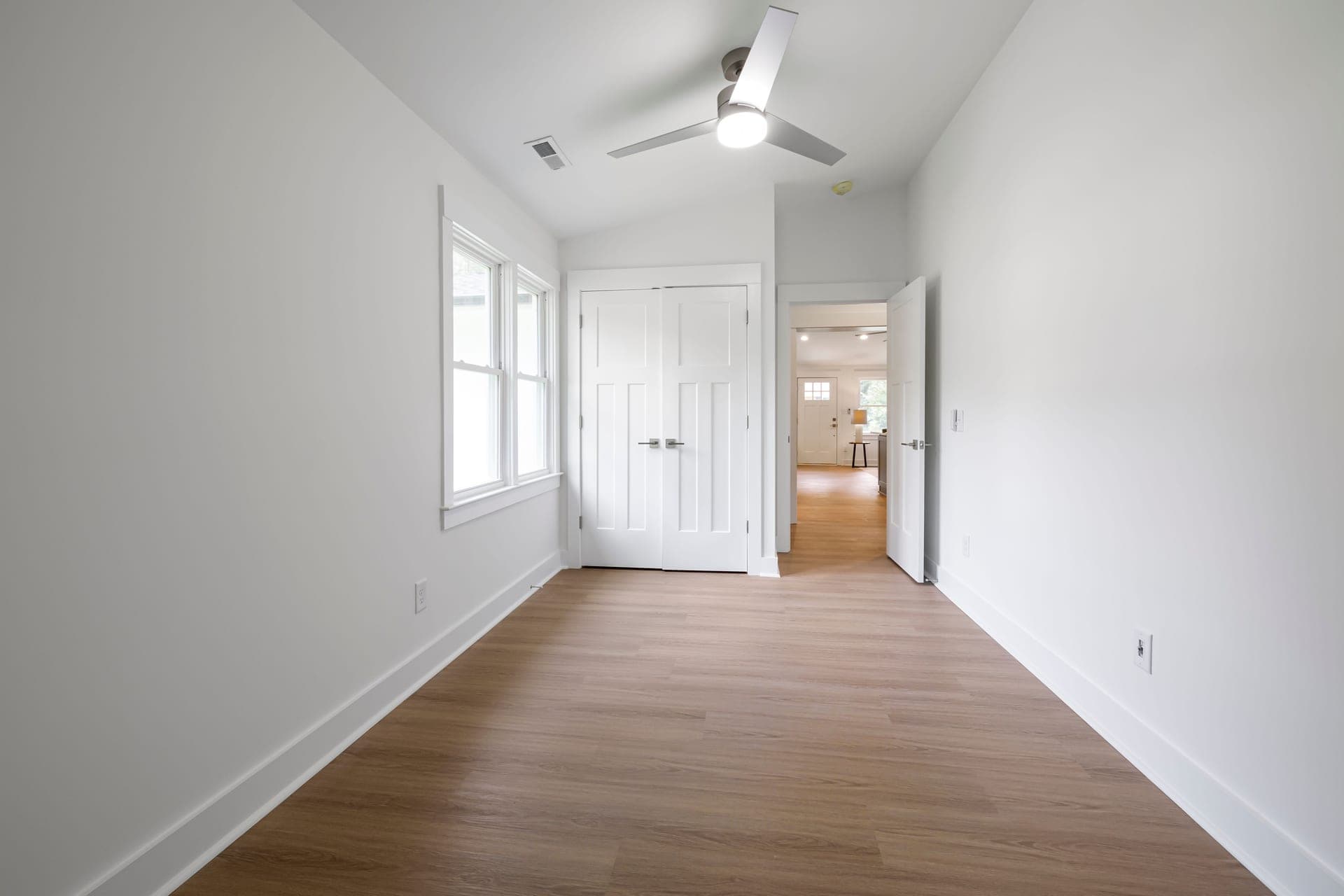
Usually no. On most interior doors the gap underneath is a deliberate return-air path for the heating system, and sealing it can make a room worse rather than better. Seal one only for a specific reason — noise, smell, light, dust, or a room over something unheated — and when you do, the Randall adhesive silicone sweep is the right shape of fix: a few dollars, no screws, and it comes off again.
The reason the gap is there
Walk around a house and measure the gap under the interior doors. It is remarkably consistent — usually somewhere between half an inch and three quarters — and it is consistent because somebody chose it.
In a house with central forced-air heating, every room that has a supply vent blowing air IN needs a path for that air to get back OUT to the return. Most houses do not have a return duct in every bedroom. They have one or two central returns, usually in a hallway, and the air gets there by traveling under the closed doors. That gap is the return path. In the trade it is called the door undercut, and it is sized rather than left over.
Seal it, and with the door shut the supply vent is pushing air into a room that has nowhere to vent. The room pressurizes slightly, airflow from the vent drops, and the room you were trying to make more comfortable gets less heated air than before. Meanwhile the rest of the house is now short of return air, so the furnace fan works against a tighter system than it was commissioned for.
This is also why the same question has a completely different answer in a house with radiators or a mini-split in each room. There is no forced-air return to starve, so the undercut is just a gap, and every reason below applies without a downside.
The five reasons to seal one anyway
None of these are about heating bills, and that is deliberate. An interior door separates two heated rooms, so there is no outdoor-to-indoor temperature difference for the seal to work against. The real reasons are all about what else travels through that gap.
- 1Noise. The single most common honest reason. Sound follows the air path, and the undercut is the largest opening in the doorway. This is the one case where a sweep makes an obvious, immediate difference — and it has its own page, because the product choice is different: best door sweeps for soundproofing.
- 2Smell. A litter tray, a kitchen, a utility room, a teenager's bathroom. Odor travels on exactly the airflow the undercut was designed to carry, so closing it works.
- 3Light. A bedroom with a lit hallway outside, or a nursery during the day. A quarter inch of light across a three-foot span is a surprisingly bright line on a dark floor.
- 4Dust and pet hair. If one side of the door is a workshop, a garage lobby or a room where a dog sleeps, the gap is where the mess migrates. A brush sweep is good at this specifically.
- 5A room over something unheated. This is the exception that IS about temperature: a door at the top of a basement stair, a door into an attached garage, or a bonus room over a garage. One side of that door is genuinely cold, and sealing it is a real comfort fix rather than a marginal one. Two existing pages cover those doors directly — the drafty door between the house and the garage and how to stop a draft under a door.
If your reason is not on that list, the honest advice is to leave the door alone. There is no comfort gain available from sealing a doorway between two rooms that are the same temperature, and there is a real airflow cost if your system is using the gap.
Interior doors change the product rules
Three things are different about an interior door, and together they rule out most of what works on a front door.
| Exterior door | Interior door | |
|---|---|---|
| Fixing method | Screws, and nobody minds | Adhesive, usually — screws into a painted or veneered leaf are a visible, permanent decision |
| Door construction | Solid slab, takes a screw | Often hollow-core: a screw has nothing to bite into past the thin skin |
| Floor underneath | Threshold, one known height | Frequently changes mid-doorway — tile to carpet, hardwood to rug |
| Seal duty | Weather, insects, rodents | Sound, light, smell, dust |
| Appearance | Functional, outside, unseen | In your sightline every day |
The hollow-core point is worth dwelling on, because it is the most common fitting failure on an interior door. The bottom rail of a hollow-core leaf is typically a strip of softwood about an inch deep, and below or beside it there is nothing but air and cardboard. A screw-mounted sweep fitted into the wrong part of that bottom edge spins free, pulls out, or splits the lipping. If you are going to screw anything to a hollow-core door, find the solid rail first by tapping along the bottom edge.
The floor point decides between a blade and a brush. A blade sweep gives the better seal and drags unpleasantly on carpet. A brush sweep gives a worse air seal and glides over pile. If your doorway is the classic tile-to-carpet transition, a brush is the pick, and if the whole floor is hard and level, a blade is.
And sliding or barn doors do not work at all like this
If the interior door in question hangs on a track rather than on hinges, almost none of the above applies, because there is no jamb for a seal to compress against. That is a genuinely harder problem with a lower ceiling on what is achievable, and it is covered separately in the best barn door seals.
Quick picks
Ranked for fit, not for hype. Tap a row to jump to the full write-up, or go straight to the listing.
| # | Product | Best for | Gap range | Price |
|---|---|---|---|---|
| 1 |  Randall Adhesive-Backed Silicone Under-Door Sweep, for Interior and Exterior DoorsA thin adhesive silicone blade — the lightest-touch sweep there is. On an interior door that is the whole point: no screws, no visible hardware, and it comes off without taking the paint. | An interior door you are not willing to drill | Not published as a numeric range; a flexible blade that bends to the floor it meets | $6.99 · CHECK ON AMAZON |
| 2 |  Vannesse Door Sweep with Brush, 39 in, Self-AdhesiveAn adhesive sweep with bristles instead of a blade. Bristles part over carpet pile rather than dragging on it, which is the one place a blade sweep genuinely fails. | An interior door over carpet | Not published as a numeric range; bristles compress to the surface they meet | $11.69 · CHECK ON AMAZON |
| 3 |  MAXTID Under Door Draft Stopper, 36 in AdjustableA dense 36-inch filler sold on noise reduction; the same mass that muffles a hallway is the mass that stops the draft. | Noise as well as draft | Sized to 36 in doors; adjustable | $12.99 · CHECK ON AMAZON |
| 4 |  Suptikes Door Draft Stopper Under Door SweepA silicone blade on a strong adhesive strip — the sweep you use when drilling the door is not an option. | Renters and no-drill installs | Roughly 1/8 in to 1 in | $8.98 · CHECK ON AMAZON |
| 5 |  Holikme Under Door Draft Stopper, 36 inA single-side 36-inch filler aimed at light and dust as much as air — the one to use where a twin stopper would drag. | Wide doors and light blocking | Sized to 36 in doors; single-sided so it needs less clearance than a twin | $9.99 · CHECK ON AMAZON |
#ad · how we are funded · price as of October 17, 2026
An interior door you are not willing to drill
Randall Adhesive-Backed Silicone Under-Door Sweep, for Interior and Exterior Doors
Published gap range
Not published as a numeric range; a flexible blade that bends to the floor it meets
#ad · how we are funded · price as of October 17, 2026
A thin adhesive silicone blade — the lightest-touch sweep there is. On an interior door that is the whole point: no screws, no visible hardware, and it comes off without taking the paint.
Where the number comes fromNo working gap figure is published, which is the norm for adhesive blade sweeps. Measure your gap: a flexible blade needs to be a little TALLER than the gap so it bends and stays in contact, but a blade far too tall drags and peels its own tape off.
- Type
- Adhesive single-blade silicone sweep
- Mounting
- Self-adhesive, no screws
- Trimmable
- Yes, cut to door width
- Door types
- Interior and exterior, per the listing
- Removal
- Peels off; adhesive residue likely
- Mounting
- Self-adhesive to the bottom face of the door
What it does well
- Cheapest way to close an interior door's gap, and the least permanent
- No fixings at all, which matters on a hollow-core door where screws have nothing to bite
- Silicone stays flexible rather than going stiff like cheap vinyl
Where it fails
- Adhesive on a painted or veneered interior door is a known failure point, especially in a warm hallway
- No published gap range, so sizing is your judgment
- A single blade drags on carpet — the brush type is the better choice there
Who this is forA renter, or anyone closing off one interior door for the season without modifying it.
An interior door over carpet
Vannesse Door Sweep with Brush, 39 in, Self-Adhesive
Published gap range
Not published as a numeric range; bristles compress to the surface they meet
#ad · how we are funded · price as of October 17, 2026
An adhesive sweep with bristles instead of a blade. Bristles part over carpet pile rather than dragging on it, which is the one place a blade sweep genuinely fails.
Where the number comes fromNo working gap figure published. A brush sweep is more forgiving than a blade because the bristles compress to different depths across the width — which is exactly why it is the pick for carpet and for a floor that changes height in the doorway.
- Type
- Adhesive brush sweep
- Length
- 39 in, trimmable
- Mounting
- Self-adhesive
- Bristles
- Nylon
- Door types
- Interior and exterior, per the listing
- Mounting
- Self-adhesive to the bottom face of the door
What it does well
- Bristles ride over carpet pile instead of dragging, so the door still swings freely
- 39 in covers a 36 in door with trim left over
- Forgiving of an uneven gap across the door width, which blade sweeps are not
Where it fails
- A brush is a worse AIR seal than a blade — bristles leak between the fibers by design
- Adhesive mounting on a painted door has the same lifting problem as any tape sweep
- Bristles collect dust and pet hair and look it within a season
Who this is forAn interior door over carpet, or a doorway where the floor changes from tile to carpet.
Noise as well as draft
MAXTID Under Door Draft Stopper, 36 in Adjustable
Published gap range
Sized to 36 in doors; adjustable
#ad · how we are funded · price as of October 17, 2026
A dense 36-inch filler sold on noise reduction; the same mass that muffles a hallway is the mass that stops the draft.
Where the number comes fromMAXTID publishes the 36 in size and describes the seal as adjustable. It publishes no gap range and no measured noise figure, and we do not repeat noise-reduction percentages that nobody sources.
- Published length
- 36 in
- Type
- Under-door seal
- Mounting
- Slide-under
- Trim
- Adjustable
- Claim we do not repeat
- Any specific noise-reduction percentage
- Mounting
- Slides under the door
What it does well
- Denser core than the budget fabric tubes
- Adjustable width without cutting the cover open
- Works on the very common 36 in front door
Where it fails
- Noise claims in this category are unsourced across the board, including here
- No published gap range
- Slide-under designs get pushed aside by a door that swings hard
Who this is forA door where the noise bothers you as much as the cold.
Renters and no-drill installs
Suptikes Door Draft Stopper Under Door Sweep
Published gap range
Roughly 1/8 in to 1 in
#ad · how we are funded · price as of October 17, 2026
A silicone blade on a strong adhesive strip — the sweep you use when drilling the door is not an option.
Where the number comes fromThe seller publishes 2" W x 39" L and no numeric gap range. The blade is trimmed to your gap on install, which is where the flexibility comes from: too little and it drags, too much and it does nothing.
- Blade
- Silicone
- Published size
- 2" W x 39" L
- Mounting
- Adhesive, no drilling
- Trim
- Cut to door width with scissors
- Doors
- Exterior and interior
- Mounting
- Self-adhesive strip on the inside face of the door
What it does well
- No holes, so no deposit argument at move-out
- Silicone stays flexible far below freezing where cheap vinyl stiffens
- Trims to width in one cut
Where it fails
- Adhesive needs a clean, smooth, dry surface — it will not hold on a textured or freshly painted door
- A door that gets kicked open will peel it eventually
- No published gap range; you are sizing it by eye against your own gap
Who this is forRenters, and anyone who wants the draft gone tonight without a drill.
Wide doors and light blocking
Holikme Under Door Draft Stopper, 36 in
Published gap range
Sized to 36 in doors; single-sided so it needs less clearance than a twin
#ad · how we are funded · price as of October 17, 2026
A single-side 36-inch filler aimed at light and dust as much as air — the one to use where a twin stopper would drag.
Where the number comes fromHolikme publishes the 36 in length and describes it as adjustable. No gap figure is published. Because only one tube sits under the door, it clears a tighter gap than the twin version.
- Published length
- 36 in
- Type
- Single-side filler
- Stops
- Light, air, dust
- Trim
- Adjustable to width
- Color
- Gray
- Mounting
- Adhesive strip or slide-under, depending on version
What it does well
- Clears a tighter gap than a twin stopper
- 36 in covers the wider doors twin stoppers overhang
- Kills the light strip under a bedroom door as well as the draft
Where it fails
- Seals one face, so a strong pressure difference still pushes air past
- Has to be repositioned if it is the slide-under version
- No published gap range
Who this is forA wide door, or one where a twin stopper drags on the floor.
What we would actually do
For a hallway door you want quieter: the adhesive blade sweep, fitted on the side the noise comes from, and accept that it will do less than you hope because the jambs are still open. The soundproofing page explains the ceiling honestly.
For a litter tray, a dusty room or a dog: the brush sweep, because what you are stopping is particles and smell rather than a precise air seal, and the brush survives the daily traffic those doors get.
For a door you do not want to touch at all — a rental, a nice door, a door you will reinstate when the baby sleeps through: a floor-laid stopper. Nothing is attached, nothing is marked, and it is lifted out in a second. Do draft stoppers actually work? is the full assessment of that product type, including why the twin design exists.
And if the honest answer after the tissue test is that the gap is doing a job for your heating system, leave it. The right fix for a cold bedroom with a forced-air system is almost never at the door, and why is my house so drafty? is where that search should start instead.
How we picked
- We judged these on reversibility and floor compatibility, which are the two things that matter on an interior door. Nobody wants screw holes in a hallway door, and interior doorways are where flooring changes from tile to carpet mid-span.
- We publish no energy figure for sealing an interior door and nobody should, because the answer depends entirely on your heating system's return-air design — which is not a thing a product can know.
- Where a maker publishes no working gap range, we say so. Most adhesive sweeps publish a length and nothing else. The full method is published.
We have not tested these products and we do not claim to have. The full method, including what we refuse to claim, is on how we pick.
Questions people actually ask
- Should interior doors have a gap at the bottom?
- Yes, in most houses with forced-air heating. The gap is a deliberate return-air path called the door undercut: it lets the air a supply vent pushes into a closed room get back to the central return. It is sized on purpose, not left over from a bad fit.
- Is it bad to block the gap under an interior door?
- It can be. If the room's supply vent relies on the undercut for return air, sealing it reduces airflow into that room and makes the whole system work against a tighter duct network. If the house has radiators, baseboard heat, mini-splits, or a return register in the room itself, blocking the gap costs you nothing.
- Do you need a door sweep on both sides of an interior door?
- No. One seal closes the opening, and a second on the other face adds nothing except a second thing to catch on the floor. The product that uses both sides is the twin draft stopper, and it does that to stay in position as the door swings, not to seal twice.
- What kind of door sweep works on carpet?
- A brush sweep. Bristles part over the pile instead of dragging on it, so the door still swings freely and the bottom edge does not wear a track into the carpet. The trade-off is that a brush is a less complete air and sound seal than a solid blade.
- Can you fit a door sweep to a hollow-core interior door?
- An adhesive one, yes, easily. A screw-mounted one only into the solid bottom rail, which on a hollow-core leaf is usually a strip of softwood about an inch deep — tap along the bottom edge to find where it is solid before drilling, or the screws will pull straight out.
- Will sealing an interior door make the room warmer?
- Almost never, because both sides of the door are heated space, so there is no temperature difference for the seal to work against. The exception is a door onto genuinely unheated space: a basement stair, an attached garage, or an unconditioned bonus room. There, it is a real comfort fix.
- Does a sweep on an interior door help with noise?
- Somewhat, and it is the most common honest reason to fit one. Sound follows the air path and the undercut is the biggest opening in the doorway, so closing it is a real improvement. It is also a limited one, because the jamb and head gaps stay open unless you seal those too.
Sources
- U.S. Department of Energy - published guidance on duct and return-air design in central heating systems
- ENERGY STAR - published guidance on return air pathways and pressure balancing
Every specification on this page traces to a published manufacturer or retailer listing. Where a maker publishes no working gap range, we say so rather than estimating one.
Read next
The best door sweeps for cutting noise under a door
Sealing the gap is the cheapest noise fix a door has. Which sweeps seal hardest, and the ceiling no sweep can move.
Do draft stoppers actually work?
Yes at the one thing they do, no at most of what people expect. And when a sweep is the better buy.
The best door sweeps, sorted by the gap they actually close
Six sweeps placed by the gap they close, from a slim vinyl blade to a brush for uneven floors.
The best barn door seals, and the gap you cannot close
No jamb, no threshold, four gaps. Brush and flap seals matched to how far your door hangs off the wall.
The drafty door between the house and the garage
Thermally an exterior door, treated like an interior one. Seal it properly — and keep the closer working.
Cold air blowing from a return vent
A return should pull, not blow. What it means when it does, what to seal, and where to stop and call someone.