01 / DOORS
The best weather stripping for steel doors, chosen by what your frame actually has
Almost everyone searching this buys adhesive foam tape. On a steel prehung door that is usually the wrong product entirely, because the frame already has a slot waiting for the right one.
We earn a commission on some links here, at no extra cost to you. It does not change what we recommend or the order they appear in. How we are funded
Check two things before buying. If the frame has a kerf slot around the stop, buy a kerf seal, not adhesive tape. If a fridge magnet also sticks to the door, buy the magnetic version, which pulls the door onto the seal. Adhesive weather stripping is the right answer only on a flat wooden stop with no slot.
Why a steel door is not just a wooden door painted gray
Most of the weather stripping advice on the internet, including several pages on this site, assumes a wooden door in a wooden frame. Stick a bulb seal to the stop, fit a sweep at the bottom, done. Applied to a steel entry door that advice quietly goes wrong, because two things about a steel door are different in ways that change which part you buy.
The first is the frame. Steel entry doors are almost always sold as prehung units, slab and frame together, and those frames are machined with a KERF: a narrow slot running around the door stop. The factory seal is a barbed strip pushed into that slot. It is held mechanically, not glued, which is why it tends to outlast everything on this site until the material itself goes hard.
The second is the slab. Steel is ferrous, so a magnet sticks to it, and that opens a sealing method no wooden door can use. A magnetic weatherstrip works the way a refrigerator gasket does: the closed door is pulled onto the seal by magnetic attraction rather than being merely held near it by the latch. It is the one place in household draft sealing where the material of the door changes what is physically possible.
What happens when you get the mounting type wrong
It is worth knowing what the failure looks like, because it does not always look like a failure. Adhesive strip fitted to a stop that already has a kerf usually sticks fine at first. What has happened is that the door now closes against an added thickness the frame was not sized for, so it either shuts harder than it did or, more often, the strip gets crushed flat within a season and stops sealing while still looking present.
Meanwhile the slot behind it is still empty. The original seal was doing the work; the tape is a second, worse seal fitted in front of the place the good one goes. When people say their weather stripping did nothing, this is a common reason, and it is invisible unless you know to look for the slot.
The reverse mistake is smaller but more annoying: buying kerf strip for a frame with no kerf. There is nowhere to push the barbed spine, and it will not stay on with tape because the spine holds it off the surface. That one at least announces itself in the first five minutes.
Match the part to your gap
Measure at the widest point. Then read across. If your measurement sits on a boundary, take the larger band — a seal that is slightly too big compresses, and one that is too small does nothing at all.
| Your gap | Part type | Our pick | Price |
|---|---|---|---|
| Kerf slot in the frame, steel slab | Magnetic kerf seal, full-door kit |  Trademark Hardware Magnetic Kerf Door Seal Kit, 36 x 84 in, WhiteThe only combination where a magnet does something. The door pulls itself onto the seal. | $54.97 · CHECK ON AMAZON |
| Kerf slot, and the old seal is a Q-Lon | Magnetic kerf seal, matched profile |  Q-Lon Magnetic Weather Stripping, Complete Door, 81 inMatch what came out. A different section in the same slot sits proud or works loose. | $49.95 · CHECK ON AMAZON |
| Kerf slot, fiberglass or wood slab | Plain bulb kerf seal | 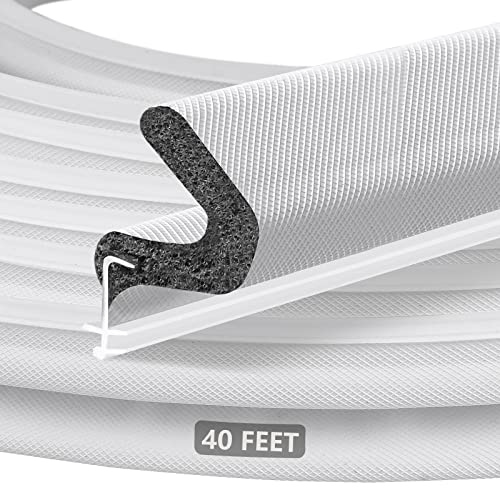 Litaibai Kerf Weather Stripping for Exterior Doors, 40 ft, WhiteNo steel means no magnetic pull, so do not pay for one. Cheapest per foot here. | $19.99 · CHECK ON AMAZON |
| Flat stop, no slot, gap up to 1/4 in | Adhesive EPDM D-section, 1/4 in thick |  Frost King EPDM Rubber Self-Stick Weatherseal Tape, D-Section, 5/16 in x 1/4 in x 17 ftThe only case where adhesive is the right answer rather than the default one. | $7.69 · CHECK ON AMAZON |
| Flat stop, gap 3/16 in to 5/16 in | Adhesive silicone D-section, 5/16 in thick |  Protalwell Silicone D-Section Door Seal, 3/8 in W x 5/16 in T, 20 ftThe thicker of the two, for a frame that no longer quite meets the door. | $11.99 · CHECK ON AMAZON |
Magnetic seals: what they do and what they do not
A magnetic weatherstrip is genuinely better on a steel door, and it is worth being precise about why, because the listings are not. An ordinary bulb seal is compressed only as hard as the latch pulls the door in. If the latch is slightly out of adjustment, or the door has a small twist in it, part of the perimeter is touching the seal and part of it is merely close to it.
A magnetic seal adds a second, distributed closing force along the whole run. The door is pulled onto the seal at the top corner as well as at the lock, which is exactly where a door that has dropped slightly tends to leak. That is the mechanism, and it is real.
What it does not do: it does not close a gap that is too big for the seal in the first place, it does not fix a door that is genuinely out of square, and it does nothing at the bottom of the door, where there is no frame to mount to. It also does nothing at all on fiberglass or wood, however much the listing implies otherwise.
Match the profile you are pulling out
Q-Lon is worth knowing by name. It is a kerf-mounted seal profile that a great many prehung doors shipped with, and if that is what is coming out of your slot, that is what should go back in. Kerf seals are not one standard part: the spine width, the bulb height and the way the section sits in the slot all vary between makers. Which reach to order, and how to tell, is worked through in Q-Lon weatherstrip replacement.
The practical approach is to pull a short length out before ordering rather than after. It comes out by hand, and it tells you three things at once: whether the spine is barbed or T-footed, how tall the bulb stands above the slot, and whether the seal you have is magnetic, which you can feel immediately.
- Take the old piece with you, or photograph it end-on. The end profile is the identifying feature, and it is what a supplier will ask you to describe.
- Measure the slot width, not the bulb. A spine that is fractionally too slim works its way out over a winter of the door slamming.
- Buy the length for the whole perimeter in one go. Two jambs and a head on a standard door is around 18 to 19 feet, so a 17 ft roll is short and a 40 ft roll does the job twice.
The bottom of the door is a different job
Everything above is about the perimeter: the two jambs and the head, where there is a frame to mount to. The bottom of a steel door has no kerf and no frame, and none of the picks on this page go there. It is a separate part and a separate decision.
In most cases the answer is a sweep on the inside face of the door or a replacement door bottom in the factory channel, and the sizing is done on the measured gap rather than on the frame. That is covered properly in best door sweeps, with the measuring method in how to measure a door gap. If the floor under the door is uneven as well, best door thresholds is the page you want.
The reason to keep the two jobs separate is that people often replace the perimeter seal, find the door still feels drafty, and conclude the new seal failed. Usually the new seal is fine and the draft was always coming under the door, which is the biggest single opening in most exterior doorways anyway.
When adhesive is the right answer
Not every steel door is in a kerfed frame. Plenty of older steel doors were hung in existing wooden frames with a plain flat stop, and some frames have had the stop replaced over the years. If you have run a finger along the stop and there is no slot in it, adhesive is not a compromise, it is the correct method, and two of the picks here are for exactly that case.
The choice between them is the measured gap, and both publish one. The EPDM D-section is 1/4 in thick and suits a gap up to about that; the silicone D-section is 5/16 in thick and is published for roughly 3/16 to 5/16 in, so it is the one for a frame that no longer quite meets the door. The general comparison across seal types is in foam vs V-seal vs silicone, and it applies to a steel door in a wooden frame exactly as it does to a wooden one.
One caution specific to steel. Clean the surface properly before sticking anything to it, and mean it: a painted steel door that has been outside for years carries a film of road grime and oxidized paint that looks clean and is not. Degrease it, let it dry, and fit the strip in reasonable weather rather than on the coldest day of the year.
What we would skip, and why
Nobody in this category ever declines to recommend something. That is what makes universal praise worth ignoring. Here is what we would not buy.
Buying adhesive foam tape because the listing says it is for steel doors
This is the commonest mistake in the category and it is worth being blunt about. A steel entry door is nearly always a PREHUNG unit, and prehung steel frames are machined with a kerf, a narrow slot around the stop that a barbed seal pushes into. If your frame has that slot, the factory seal came out of it and a replacement should go back into it. Sticking foam tape onto the face of the stop instead leaves the slot empty, adds a second thickness the door was never sized for, and puts the whole repair on an adhesive bond. Look for the slot before you buy anything.
Buying a magnetic seal for a fiberglass door
Fiberglass entry doors are sold alongside steel ones, they are often painted the same way, and from three feet away they look identical. A magnetic seal on a fiberglass slab is just an expensive bulb seal, because there is nothing for the magnet to pull against. The test takes five seconds: hold a refrigerator magnet against the middle of the door face, away from the lock and the hinges where there is hardware behind the skin. If it does not stick, buy the plain kerf seal and spend the difference on something else.
Screwing anything into the face of a steel slab
A steel door is a thin steel skin over a foam core, not a solid slab. Our reasoning, stated as reasoning: a screw through the skin puts a hole in the one continuous surface keeping water out of that core, and there is very little behind it for the thread to hold. That is why seals for steel doors mount to the FRAME rather than the door. Where a part genuinely has to attach to the slab, as a bottom sweep does, use the existing factory holes at the door bottom rather than making new ones through the face.
Judging kerf seals on insulation claims
Listings in this category talk about energy efficiency and soundproofing without naming a test, a temperature or a door. We publish no percentage from any of them. What you can check before buying is the mounting type, whether the seal is magnetic, the published length, and the color. Those four facts decide whether the part fits and works, and they are all any honest listing here actually publishes.
The order we would do this in
If the door is drafty and you are starting from nothing, do it in this order. Find where the air is actually coming in, using the method in how to find drafts in your house. Fix the bottom of the door first, because it is usually the largest opening. Then replace the perimeter seal with the right mounting type for your frame.
Doing it in that order means you can tell which change did what, and it stops you paying for a magnetic kit to solve a problem that was always a half-inch gap at the threshold.
Complete the kit
The parts that decide whether the seal you just bought actually holds. Skip these and you will be doing the job again in March.

Removing old weatherstrip adhesive
Goo Gone Pro-Power Adhesive Remover Spray, 16 fl oz, with Scraper
The step everybody skips: the new tape will not stick to the residue the old tape left behind.
Medium frame gaps
Frost King EPDM Rubber Self-Stick Weatherseal Tape, D-Section, 5/16 in x 1/4 in x 17 ft
EPDM in a hollow D — the profile that keeps sealing at minus ten where foam tape has already gone hard.

Deep gaps before caulking
Frost King C21CP-C Caulk Saver Backer Rod, 3/8 in x 350 ft
Backer rod: the foam you push into a deep gap so the caulk over it is a seal rather than a bottomless hole.
#ad · how we are funded · price as of October 17, 2026
How we picked
- We rank on mounting type first, because on a steel door that is the spec that decides whether the part can be fitted at all. Kerf, T-slot and adhesive are not interchangeable, and every pick states which one it is.
- Whether the slab is ferrous second. A magnetic seal is a genuinely different product on steel and a waste of money on anything else, so the picks are split on that line rather than ranked across it.
- Published length and finish third, against the perimeter of a standard door. Where a maker publishes a full-door kit we say so, because three matched runs beat a roll cut into three.
- No maker in this group publishes a working gap range, and we say so in every entry rather than inventing one. We did not test these. Prices come from the live price layer and are dated; the full method is published.
We have not tested these products and we do not claim to have. The full method, including what we refuse to claim, is on how we pick.
Questions people actually ask
- What kind of weather stripping goes on a steel door?
- It depends on the frame, not the door. Most steel entry doors are prehung in a frame with a kerf slot around the stop, and those take a kerf-mounted seal pushed into the slot. If the slab is also steel, the magnetic version of that seal is worth the extra because the door is pulled onto it. Only a frame with no slot takes adhesive weather stripping.
- How do I know if my door frame has a kerf?
- Run a finger along the door stop, the raised lip the door closes against. A kerfed frame has a narrow slot machined into it, almost always with a rubbery strip already sitting in it. Hook a fingernail under that strip and it will lift out by hand. If the stop is a flat, solid surface with a strip stuck onto the face of it, there is no kerf.
- Do magnetic door seals actually work?
- On a steel door, yes, and the mechanism is straightforward: the door is pulled onto the seal along the whole run rather than only being held close by the latch. That matters most at the top corner away from the lock, which is where a slightly dropped door leaks. On a fiberglass or wooden door it does nothing at all, because there is nothing ferrous for the magnet to grip.
- Can I use adhesive weather stripping on a steel door?
- Only if the frame has no kerf slot. Where the slot exists, sticking tape to the face of the stop leaves the slot empty and adds a thickness the door was not sized for, so it tends to crush flat within a season while still looking like it is there. On a flat stop with no slot, adhesive is the correct method rather than a compromise.
- Is Q-Lon the same as kerf weather stripping?
- Q-Lon is one particular family of kerf-mounted seal, not a synonym for the category. It is what many prehung doors shipped with, so it is often what you are pulling out. Kerf profiles are not standardized across makers, so pull a short length out and compare the end profile before ordering, rather than assuming any kerf strip will seat correctly in your slot.
- Can I screw a door sweep into a steel door?
- Use the factory holes at the bottom of the door if there are any, and avoid making new ones through the face. Our reasoning: a steel door is a thin skin over a foam core, so a new hole breaks the surface keeping water out of that core and gives the screw very little to hold. Where the bottom has no fixing points, an adhesive-mounted sweep or a threshold-side fix avoids the problem.
Read next
The best weather stripping for doors, by published thickness
V-strip, D-section, silicone and foam placed against the gap each published thickness can actually seal.
Foam, V-seal or silicone: which weather stripping your door needs
Three materials, three gap bands, one spec table. Choose by measured gap, not by shelf price.
The best door sweeps, sorted by the gap they actually close
Six sweeps placed by the gap they close, from a slim vinyl blade to a brush for uneven floors.
How to measure a door gap properly
The index-card method, the three-point rule, and how to read your number against a published seal size.
The best door thresholds, by published section
The part under the door, not on it. Adjustable, low-profile and full sill replacements by published height.
Q-Lon weatherstrip replacement, and the one spec that decides whether it works
The strip most prehung doors shipped with. Reach is the spec, and matching it is the whole job.