01 / DOORS
The best Pemko door bottoms, and the three different parts hiding under that name
A sweep screws to the face. A shoe wraps the bottom edge. An automatic bottom drops as the door shuts. They are not interchangeable, and one of them means taking your door off.
We earn a commission on some links here, at no extra cost to you. It does not change what we recommend or the order they appear in. How we are funded

Decide the mounting first. A sweep screws to the door face and fits in twenty minutes. A door shoe wraps the bottom edge and needs the door off its hinges. An automatic bottom drops as the door closes, so it seals harder without dragging. Then pick vinyl for a flat floor, brush for an uneven one.
Three parts, one product name
Search for a door bottom and you will be shown three mechanically different parts under broadly the same heading, at prices from under twenty dollars to over seventy, with nothing in most listings to tell you which is which. Getting this wrong is the main way money gets wasted in the category, so it is worth two minutes.
- A sweep is a carrier that screws flat to one FACE of the door, near the bottom, with a blade or brush hanging below the door edge. It is the common part, it is the cheapest, and it fits with the door still hanging.
- A door shoe is a U-shaped channel that slides onto the bottom EDGE of the door and wraps up both faces, carrying its seal underneath. It seals and it encloses the end grain of a wooden door. It cannot be fitted without unhanging the door.
- An automatic door bottom is a sprung unit with a plunger at the hinge jamb. Closing the door pushes the plunger and the seal drops onto the floor; opening it lifts the seal clear. Nothing touches the floor while the door is open.
All three appear on this page because all three are legitimate answers to different doors. The general comparison across part types, independent of brand, is in door sweep vs door bottom seal.
What the rain drip is actually for
Two of the picks here are described as having a rain drip, and it is a detail worth understanding because it is the thing that distinguishes an exterior-door part from an interior one.
The drip is an angled fin running along the outer bottom edge of the carrier. Water running down the face of the door reaches it and is thrown outward, so it drops clear of the threshold rather than tracking back along the underside of the door and sitting on the sill. On a door that takes driving rain, and especially on an out-swing door where the threshold is on the weather side, that is a real function.
On a sheltered in-swing door it does nothing. It is extra depth on the part and extra cost, and a plain sweep of the same section seals exactly as well. Buy the drip for exposure, not as an upgrade.
Match the part to your gap
Measure at the widest point. Then read across. If your measurement sits on a boundary, take the larger band — a seal that is slightly too big compresses, and one that is too small does nothing at all.
| Your gap | Part type | Our pick | Price |
|---|---|---|---|
| Exterior door, weather on it | Vinyl sweep with rain drip, 2 in face |  Pemko 345AV36 Door Bottom Sweep with Rain Drip, Mill Finish Aluminum with Gray Vinyl, 36 inThe rain drip sheds water clear of the threshold. Cheapest part here. | $14.95 · CHECK ON AMAZON |
| Uneven, tiled or carpeted floor | Brush sweep, 1 in nylon brush | 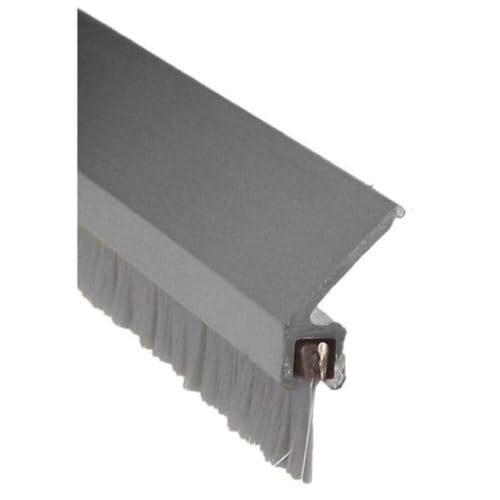 Pemko 18100CNB36 Brush Door Bottom Sweep, Clear Anodized with 1 in Gray Nylon Brush, 36 inA brush follows a floor that changes height. A vinyl blade cannot. | $22.55 · CHECK ON AMAZON |
| A fixed sweep either drags or misses | Automatic drop-down door bottom |  Pemko 4131CRL36 Automatic Door Bottom, Clear Anodized Aluminum, 19/32 in W x 36 in L x 1-27/32 in HClears the floor when open, seals under pressure when shut. No published drop figure. | $69.82 · CHECK ON AMAZON |
| Wooden door bottom starting to weather | Wrap-round door shoe |  Pemko 216AV36 Wrap-Round Combination Door Shoe with Vinyl Weatherseal, for 36 in DoorsEncloses the end grain as well as sealing. You must unhang the door to fit it. | $26.19 · CHECK ON AMAZON |
| Dark or bronze-trimmed door | Vinyl sweep with rain drip, dark bronze |  Pemko 345DV36 Door Bottom Sweep with Rain Drip, Dark Bronze Anodized with Black Vinyl, 36 inIdentical section to the mill version. You are paying for the anodized finish. | $24.27 · CHECK ON AMAZON |
Vinyl or brush, decided by your floor
This is the other real decision and it is made by looking down rather than at the catalog. The question is whether the floor under the door is flat.
A vinyl blade is a continuous strip. Where the floor is flat it compresses evenly along the whole width and seals hard, which is the best result available from a fixed sweep. Where the floor rises and falls across the doorway, the blade rides on the high points and lifts clear of the low ones, so you get drag at one end and a gap at the other.
A nylon brush is a row of independent bristles. Each one reaches down as far as the floor under it allows, so the brush follows a surface that changes height. The trade is honest and we will not dress it up: air moves through a brush more readily than through squeezed vinyl, and bristles part under pressure. On a flat floor a brush is a worse seal. On an uneven one it is the only thing that works.
The same logic applies across the whole category, not just to Pemko, and it is worked through with the alternatives in rubber vs vinyl vs brush seals, which is written about garage doors but turns on exactly the same physics.
When the automatic one earns its price
An automatic door bottom costs several times what a vinyl sweep costs, and for most doors that is not a good trade. There is one situation where it genuinely is, and it is a situation a lot of people are in without having named it.
Every fixed sweep lives with a contradiction. To seal, the blade has to reach the floor and be compressed by it. To not drag, it has to clear the floor. You cannot have both, so every fixed sweep is a compromise and on a door with a large or uneven gap the compromise fails at one end or the other: either it scrapes a stripe into the floor and wears out, or it hovers and whistles.
An automatic bottom breaks the contradiction by only being down when the door is shut. That is why it can seal harder than a fixed sweep while leaving no wear mark and catching on no rug. The site's wider coverage of the type, across brands, is in best automatic door bottoms.
What we would skip, and why
Nobody in this category ever declines to recommend something. That is what makes universal praise worth ignoring. Here is what we would not buy.
Buying a door shoe without realizing the door has to come off
This is the one genuine surprise in the category. A door SHOE is a U-shaped channel that slides onto the bottom EDGE of the door and wraps up both faces, which is why it protects the end grain and why it cannot be fitted with the door hanging. You take the door off its hinges, slide the shoe on, fix it, and rehang. If that is not a job you want on a Saturday, buy a face-mounted sweep instead and keep the door where it is.
Buying a rain drip for an in-swing door in a porch
The rain drip is the angled fin along the bottom front of the sweep, and it exists to throw water outward so it falls clear of the threshold instead of running back underneath the door. On an exposed out-swing door that is genuinely useful. On an in-swing door under a covered porch it is extra depth that catches on nothing and does nothing, and you can buy the same sweep without it for less.
Choosing brush because it sounds gentler
Brush is the right answer on an uneven, tiled or carpeted floor, and the wrong answer almost everywhere else. Bristles part under pressure, which means they let more air through than a compressed vinyl blade and that they are no barrier at all to a rodent pushing against them. If your floor is flat, vinyl seals harder. If mice are the reason you are here, neither of these is the part: best door sweeps to keep mice out covers what actually works.
Expecting the automatic door bottom to publish a drop figure
It does not, and we are flagging that rather than inferring a number. Pemko publishes the full body section for the automatic unit here, which is more than most sellers manage, but the published 1-27/32 in is the HEIGHT OF THE UNIT, not how far the seal travels down. An automatic bottom can close a bigger gap than a fixed sweep, which is the whole point of the mechanism, but you cannot match it to a measured gap from the listing data alone. Measure your gap and accept that this one involves some judgement.
Paying the bronze premium on a white door
Two picks here are the same sweep in different finishes, and the dark bronze one costs noticeably more for no functional difference whatsoever: identical published section, identical rain drip. On a dark-painted door or against bronze-anodized storm trim it is worth every cent, because mill aluminum on a dark door reads as a repair. On a white or light door, bronze is the conspicuous one and you are paying extra to make it look worse.
The door shoe, and the end-grain problem
The shoe deserves its own section because it is the part the rest of this site has not covered, and because it solves a problem that is not really about drafts.
The bottom edge of a wooden door is end grain, and end grain drinks water. It is usually the least-finished surface on the whole door, it sits closest to splashing and snow, and it is where exterior doors begin to fail. A face-mounted sweep screwed above it does nothing about that at all; it seals the gap and leaves the edge exposed.
A wrap-round shoe encloses that edge in aluminum and carries the seal underneath. So it is doing two jobs: closing the gap, and keeping water out of the part of the door most likely to rot. On an exterior wooden door that is still sound but starting to weather at the bottom, that is a genuinely better answer than a sweep.
Two honest caveats. The door has to come off, which is most of the work. And the shoe adds height at the bottom of the door, so a door that already has minimal clearance may need planing before it closes, which is a bigger commitment than any other part on this page.
Fit the threshold first
If you are replacing the threshold as well, do that before you buy anything here. The threshold sets the height of the surface the door closes onto, which sets the gap, which decides the part. Buying both at once means guessing at the gap you are going to end up with.
The Pemko thresholds are on best Pemko thresholds, the consumer-grade alternatives are in best door thresholds, and the measuring method is in how to measure a door gap. Threshold, then measure, then sweep.
Complete the kit
The parts that decide whether the seal you just bought actually holds. Skip these and you will be doing the job again in March.

Removing old weatherstrip adhesive
Goo Gone Pro-Power Adhesive Remover Spray, 16 fl oz, with Scraper
The step everybody skips: the new tape will not stick to the residue the old tape left behind.

Deep gaps before caulking
Frost King C21CP-C Caulk Saver Backer Rod, 3/8 in x 350 ft
Backer rod: the foam you push into a deep gap so the caulk over it is a seal rather than a bottomless hole.

Medium frame gaps
Frost King EPDM Rubber Self-Stick Weatherseal Tape, D-Section, 5/16 in x 1/4 in x 17 ft
EPDM in a hollow D — the profile that keeps sealing at minus ten where foam tape has already gone hard.
#ad · how we are funded · price as of October 16, 2026
How we picked
- We rank on mounting type first, because that decides whether you can fit the part at all. Face-mounted sweep, wrap-round shoe and automatic drop-down are three different jobs, and every entry states which it is.
- Published section second — width, face height and, on the brush pick, brush length. Face height sets how far the seal can reach down, which is what actually closes the gap.
- Insert material third, treated as a floor decision rather than a ranking. Vinyl seals harder on a flat floor; nylon brush follows a floor that is not flat. Neither is better in the abstract.
- One pick publishes no drop figure and we say so in its entry rather than inventing one. We did not test these. Prices come from the live price layer and are dated; the full method is published.
We have not tested these products and we do not claim to have. The full method, including what we refuse to claim, is on how we pick.
Questions people actually ask
- What is the difference between a door sweep and a door shoe?
- Where it mounts. A sweep screws flat to one face of the door with its blade hanging below the edge, and fits with the door still hanging. A door shoe is a U-shaped channel that slides onto the bottom edge and wraps up both faces, carrying its seal underneath, so it also protects the end grain. Fitting a shoe means taking the door off its hinges.
- What does a rain drip on a door sweep do?
- It is an angled fin along the outer bottom edge that throws water outward so it falls clear of the threshold instead of running back under the door. It is a real function on an exposed or out-swing door. On a sheltered in-swing door it adds depth and cost without doing anything, and a plain sweep of the same section seals just as well.
- Should I get a vinyl or brush door sweep?
- Look at the floor. On a flat floor a vinyl blade compresses evenly and seals harder than a brush. On a floor that rises and falls across the doorway, a vinyl blade rides the high points and gaps at the low ones, while a brush's independent bristles follow the surface. Brush seals less tightly but is the only thing that works on an uneven floor.
- How much gap can an automatic door bottom close?
- More than a fixed sweep, because it drops under pressure rather than being dragged, but the listing for the one on this page publishes the unit height and not a drop figure, so we cannot give you a number from the data. Measure your gap, and treat the published 1-27/32 in as the body of the unit rather than its reach.
- Do I need to take my door off to fit a Pemko door bottom?
- Only for the wrap-round door shoe, which slides onto the bottom edge. The face-mounted sweeps and the automatic door bottom both fit with the door hanging. If taking the door off is not an option, that rules out the shoe and leaves you three picks on this page that still work.
- Is the dark bronze sweep better than the mill finish one?
- No, it is the same part. Identical published section, identical rain drip; only the finish differs. Anodized bronze holds its appearance where mill aluminum oxidizes to a dull gray outdoors, so it is worth the premium on a dark or bronze-trimmed door and a waste of money on a white one, where mill is the less conspicuous choice.
Read next
The best Pemko thresholds, and how to read the model number before you buy
The commercial tier, specified properly. Which profile fits, and when a cheaper threshold wins.
The best door sweeps, sorted by the gap they actually close
Six sweeps placed by the gap they close, from a slim vinyl blade to a brush for uneven floors.
Door sweep, bottom seal or threshold: which part are you actually buying?
Four parts sit at the bottom of a door. A table that tells you which one yours takes.
The best automatic door bottoms, ranked by what they publish
Drop-down bottoms lift clear of the floor, so they seal harder than any fixed sweep. Which ones publish the drop distance that decides the purchase.
How to measure a door gap properly
The index-card method, the three-point rule, and how to read your number against a published seal size.