03 / GARAGE
Rubber, vinyl or brush: garage door seal materials
Three materials, three jobs. Getting them the wrong way round is why a new seal can perform worse than the old one it replaced.
We earn a commission on some links here, at no extra cost to you. It does not change what we recommend or the order they appear in. How we are funded
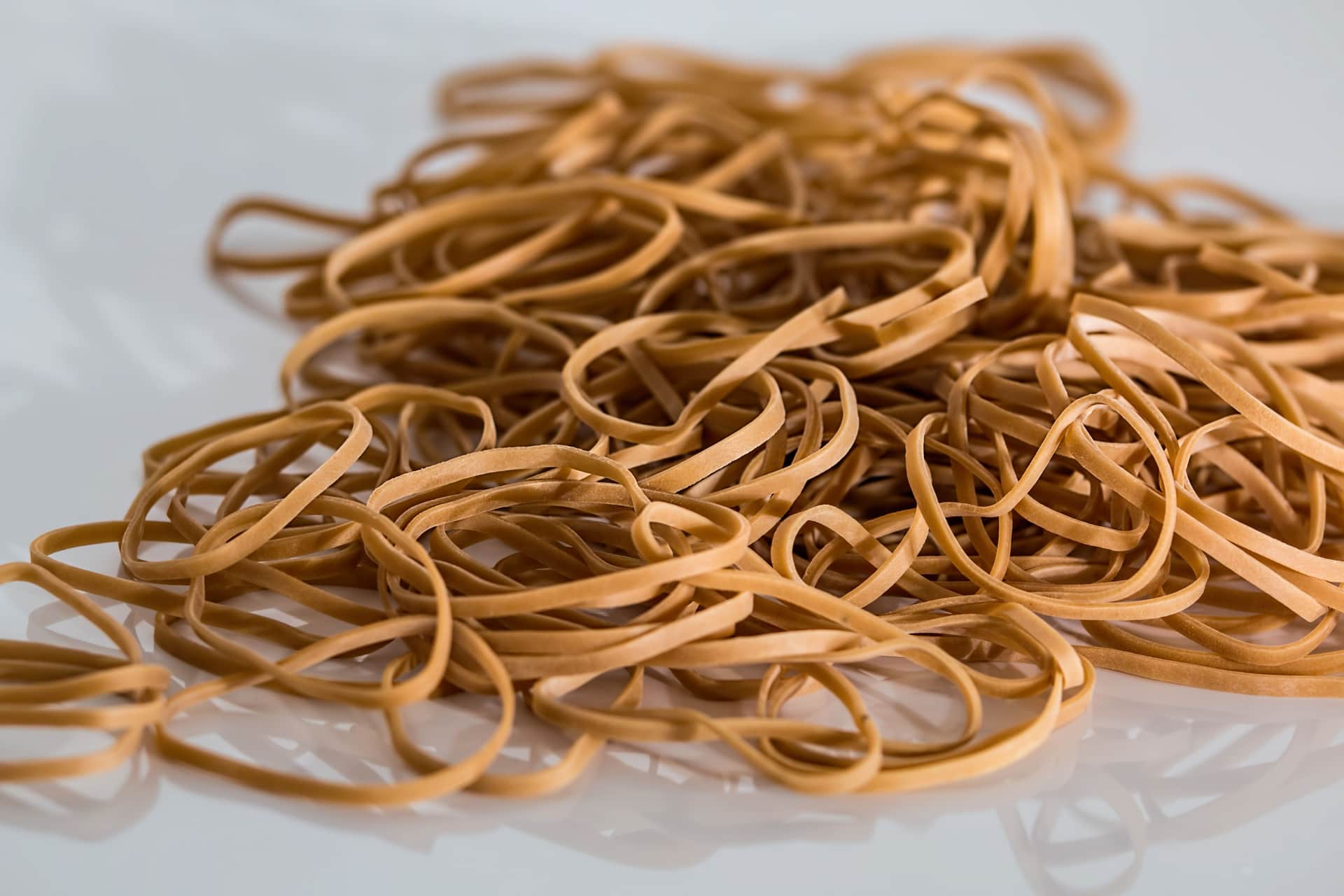
Rubber and EPDM belong at the bottom of the door, where the seal has to compress against concrete and stay flexible in the cold. Vinyl belongs on the jambs and head as a trim seal, where it only has to bend. Brush belongs where a gap changes size — a warped side jamb, or a person door with an uneven floor.
| Rubber / EPDM | Vinyl | Brush | |
|---|---|---|---|
| Cold behavior | Stays flexible well below freezing | Stiffens; can crack if slammed | Unaffected |
| Compression | Compresses and rebounds | Bends rather than compresses | Bends per bristle |
| Water | Sheds it, seals against it | Sheds it | Passes it straight through |
| Pests | Good — a compressed blade closes the gap | Fair | Poor — bristles part |
| Best position | Bottom of the door | Jambs and head trim seal | Uneven or changing gaps |
| Typical life | Several seasons | Several seasons, less in hard cold | Wears with traffic |
Rubber and EPDM: the bottom of the door
The bottom seal has the hardest job on the whole door: it is squashed against cold concrete every night, it takes the door's weight, it sits in whatever water is on the slab, and it has to spring back afterwards. That combination rules out most materials. EPDM in particular is specified for outdoor weatherseal because it resists ozone, UV and temperature extremes without hardening.
This is also why cold-climate garages should not use vinyl at the bottom. A stiff seal on a heavy door does not conform to the slab; it holds the door up on a ridge and leaves gaps either side of it.
Vinyl: the jambs and the head
A trim seal along the sides and head is not being compressed by anything heavy. It is a flexible flange nailed to the jamb, pressing lightly against the door face. Vinyl is ideal for that — it holds a shape, it comes in white and brown to match trim, and it costs less than rubber per foot.
The one caution is deep cold plus a slammed door: stiff vinyl can crack at the nail line. If your winters are severe, the rubber version of the same trim seal is worth the difference.
Brush: for gaps that change
Brush is the specialist. Bristles bend individually, so a brush strip seals a gap that is a quarter inch at one end and three quarters at the other — which is what a warped jamb or an uneven floor gives you. What brush does not do is stop water, and it does not stop mice, because both push straight through bristles. What does stop a rodent is a seal with steel wool or steel screen in it, and those are compared in will a garage door seal keep mice out?.
Pick this if
- You are replacing the bottom seal — rubber or EPDM, always.
- You are doing the sides and head — vinyl trim seal, or rubber trim seal if your winters are hard.
- Your side jamb is warped and the gap varies along its length — brush strip, and accept it will not stop driving rain.
- The person door beside the garage door has an uneven floor — brush sweep. Full picks in best door sweeps.
Quick picks
Ranked for fit, not for hype. Tap a row to jump to the full write-up, or go straight to the listing.
| # | Product | Best for | Gap range | Price |
|---|---|---|---|---|
| 1 | 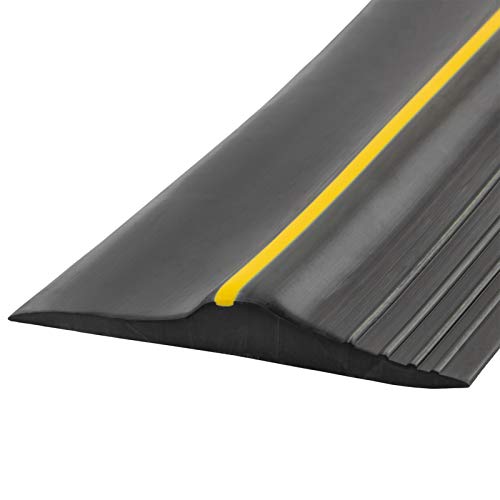 Papillon Garage Door Bottom Seal Strip, EPDM Rubber, 20 ftEPDM rather than generic rubber, in lengths up to 20 ft, and it slides into the existing retainer with no adhesive at all. | Long doors and cold climates | Fits standard door retainers; 20 ft covers an oversized double door | $43.97 · CHECK ON AMAZON |
| 2 |  M-D Garage Door Top and Sides Seal, 30 ft x 1-1/2 inThirty feet of vinyl trim seal — enough for the top and both sides of a double door in one purchase. | Doing the whole opening | Published 1-1/2 in flexible vinyl flange; overlaps the door face to close the jamb gap | $22.25 · CHECK ON AMAZON |
| 3 |  Elvone Garage Door Top and Side Seal with Nails, 40 ft, WhiteForty feet with the nails actually in the box — enough to do a double opening's header and both jambs without a second order or a trip for fixings. | Longest run, nails included | Not published as a working gap range; published as a 40 ft roll | $29.99 · CHECK ON AMAZON |
| 4 |  Frost King SB36 Extra Brush Door Sweep, 2 x 36 in, 2-PackBristles instead of a blade, which is the difference between sealing a floor that is flat and sealing a floor that is not. | Uneven floors and carpet | Roughly 1/2 in to 1 in | $34.16 · CHECK ON AMAZON |
#ad · how we are funded · price as of October 17, 2026
Long doors and cold climates
Papillon Garage Door Bottom Seal Strip, EPDM Rubber, 20 ft
Published gap range
Fits standard door retainers; 20 ft covers an oversized double door
#ad · how we are funded · price as of October 17, 2026
EPDM rather than generic rubber, in lengths up to 20 ft, and it slides into the existing retainer with no adhesive at all.
Where the number comes fromPapillon publishes the material (EPDM), the lengths (10, 16, 16.5 and 20 ft) and that no adhesive or sealant is included or needed. It publishes no gap figure — the seal's compression is set by the retainer your door already has.
- Material
- EPDM rubber
- Published lengths
- 10, 16, 16.5, 20 ft
- Adhesive
- None required
- Fit
- Standard door retainers
- Claim
- Withstands extreme temperature exposure
- Mounting
- Slides into the existing bottom retainer
What it does well
- EPDM is the right polymer for something that sits on cold concrete all winter
- No adhesive, no nails — it slides in
- Four published lengths, so you buy the door you have
Where it fails
- Only works if your door has an intact retainer track
- Slides out again if the retainer ends are not capped
- No published gap figure
Who this is forA door with a good retainer track and a seal that has gone hard.
Doing the whole opening
M-D Garage Door Top and Sides Seal, 30 ft x 1-1/2 in
Published gap range
Published 1-1/2 in flexible vinyl flange; overlaps the door face to close the jamb gap
#ad · how we are funded · price as of October 17, 2026
Thirty feet of vinyl trim seal — enough for the top and both sides of a double door in one purchase.
Where the number comes fromM-D publishes the length (30 ft) and the width (1-1/2 in) and states nails are not included. A trim seal does not have a gap range: you nail it so the flange presses against the closed door, which is why install position matters more than the section here.
- Published length
- 30 ft
- Published width
- 1-1/2 in
- Material
- Flexible vinyl
- Fixings
- Nails NOT included
- Cut
- To length
- Mounting
- Nailed to the jamb (nails not included)
What it does well
- One roll does the top and both sides of a double door
- Vinyl flange conforms to a jamb that is not perfectly straight
- Cut-to-length install with a utility knife
Where it fails
- Nails are not in the box — buy galvanized ones at the same time
- Vinyl stiffens in deep cold and can crack if you slam the door
- Get the flange pressure wrong and the door will not close
Who this is forA garage where you can see daylight down the sides as well as under the door.
Longest run, nails included
Elvone Garage Door Top and Side Seal with Nails, 40 ft, White
Published gap range
Not published as a working gap range; published as a 40 ft roll
#ad · how we are funded · price as of October 17, 2026
Forty feet with the nails actually in the box — enough to do a double opening's header and both jambs without a second order or a trip for fixings.
Where the number comes fromNo maker in this category publishes a working gap range, and this one is no exception. What is published is the length: 40 ft, which covers a double opening (roughly 30 ft) with real margin. Judge the flap against your own door-to-jamb gap by eye before committing the roll.
- Published length
- 40 ft
- Fixings
- Nails included
- Use
- Top and sides
- Finish
- White
- Published gap range
- None
- Mounting
- Nailed to the stop trim around the opening (nails included)
What it does well
- 40 ft does a double opening with margin, which is where the shorter rolls run out
- Nails in the box, so the job does not stall for fixings
- White matches the painted stop trim most garage openings actually have
Where it fails
- No published working gap range, so the flap depth has to be eyeballed against your gap
- No named manufacturer data sheet behind the specification
- White shows the dirt line along a garage opening within a season
Who this is forA double garage door whose perimeter seal is being replaced all round.
Uneven floors and carpet
Frost King SB36 Extra Brush Door Sweep, 2 x 36 in, 2-Pack
Published gap range
Roughly 1/2 in to 1 in
#ad · how we are funded · price as of October 17, 2026
Bristles instead of a blade, which is the difference between sealing a floor that is flat and sealing a floor that is not.
Where the number comes fromFrost King publishes the 2 in x 36 in size but no numeric gap range. A brush seals by bending, so it tolerates a gap that changes across the door swing — which is exactly the case a rubber blade fails at. Set it so the bristle tips just brush the floor.
- Carrier
- Aluminum
- Seal
- Nylon brush
- Published size
- 2" x 36"
- Mounting
- Screws
- Slotted holes
- Height adjustable after mounting
- Mounting
- Screws through the door face
What it does well
- Brush deals with a floor that rises across the swing; a blade cannot
- Sweeps over carpet and tile transitions without dragging
- Slotted mounting holes let you drop it a few millimeters after the first test
Where it fails
- A brush leaks more air than a compressed rubber blade on a flat threshold
- Bristles flatten with heavy traffic over a few seasons
- Not the pick if you are chasing a fully airtight seal on a flat sill
- Sold as a two-pack, so the price shown covers two sweeps — right for two doors, more than you need for one
Who this is forA door that scrapes on one side and swings free on the other, or one that opens onto carpet.
How we picked
- Compare by published material and the physical behavior that follows from it.
- Assign each material to the position on the door where that behavior is an advantage.
We have not tested these products and we do not claim to have. The full method, including what we refuse to claim, is on how we pick.
Questions people actually ask
- Is rubber or vinyl better for a garage door seal?
- Rubber or EPDM at the bottom, because it has to compress against concrete and stay flexible when cold. Vinyl on the jambs and head, where it only has to bend and where the cost saving is real.
- Do brush seals work on garage doors?
- For a gap that changes width along its length, yes. They do not stop water and they do not stop pests, so they are a poor choice at the bottom of a garage door and a reasonable one on a warped side jamb.
- Why did my vinyl garage door seal crack?
- Cold plus impact. Vinyl stiffens as the temperature drops, and a door closing hard against a stiff flange can split it at the nail line. Rubber trim seal is the cold-climate alternative.
- What is EPDM and why does it matter?
- EPDM is a synthetic rubber specified for outdoor weatherseal because it resists ozone, UV and temperature extremes without hardening. In practice it is the reason a seal is still flexible in its third winter.
Sources
- Papillon — published EPDM construction and temperature claim
- M-D Building Products — published vinyl top and sides seal (30 ft x 1-1/2 in)
Every specification on this page traces to a published manufacturer or retailer listing. Where a maker publishes no working gap range, we say so rather than estimating one.
Read next
The best garage door bottom seals
Rubber and EPDM seals by published length and fixing type, plus the case where a bottom seal is the wrong buy.
Sealing the sides and top of a garage door
The jambs and header are usually a bigger hole than the bottom, and about twenty dollars to close.
The best door sweeps, sorted by the gap they actually close
Six sweeps placed by the gap they close, from a slim vinyl blade to a brush for uneven floors.
Will a garage door seal keep mice out?
Not a rubber one — a mouse chews it. The steel wool and screen seals that do, plus the two corners no seal closes.