05 / ATTIC
Is an insulated attic ladder worth it, or should you just cover the one you have?
Both routes close the same hole in your ceiling. One costs sixty dollars and takes ten minutes; the other costs several hundred and means cutting into a ceiling. The deciding factor is not insulation.
We earn a commission on some links here, at no extra cost to you. It does not change what we recommend or the order they appear in. How we are funded

For almost everyone, cover the ladder you already have. An insulated cover costs around sixty dollars, goes on in ten minutes, publishes an R-value, and closes the same hole — the Miloo attic tent is the version with a published R-value behind it. Replace the ladder only if the ladder itself is at the end of its life, because then you are buying a ladder and getting the insulation included. Buying a several-hundred-dollar FAKRO ladder purely for the insulation is the expensive way to solve a sixty-dollar problem.
Why this hole is worth dealing with at all
An attic hatch is a thin panel in the middle of your ceiling insulation, and in winter the attic above it is close to outdoor temperature. Everywhere else in that ceiling you have perhaps ten inches of insulation; at the hatch you have a sheet of plywood, a perimeter gap, and in a lot of houses no weatherstrip at all.
Two things are happening there and they are worth separating, because the two routes address them differently. There is CONDUCTION through the panel, which is an insulation question. And there is AIR LEAKAGE around the perimeter, which is a sealing question — and on most hatches it is the larger of the two, because warm air rising through a gap takes heat with it in a way conduction through plywood does not match.
That matters for the decision below, because an insulated ladder improves the conduction side considerably and the air leakage side only as well as its factory seal is fitted. A cover improves both, and can be adjusted until the perimeter is genuinely closed.
The two routes, side by side
| Insulated cover over the existing hatch | New insulated attic ladder | |
|---|---|---|
| Typical cost | Tens of dollars | Several hundred dollars |
| Work involved | Ten minutes, from the attic side | Cutting and framing a ceiling opening |
| Published R-value | Often published (the tent types) | Rarely published as a system figure |
| Deals with air leakage | Yes — a full enclosure around the opening | Only as well as the factory seal is installed |
| Deals with conduction | Yes, over the whole panel | Yes, built into the door |
| Reversible | Yes | No |
| Fixes a broken ladder | No | Yes |
| Changes how the hatch feels to use | Yes — a zip or flap to open each time | No — it works like a normal hatch |
| Suits a rental | Yes | No |
Read down the cost column and then down the capability column, and the conclusion is uncomfortable for the expensive option: the cheap route does at least as much on the leakage side, publishes better numbers, and costs a seventh as much. The expensive route's genuine advantage is that it does not change how you use the hatch.
What an insulated ladder actually gives you
Three real advantages, stated fairly, because this page should not read as an argument against a legitimate product.
- 1The insulation and the seal are factory-aligned. The weatherstrip is fitted to a frame that was made for it, in a jig, rather than taped to an opening by you at an angle. When a cover fails it is almost always because the fit was approximate; this removes that failure mode entirely.
- 2It does not change the user experience. You pull the cord and the ladder comes down. With a cover, somebody has to open a zip or lift a flap from below or above every single time, and in practice there is a household member who will not, which leaves the cover open from November to March.
- 3A wooden ladder is better than an aluminum one. Quieter, considerably more solid underfoot, and the FAKRO-type doors are deeper sections than the economy aluminum kits. If you are in your attic regularly this is a daily quality-of-life difference and it is not a small one.
Point two is the one that decides a lot of real households, and it is worth taking seriously. A sixty-dollar cover that gets left open achieves nothing, and a four-hundred-dollar ladder that works automatically achieves something every day. That is a genuine argument, and it is about behavior rather than about R-value.
What an insulated ladder does not give you
- A published system R-value. None of these publish one for the assembly, which is the figure you would actually want. The cover products in this category frequently do. That is an awkward fact for the expensive option and we are not going to dress it up.
- A sealed perimeter, automatically. The frame still has to be fitted square into the ceiling and the trim sealed to the drywall. A beautifully insulated hatch in a frame with a quarter-inch gap to the plaster behind the architrave leaks air exactly as the old one did.
- Insulation above the door. The insulated panel is in the door. The box it folds into is still a box in your attic, and the sides of that box are a thermal bridge unless you insulate around them — which is work you do either way.
- Any help with a scuttle hatch. If what you have is a push-up panel rather than folding stairs, an attic ladder is not a replacement for it, it is a conversion project. Pull-down stairs or a scuttle hatch? covers which you have.
Measure before either route
Both options are bought against the opening, and both have a second measurement people forget.
For a cover, measure the rough opening and the height you have available above it in the attic. The tent types stand 11 inches or more tall and need headroom and clearance from the ladder's own folded box. The measuring detail is in the best attic hatch and pull-down stair covers.
For a ladder, measure the rough opening AND the floor-to-ceiling height. Every ladder publishes a ceiling height range — commonly 7 ft 8 in to 10 ft 3 in — and this is the specification that gets skipped, because the opening dimensions are the ones in the product title. A ladder for a lower ceiling than yours does not reach the floor safely.
Quick picks
Ranked for fit, not for hype. Tap a row to jump to the full write-up, or go straight to the listing.
| # | Product | Best for | Gap range | Price |
|---|---|---|---|---|
| 1 |  Miloo Attic Door Insulation Cover, 25 x 54 x 11 in, R-15.6A zippered tent over the whole stair opening with an R-value actually printed on the listing — which most of this category does not publish at all. | Pull-down stairs, published R-value | Fits a published 25 x 54 in opening, 11 in tall | $59.99 · CHECK ON AMAZON |
| 2 | 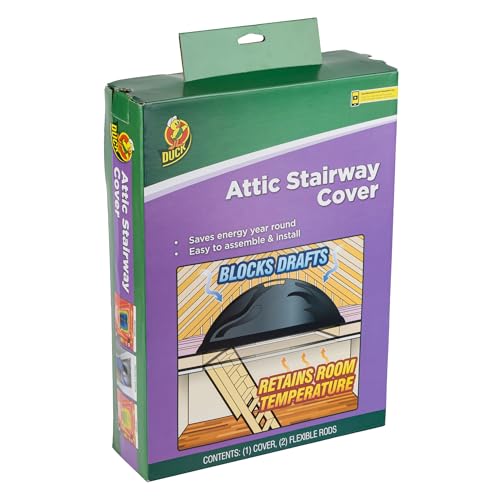 Duck Brand Attic Stairway Cover, fits 25.5 x 54 in openingsA lightweight cover that seals the stair opening without pretending to be insulation — and Duck, to its credit, publishes no R-value for it. | The cheapest cover that closes the opening | Fits openings up to a published 25.5 x 54 in | $54.98 · CHECK ON AMAZON |
| 3 |  FAKRO LWS-PL 66853 Insulated Attic Ladder, for 22-1/2 x 54 in Rough OpeningsA wooden folding attic ladder with an insulated hatch panel built into the door, from a maker whose whole business is attic access. This is the real version of the upgrade — and the reason to buy it is a worn-out ladder, not a draft. | Replacing a ladder you were going to replace anyway | Not applicable — this is the hatch assembly, not a seal | $489.00 · CHECK ON AMAZON |
| 4 |  S.Walt Aluminum Attic Ladder with Attic Door Insulation Cover, 22.5 x 54 in Rough Opening, for 7 ft 8 in to 10 ft 3 in CeilingsAn aluminum folding ladder sold WITH a separate insulated cover for the hatch, rather than with insulation built into the door. It is two products in one box, which is honest and is also the compromise. | A cheaper route to the same two jobs | Not applicable — this is the ladder assembly plus a cover, not a seal | $344.99 · CHECK ON AMAZON |
| 5 |  WIILAYOK Aluminum Attic Ladder with Insulation Cover, 22.5 x 54 in, 375 lb CapacityThe same aluminum-ladder-plus-cover formula, with the one specification this category usually hides: a published 375 lb load rating. If somebody heavy is going up there with boxes, that is the number to buy on. | The buyer who cares most about what the ladder will hold | Not applicable — this is the ladder assembly plus a cover, not a seal | $399.98 · CHECK ON AMAZON |
#ad · how we are funded · price as of October 17, 2026
Pull-down stairs, published R-value
Miloo Attic Door Insulation Cover, 25 x 54 x 11 in, R-15.6
Published gap range
Fits a published 25 x 54 in opening, 11 in tall
#ad · how we are funded · price as of October 17, 2026
A zippered tent over the whole stair opening with an R-value actually printed on the listing — which most of this category does not publish at all.
Where the number comes fromMiloo publishes the full box dimensions (25 x 54 x 11 in) and an R-value of 15.6. Measure your rough opening, not your stair door: the tent has to sit over the frame, so an opening larger than 25 x 54 in will not close.
- Published R-value
- 15.6
- Published size
- 25" x 54" x 11"
- Access
- Zipper
- Fits
- Pull-down ladder / stair openings
- Fire
- Listed as "fire proof" by the seller — see cons
- Mounting
- Sits over the opening in the attic, sealed to the frame
What it does well
- Publishes an R-value, which most of this category does not
- The zipper means you can still use the stairs without dismantling anything
- Covers the whole opening rather than just the hatch panel
Where it fails
- The "fire proof" wording is the seller's and names no standard or test; treat it as a marketing claim, not a rating
- One size only — a larger rough opening rules it out entirely
- You are installing it from inside the attic, which is the least pleasant part of this job
- A tent seals the opening; it does nothing for the hatch panel's own perimeter gap
Who this is forA standard 25 x 54 in pull-down stair opening where you want a number to compare.
The cheapest cover that closes the opening
Duck Brand Attic Stairway Cover, fits 25.5 x 54 in openings
Published gap range
Fits openings up to a published 25.5 x 54 in
#ad · how we are funded · price as of October 17, 2026
A lightweight cover that seals the stair opening without pretending to be insulation — and Duck, to its credit, publishes no R-value for it.
Where the number comes fromDuck publishes the opening it fits (25.5 x 54 in) and describes the cover as "flexible and lightweight". It publishes NO R-value, which is the honest position for a product of this construction — this is an air seal, not an insulator.
- Published fit
- 25.5" x 54" openings
- Published R-value
- None — Duck does not claim one
- Construction
- Flexible, lightweight
- Access
- Repositionable
- Job it does
- Air sealing, not insulating
- Mounting
- Assembled and placed over the opening; repositionable for access
What it does well
- The lowest-priced of the covers here
- Duck publishes no R-value rather than inventing one, which is more than several competitors manage
- Repositionable, so attic access stays genuinely usable
Where it fails
- It is an air seal, not insulation — do not expect it to perform like the R-rated tents
- Plastic sheet construction is the least durable here
Who this is forSomeone whose attic opening is currently sealed by nothing at all and who wants that fixed cheaply this weekend.
Replacing a ladder you were going to replace anyway
FAKRO LWS-PL 66853 Insulated Attic Ladder, for 22-1/2 x 54 in Rough Openings
Published gap range
Not applicable — this is the hatch assembly, not a seal
#ad · how we are funded · price as of October 17, 2026
A wooden folding attic ladder with an insulated hatch panel built into the door, from a maker whose whole business is attic access. This is the real version of the upgrade — and the reason to buy it is a worn-out ladder, not a draft.
Where the number comes fromAn insulated ladder replaces the whole opening rather than sealing the one you have. The number that decides the purchase is the ROUGH OPENING, published here as 22-1/2 x 54 in, plus your floor-to-ceiling height.
- Type
- Wooden folding attic ladder with insulated hatch
- Rough opening
- 22-1/2 x 54 in
- Hatch
- Insulated panel integral to the door
- Seal
- Factory-fitted perimeter weatherseal
- Maker
- FAKRO, an attic-access specialist
- Mounting
- Framed into the ceiling rough opening
What it does well
- The insulation and the seal are built in and aligned at the factory, not added by you at an angle
- Wooden sections are quieter and feel considerably more solid underfoot than aluminum
- If the existing ladder is broken, rotted or the wrong length, this solves two problems with one purchase
Where it fails
- Costs roughly eight times a good hatch cover, which is the comparison that actually matters
- It is a framing job: you are cutting into a ceiling, and that is not a weekend-confidence task for most people
- Matches one rough opening — if yours is different, this specific model does not fit
Who this is forSomeone whose attic ladder is at the end of its life, in a house where the attic hatch is a real heat loss.
A cheaper route to the same two jobs
S.Walt Aluminum Attic Ladder with Attic Door Insulation Cover, 22.5 x 54 in Rough Opening, for 7 ft 8 in to 10 ft 3 in Ceilings
Published gap range
Not applicable — this is the ladder assembly plus a cover, not a seal
#ad · how we are funded · price as of October 17, 2026
An aluminum folding ladder sold WITH a separate insulated cover for the hatch, rather than with insulation built into the door. It is two products in one box, which is honest and is also the compromise.
Where the number comes fromSized by rough opening (22.5 x 54 in) and ceiling height (7 ft 8 in to 10 ft 3 in). Measure both before ordering; the ceiling height range is the specification people skip.
- Type
- Aluminum folding attic ladder with separate insulated cover
- Rough opening
- 22.5 x 54 in
- Ceiling height
- 7 ft 8 in to 10 ft 3 in
- Insulation
- Separate cover supplied, not integral to the door
- Operation
- Manual pull-down
- Mounting
- Framed into the ceiling rough opening; the cover sits over the hatch from the attic side
What it does well
- Noticeably cheaper than the specialist wooden ladders while covering the same two needs
- Published ceiling-height range, which several competing listings omit
- Aluminum is light, which makes a one-person installation more realistic
Where it fails
- A separate cover is a separate thing to seat correctly every time you come down the ladder
- No published R-value for the cover, so its insulating performance is unverifiable
- Aluminum ladders flex and ring underfoot in a way wooden ones do not
Who this is forSomeone replacing a ladder on a budget who accepts a loose cover rather than a built-in panel.
The buyer who cares most about what the ladder will hold
WIILAYOK Aluminum Attic Ladder with Insulation Cover, 22.5 x 54 in, 375 lb Capacity
Published gap range
Not applicable — this is the ladder assembly plus a cover, not a seal
#ad · how we are funded · price as of October 17, 2026
The same aluminum-ladder-plus-cover formula, with the one specification this category usually hides: a published 375 lb load rating. If somebody heavy is going up there with boxes, that is the number to buy on.
Where the number comes fromSized by rough opening (22.5 x 54 in) and ceiling height (7 ft 8 in to 10 ft 3 in). The load rating is published separately at 375 lb.
- Type
- Aluminum folding attic ladder with insulation cover
- Rough opening
- 22.5 x 54 in
- Ceiling height
- 7 ft 8 in to 10 ft 3 in
- Load rating
- 375 lb, published
- Also sold as
- A 25 x 54 in version
- Mounting
- Framed into the ceiling rough opening
What it does well
- Publishes a load rating, which most listings in this category do not
- Two rough-opening sizes offered, so there is a chance one matches your framing
- Cover included, so the draft job is at least addressed in the box
Where it fails
- Same loose-cover compromise as the other aluminum kits
- No published R-value or seal detail for the cover
- 375 lb is a static rating from the seller, not an independently certified figure
Who this is forSomeone who uses their attic for real storage and wants the published capacity, not just the opening size.
What we would do, by situation
- Working ladder, cold hatch, you want this fixed this weekend: an insulated cover. This is the large majority of people reading this and the honest answer is the cheap one.
- Working ladder, but nobody in the house will reliably close a zip: weatherstrip the hatch perimeter properly and add rigid insulation to the panel itself instead, which needs no operating by anyone. Weatherstripping an attic hatch and how to insulate pull-down attic stairs are the two pages for that route.
- Ladder is broken, rotted, springy or the wrong length: replace it, and buy the insulated version. You were spending the money anyway.
- You are in the attic weekly: replace it, and buy wood rather than aluminum. The daily difference is real and it is not about insulation.
- You rent: a cover, and take it with you.
And whichever route you take, do the perimeter sealing. It is the part that neither product solves for you and it is where most of the loss is — a hatch with an expensive insulated door and an unsealed trim gap has not been fixed, it has been upgraded.
How we picked
- We compared these on published R-value and published opening dimensions, which are the only two figures either product type reliably publishes. Where a cover publishes an R-value and a ladder does not, we say so rather than estimating one.
- We publish no energy saving figure for either route and no payback period. The variables — your attic temperature, your ceiling area, your fuel cost — are not things a product can know, and the numbers circulating for attic hatches name no test conditions.
- The recommendation is deliberately weighted toward the cheaper route, because on the published figures the cheaper route does most of the same job. The full method is published.
We have not tested these products and we do not claim to have. The full method, including what we refuse to claim, is on how we pick.
Questions people actually ask
- Is an insulated attic ladder worth the money?
- Only if you were replacing the ladder anyway. An insulated cover over your existing hatch costs around a seventh as much, publishes an R-value where most ladders do not, and closes the perimeter air leak as well or better. Buy the insulated ladder as an upgrade to a purchase you had already decided on.
- Is it better to insulate the attic hatch or replace the stairs?
- Insulate the hatch, for almost everyone. The one real argument for replacing is behavioral rather than thermal: a cover has to be opened and closed by hand every time, and a cover left open all winter does nothing at all. A sealed insulated hatch works whether anyone remembers or not.
- What R-value does an insulated attic ladder have?
- Most do not publish a system figure, which is a genuine weakness of the category. Several of the cover products do publish one. If a published R-value matters to your decision, that asymmetry points toward a cover.
- Do attic stair covers actually work?
- Yes, provided they are closed. They address both the conduction through the panel and the air leakage around the perimeter, which is usually the larger loss. The failure mode is almost never the product — it is a cover that is approximately fitted, or one that nobody zips shut.
- What size attic ladder do I need?
- Two measurements: the rough opening in the ceiling, commonly 22-1/2 x 54 in or 25 x 54 in, and the floor-to-ceiling height, which every ladder publishes as a range such as 7 ft 8 in to 10 ft 3 in. The ceiling height is the one people miss, and a ladder outside its range does not land safely.
- Can I insulate the attic hatch door itself instead?
- Yes, and it is a good middle route: rigid foam board bonded to the attic side of the panel, plus weatherstrip around the perimeter. It needs no operating by anyone, costs less than a cover, and is covered in detail in the attic hatch pages on this site.
- Does an insulated attic ladder stop the draft as well as the heat loss?
- Partly. The insulated panel addresses conduction and the factory weatherstrip addresses the door-to-frame joint. What neither addresses is the gap between the ladder frame and the ceiling drywall behind the trim, which is a separate seal you have to make yourself either way.
Sources
- U.S. Department of Energy - published guidance on attic access insulation and air sealing
- ENERGY STAR - published guidance on sealing and insulating attic access openings
- FAKRO - published attic ladder range and specifications
Every specification on this page traces to a published manufacturer or retailer listing. Where a maker publishes no working gap range, we say so rather than estimating one.
Read next
The best attic hatch and pull-down stair covers
Covers and stair tents by published size and R-value — including the one whose maker honestly publishes none.
How to insulate pull-down attic stairs
Measure the rough opening, fit a tent that clears the mechanism, then seal the door stop separately.
Weatherstripping an attic hatch
The perimeter joint no cover closes — which seal, how thick, and why the latch matters as much as the strip.
Attic tent or a DIY insulated box?
Buy or build? The opening type decides it — and neither option closes the perimeter for you.
Pull-down stairs or a scuttle hatch: which do you have?
Two access types, two different products. Which you have decides everything else in this section.
How to stop a draft from the attic door
Find it with smoke, close the perimeter, then cover the opening — in that order, for a reason.